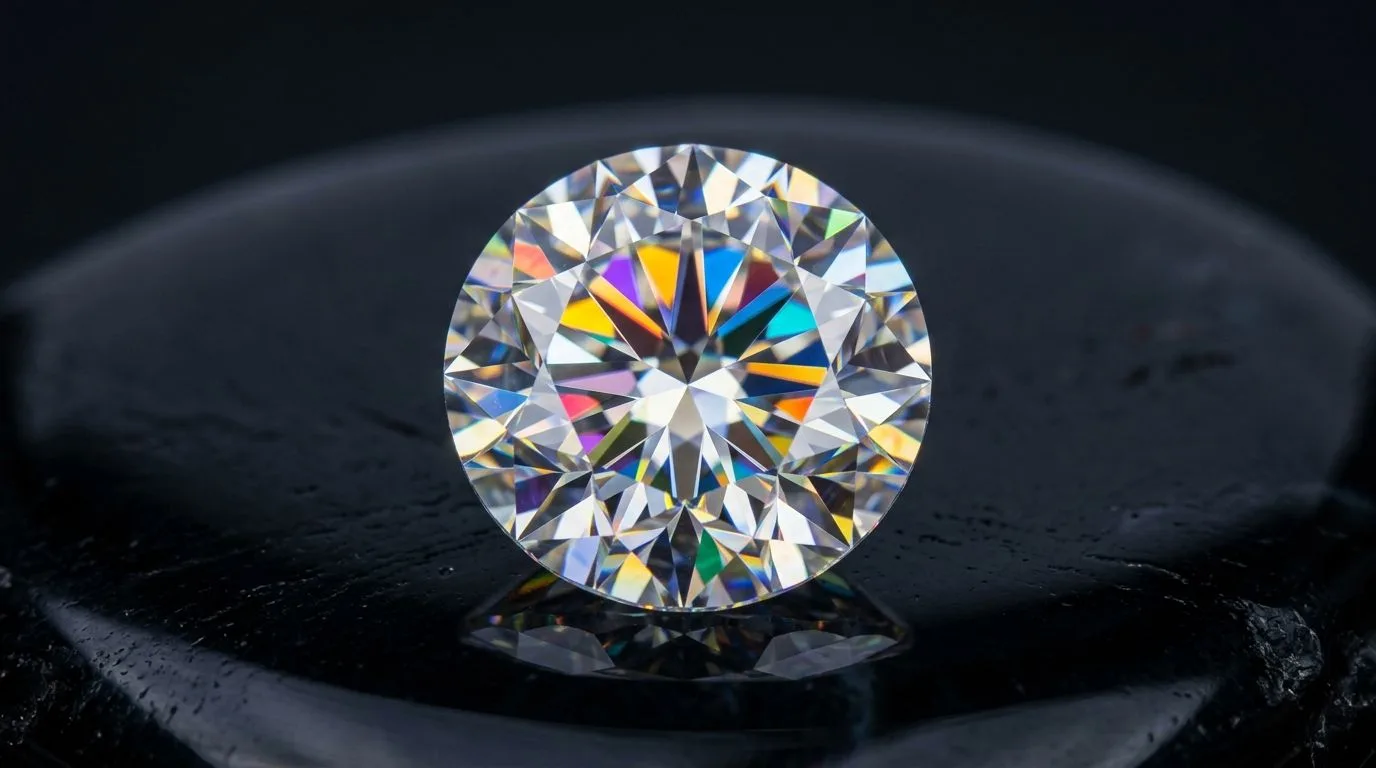
For a lab-grown diamond brand, there is one fact that should shape your entire approach to product imagery: a lab-grown diamond and a mined diamond of the same cut, colour, and clarity are optically identical and photograph identically. The stone cannot be your visual differentiator, because a buyer looking at two well-shot round brilliants cannot tell which came from the earth and which came from a reactor. That sounds like a disadvantage. In practice it means the photography itself, the quality, consistency, and presentation of your imagery, becomes the brand. Your images are doing the work that a rare provenance story does for a mined-diamond house.
This guide covers how to photograph lab-grown diamonds so they show real fire, brilliance, and cut quality, and how to build a consistent visual identity across a range when the product itself is, by design, a commodity stone.
Why photography is the differentiator for LGD
Lab-grown diamonds have largely commoditised the stone. Quality is graded on the same scale, supply is reliable, and prices have compressed. What a buyer is actually choosing between is brands: their design, their setting quality in 18k white gold or platinum, their service, and, online, their images. When the stones are interchangeable, the brand whose imagery looks more expensive, more consistent, and more trustworthy wins the click and the sale.
This reframes product photography from a cost to be minimised into the primary brand asset. It is worth investing real care in, because it is one of the few levers that genuinely separates one LGD brand from another in a search results page or a marketplace grid.
The physics of fire and brilliance
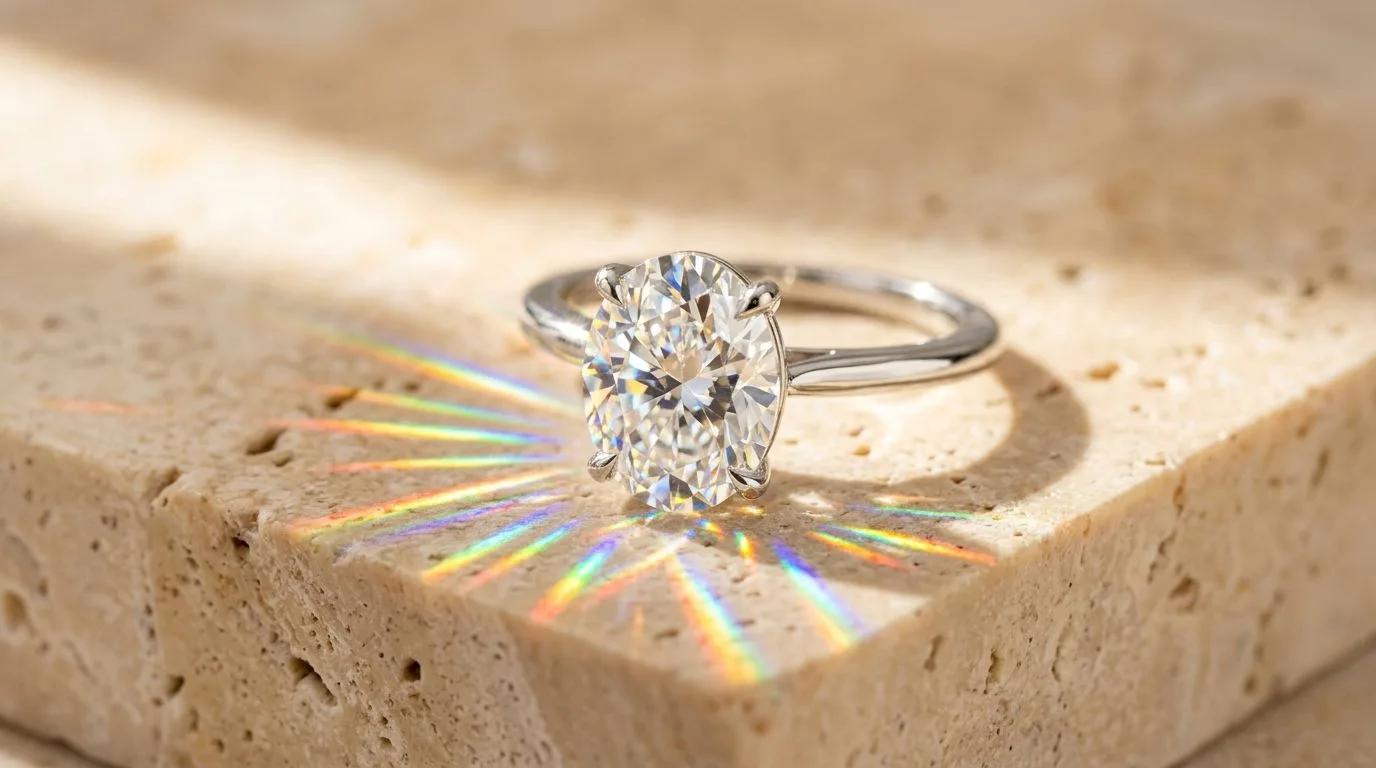
A diamond's visual appeal comes from three things: brilliance (white light reflected back), fire (white light split into spectral colours), and scintillation (the flashes as the stone or viewer moves). Capturing these in a still image is a lighting problem. Fire and brilliance come from small, hard light sources that the facets can reflect as distinct bright points. A large soft light alone, the kind that flatters metal and matte surfaces, makes a diamond look dull because there is no concentrated source for the facets to throw back.
The working solution is to mix light. Use a soft source to render the metal setting and band cleanly, then add a small hard source, a bare bulb, a small reflector, or a focused LED, to create the sparkle. Build the shot in that order: get the metal looking right with soft light, then introduce the hard light and watch the stone come alive. The ratio between them is the craft, and it is worth experimenting with for your specific settings.
Controlling reflections: the pin board and the dark center
Diamonds reflect their surroundings, including your camera. The most common failure is a stone with a dead grey center, which happens when the stone reflects the dark lens barrel straight back. The fix is a pin board: a card, usually black for contrast or white for fill, with a hole punched for the lens. Now the stone reflects the card instead of the lens, and you control what it sees.
A black pin board deepens contrast and is the key to dramatic fire shots, because the dark surround makes the bright flashes pop. If the center still reads dark, add a small white reflector positioned to bounce brightness into the table, and adjust it while watching live view until the stone lights up evenly. Even, bright light return across the whole table is also how you visually communicate cut quality: a well-cut stone returns light evenly, and your lighting should let that show.
Aperture, focus, and the white packshot
A ring has real depth, from the table of the stone down to the base of the band, so shoot at f/11 to keep it all sharp. For extreme macros of just the crown facets you can stop down to f/16, or use focus stacking, accepting the longer exposures on a tripod at ISO 100. Sharpness matters because buyers zoom in on diamond listings more than almost any other product.
Alongside your dramatic black-background frames, you need a compliant white packshot for marketplaces. On Amazon and Flipkart the product should fill at least 85% of the frame on a pure white background with no props, at 2000px or larger for zoom. Shoot this with even, soft lighting so the stone reads clean and the metal is true.
The on-hand frame closes the sale
The packshot and the macro establish quality and detail, but the on-hand shot closes the engagement-ring sale. Buyers cannot judge a stone's face-up size, the ring's proportion, or how it sits on a finger from a stone-only image, and that uncertainty is the biggest source of hesitation on a major purchase. An on-hand frame answers it directly.
Booking a hand model for every SKU is slow and expensive, particularly for a brand with a wide range of settings and carat sizes. Hylo's AI Photoshoot generates a consistent on-hand frame from your packshot, preserving the sparkle you captured in your master shot, so every ring in the range gets the same high-quality worn image without a studio day per piece. AI Retouch then cleans dust and evens backgrounds while keeping the stone's true colour and brilliance intact.
Matching the setting metal to the stone
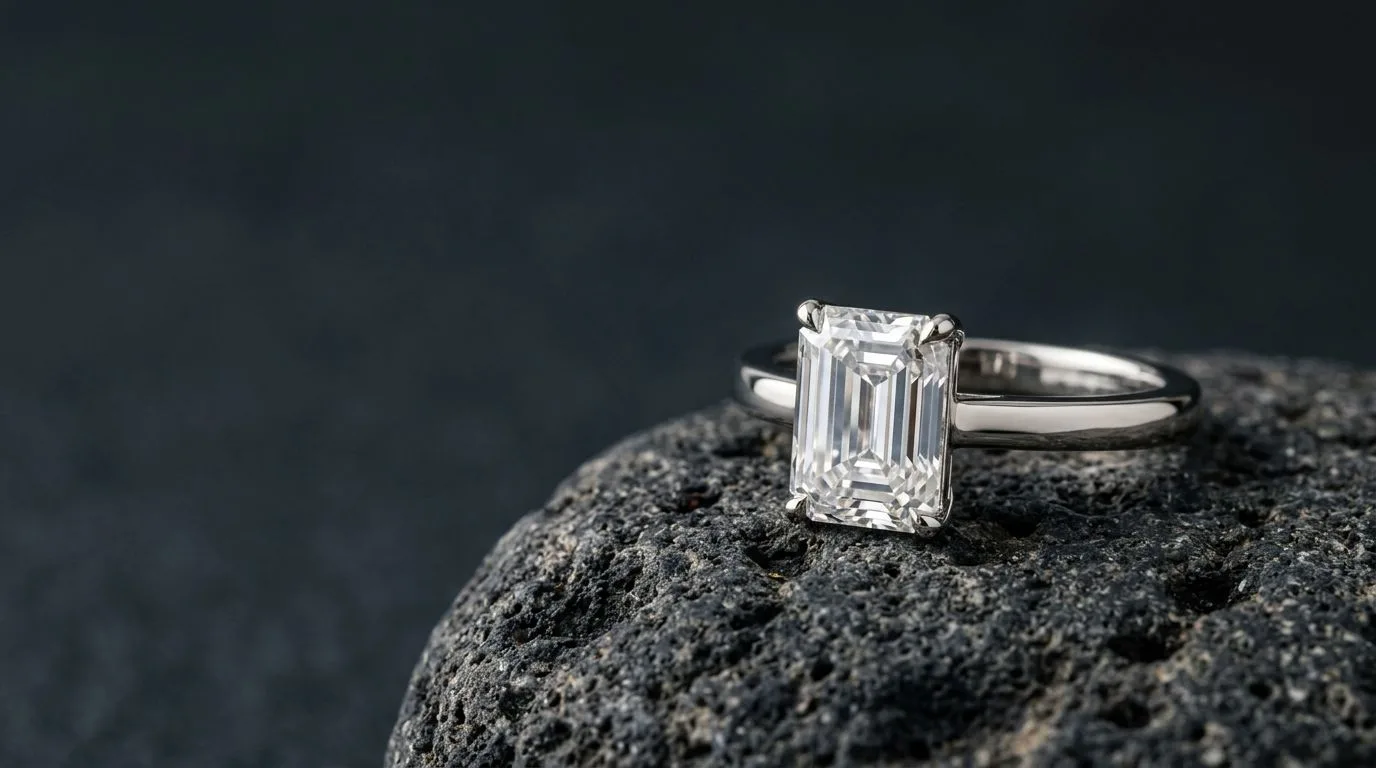
The metal around a diamond changes how the stone reads, and your lighting has to account for it. Platinum and white gold are cool and bright, and they let a colourless stone look its whitest, which is why they dominate the engagement category. Yellow gold is warm and can cast a faint warm reflection into the lower facets of a stone, which buyers either love as a vintage look or want minimised. Rose gold sits between the two. When you light a ring, decide whether the metal should read true to its real tone or be subtly flattered, and then commit to that decision consistently across the whole range so a buyer comparing a platinum and a yellow-gold setting sees an honest difference rather than an artefact of inconsistent lighting.
The setting style matters too. A solitaire gives the stone maximum prominence and is the easiest to light because there is little competing detail. A halo or pavé setting surrounds the centre stone with many small diamonds, and each of those needs its own clean light return or the setting looks dull and grey. For pavé-heavy designs, a slightly broader hard source or a second small light helps the accent stones sparkle without overpowering the centre. Three-stone and cluster designs need attention to keeping the relative brightness balanced so no single stone dominates unless it is meant to.
Building the full image set for an LGD listing
A complete lab-grown diamond listing works hardest when it answers questions in sequence. Lead with a clean white packshot that meets marketplace rules and lets the buyer see the whole ring honestly. Follow with a dramatic macro on black that shows fire and brilliance and demonstrates cut quality through even light return. Add a top-down or table-up frame that shows the stone's face-up shape and the symmetry of the cut, which serious diamond buyers scrutinise. Include the on-hand frame for scale, a profile frame that shows the setting height and how the stone sits, and a frame that shows any certificate or grading detail if you supply one.
This sequence matters because lab-grown diamond buyers are typically value-conscious and research-driven. They are choosing LGD precisely because they want more visible stone or quality for their budget, so they compare carefully and reward listings that give them the information to feel confident. A listing that shows the stone from every relevant angle, on a hand, and in honest light removes the friction that sends a researching buyer to a competitor's page.
How LGD buyer psychology shapes your imagery
It helps to understand who is buying. Lab-grown diamond shoppers have usually done their homework: they know the stone is chemically and optically identical to mined, and they have chosen it deliberately for value or for ethical and environmental reasons. That means two things for your imagery. First, you do not need to hide or apologise for the lab-grown nature of the stone; transparency is a selling point for this audience, so labelling and honesty build trust rather than undermining it. Second, because these buyers are price-aware, they are alert to anything that looks like it is hiding a flaw, so over-retouched, unnaturally perfect images can actually raise suspicion rather than confidence.
The implication is to photograph with confident honesty. Show the real stone, well lit, from angles that let the buyer verify quality, and let the value proposition speak for itself. A clean, consistent, honest image set is more persuasive to a researching LGD buyer than a glossy, over-produced one that triggers scepticism.
Avoiding the common LGD photography mistakes
The most damaging mistake is relying only on soft light, which produces a flat, lifeless stone with no fire; always introduce a small hard source for sparkle. The second is the dead grey centre from the lens reflecting back, solved with a pin board. The third is inconsistency across the range, which undermines the premium-brand impression that is your main differentiator. The fourth, and the most commercially dangerous, is faking sparkle or altering the stone's colour in post, which produces returns when the real stone arrives looking different. The fifth is omitting the on-hand frame, which leaves scale, the biggest source of hesitation, unanswered.
A subtler mistake is ignoring the profile and top-down views. Many sellers shoot only a three-quarter hero angle, but diamond buyers want to see the table from directly above to judge cut symmetry and from the side to judge setting height and stone depth. Adding these two frames is low effort and directly addresses what an informed buyer is looking for.
Certification and the proof shot
Lab-grown diamonds are typically graded and certified just like mined stones, often by the same laboratories, and that certificate is a powerful trust signal for a category where buyers are still learning what they are paying for. A clear macro of the grading report, or of the laser-inscribed certificate number on the girdle where present, belongs in your image set as a proof shot. It tells the buyer that the stone is independently verified, that you are confident enough to show the documentation, and that the carat, colour, and clarity claims in your listing are backed by something external. In a market where some shoppers are still unsure whether lab-grown means lower quality, visible certification does a great deal of quiet reassurance.
This proof shot pairs naturally with honest grading in the rest of the imagery. If your listing says F colour and VS1 clarity, the macro should show a stone that genuinely looks that clean, not one polished up in post to look flawless. The certificate and the photographs should tell the same story, because a buyer who cross-checks the report against the image and finds them consistent is a buyer who trusts the whole listing.
Communicating value without provenance
A mined-diamond house can lean on rarity and origin stories; a lab-grown brand cannot, and should not try to fake one. Instead, the value story for lab-grown is built on what is genuinely true: identical optical quality to mined stones, larger or higher-grade stones at the same budget, and a more transparent supply chain. Your imagery can support this story by showing the stone at its honest best, demonstrating size clearly through the on-hand frame, and presenting the piece with the polish and consistency of a premium brand. The photography is not decorating a provenance narrative; it is the narrative, which is exactly why investing in it pays off more for lab-grown than for almost any other jewelry category.
Consistency is the brand
Because your stones are interchangeable, visual consistency across the range is what reads as a premium brand. Lock one lighting and camera setup, run every piece through it, and apply the same editing recipe to the whole set so the catalog looks like one coherent collection rather than a pile of individually shot products. A grid of perfectly consistent, well-lit lab-grown diamond rings signals a serious brand far more than any single hero image.
Consistency also makes scaling realistic. When the setup is locked and the editing is a repeatable recipe, adding fifty new SKUs is a process rather than a project. For the on-hand frames that would otherwise require a hand model per ring, Hylo's AI Photoshoot keeps pose, lighting, and crop uniform across the entire range from your packshots, so growth does not dilute the visual coherence that distinguishes your brand.
One rule: never fake the stone
It is tempting to add sparkle in post or warm up a stone's colour, but a lab-grown diamond buyer who receives a stone duller or more tinted than the photo will return it, and returns on fine jewellery are expensive. Use AI Retouch to remove dust, clean the band, and even the background, but keep the stone's brilliance and colour grade honest. Trustworthy imagery is itself a differentiator in a category where buyers are already weighing value carefully.
Try Hylo free — no studio booking required.