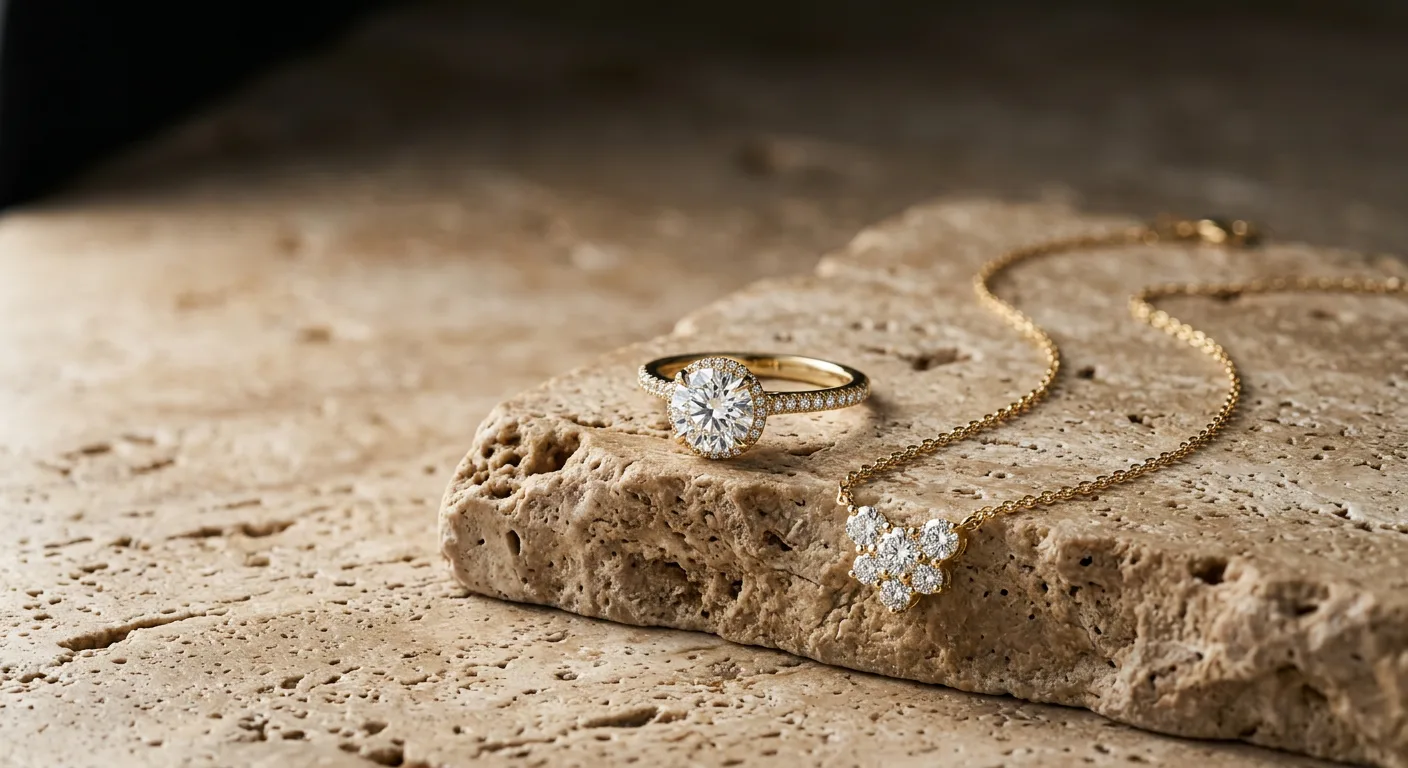
The Physics of Lab-Grown Diamond Photography
Lab-grown diamonds are chemically, physically, and optically identical to natural mined diamonds. They possess the exact same refractive index of 2.417 and high dispersion rate of 0.044. Capturing this physical brilliance in a photograph is famously difficult. A standard camera often turns a diamond into a dull, gray stone unless a specialized lighting tent, macro lens, and polarization filters are used.
AI jewelry photography changes the economics of diamond campaigns. Here is how to use Hylo's specialized AI Photoshoot to capture lab-grown diamond jewelry in studio quality.
Traditional vs. AI Photography (An Honest Comparison)
Before adopting an AI workflow, it's important to understand the trade-offs:
- Micro-Facet Precision: Traditional macro photography with a high-end DSLR lens (such as the Canon 100mm f/2.8L) captures the exact microscopic facet imperfections of a specific stone. AI models interpolate and smooth these facets to represent a perfect, flawless cut.
- Setup vs Speed: Setting up a physical macro shoot takes hours of lighting adjustments, lens calibration, and post-production cleaning. AI photography generates a polished, marketplace-ready image in under a minute from a simple raw phone photo.
- Reflection Accuracy: A physical light tent captures the real-time reflections of the surrounding room. Hylo's AI simulates physical lighting to generate clean, commercial-grade reflections, removing messy room elements (like the camera or photographer's silhouette) from the metal surface.
Step 1: Capturing the Source Photo
You don't need a professional camera, but your starting photo must have clear focus:
- Focus on the Table: Ensure the top flat facet of the diamond (the table) is sharp and in focus.
- Avoid Hard Shadows: Shoot in soft, indirect natural light (e.g. near a window on an overcast day). Avoid harsh direct sunlight, which creates blown-out white spots.
- Stable Phone: Use a tripod to eliminate camera shake, especially when shooting close-up macro details.
Step 2: Eliminating Color Bleeding (Brand Kit Setup)
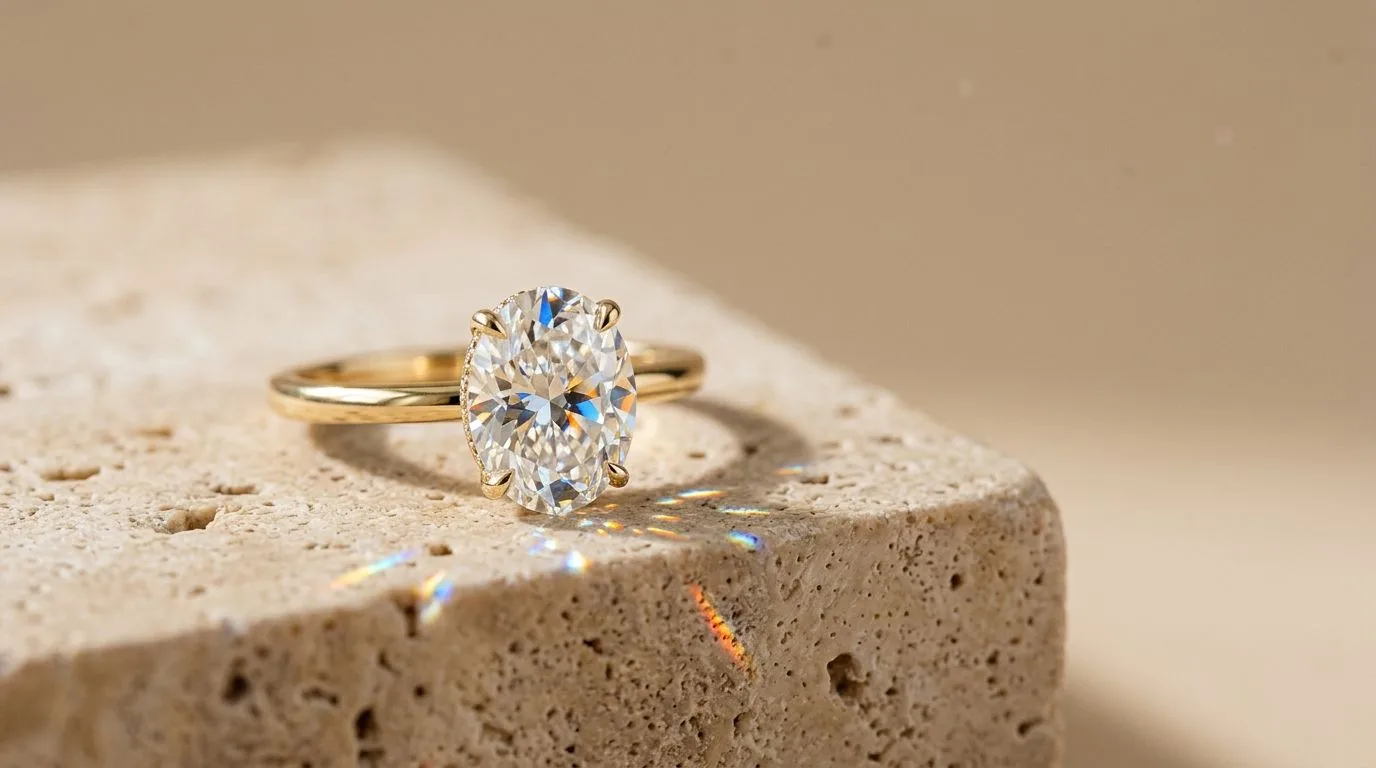
A common issue in diamond photography is color bleeding. Highly polished gold prongs reflect yellow or rose tones into the body of the diamond, making a colorless (D-F range) diamond look yellowed and low-grade.
To prevent this in Hylo, set up your Brand Kit:
- Lock Platinum / White Gold Settings: If your ring shank is yellow gold but the prongs are platinum, specify this in the Brand Kit.
- RGB Calibration: Ensure the platinum elements are mapped to clean neutral values (e.g.
RGB: 220, 220, 220). This keeps the diamond facets white and sparkling. - Activate Fire Dispersion: Turn on the gemstone refraction toggle to let the AI calculate the rainbow light split (dispersion) through the crown facets.
Step 3: Generating Lifestyle Scenes
Written by Harshal Patel, Founder & Creative Designer of Hylo.
For modern direct-to-consumer (DTC) brands, lifestyle images (like a ring on a hand) drive the highest conversion rates. But booking hand models, hiring photographers, and renting studio space is incredibly expensive.
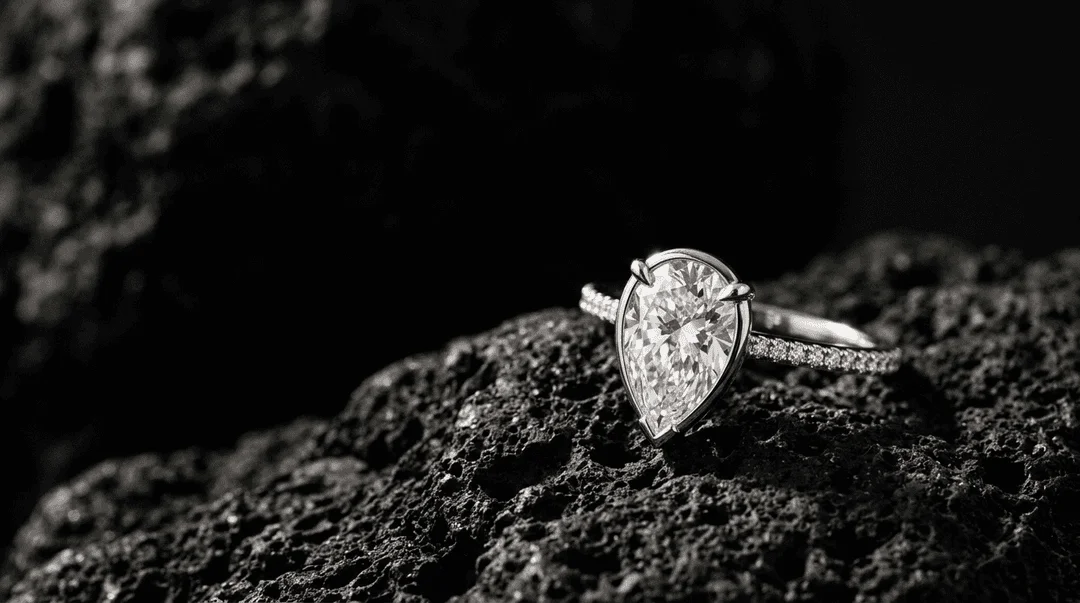
At Hylo, we built our Lifestyle Model preset to solve this. When you upload your isolated ring photo and select this preset, our AI automatically renders the ring on a photorealistic hand. It calculates the correct perspective, scales the ring to fit the finger, and maps the skin tone reflections onto the polished metal shank. You can explore how we build these models on our About Us page.
Frequently Asked Questions
Why do lab-grown diamonds look flat in generic AI editors?
Generic AI tools are trained on general products like cups, shoes, and clothing. They do not understand the physics of gemstone refraction, so they treat the diamond as a solid gray object, erasing its internal facet depth.
What resolution does Hylo output?
Hylo exports high-resolution JPEGs and PNGs up to 2048 x 2048 pixels, which is optimized for zoom functionality on Shopify, Etsy, and Amazon listing pages.
How does color calibration work in Hylo?
By saving your metal colors in the Brand Kit, Hylo ensures that every product in your catalog maintains the exact same gold or platinum tone, preventing return complaints about color mismatches.
Should I shoot my jewelry on a white background?
A neutral, light background is preferred as it prevents strong color reflections from casting onto the metal shanks. A simple piece of white paper or matte cardstock is perfect.
Can Hylo handle complex multi-stone settings?
Yes. Hylo's diamond engine detects multiple stones (including pavé halos and side baguettes) and applies realistic refraction to each stone independently based on its size and position.