What defines vintage jewelry photography
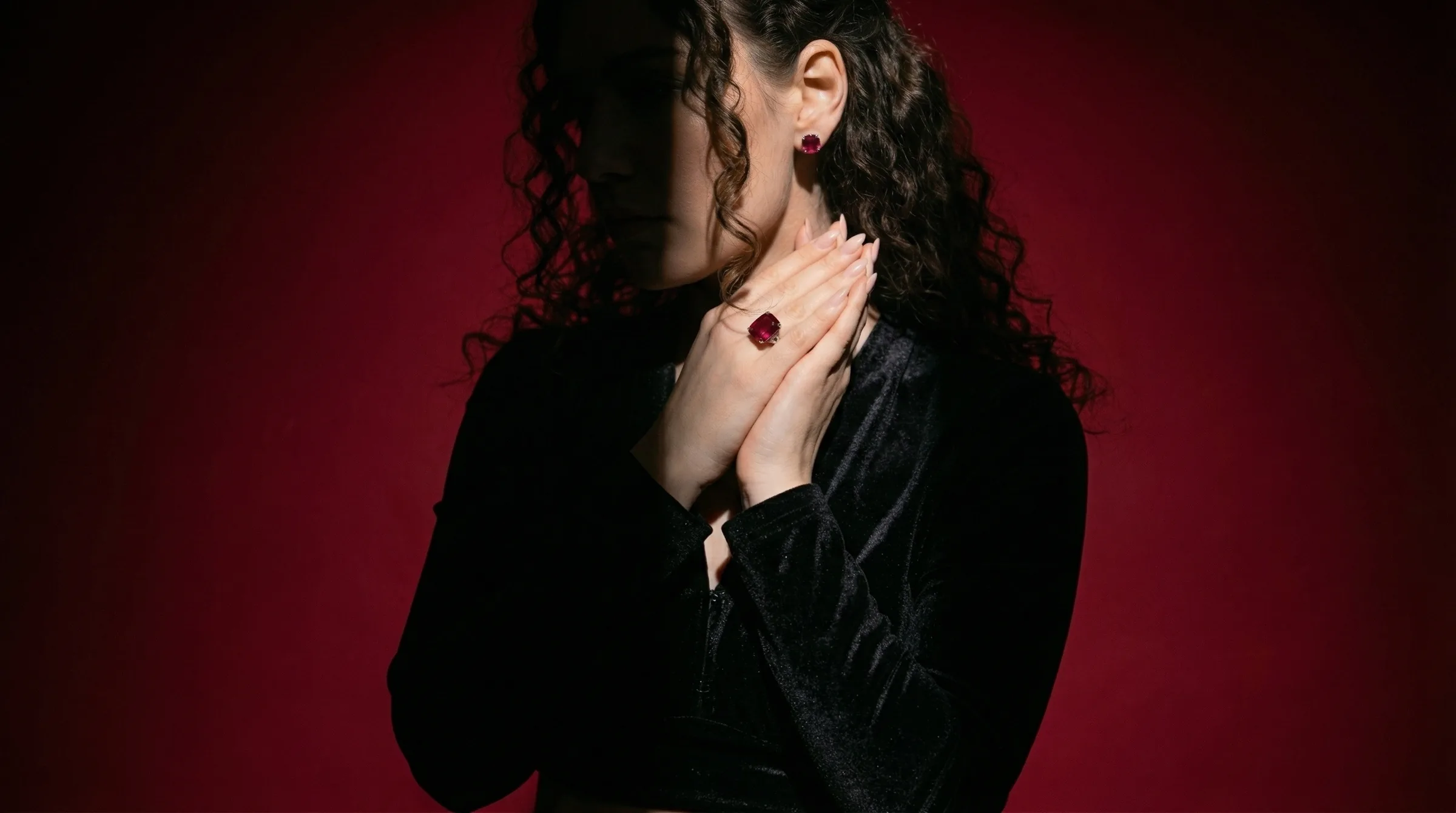
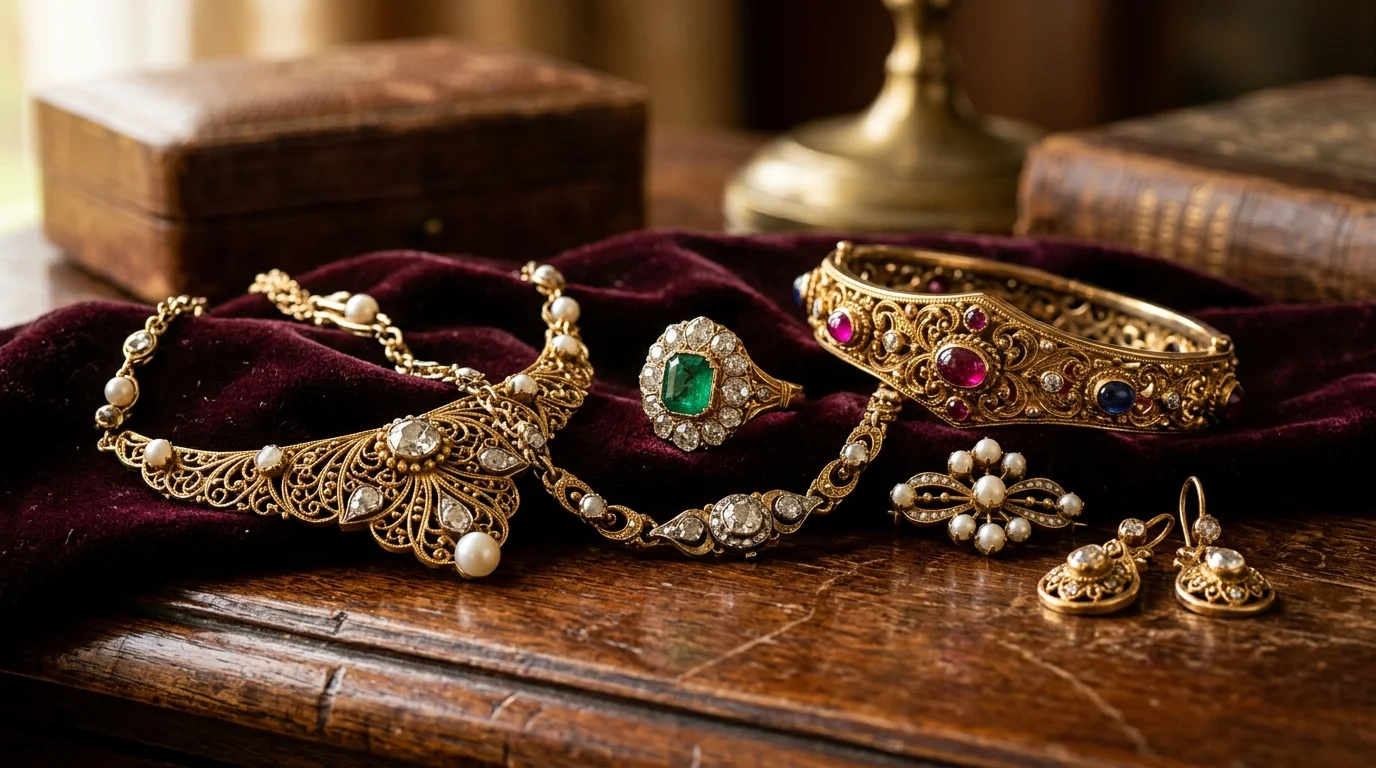
Vintage jewelry photography is fundamentally about storytelling through texture, warmth, and shadow. Whether you are shooting authentic estate pieces from the Victorian era or modern heirloom-inspired designs, the aesthetic departs completely from the stark, high-key white backgrounds of traditional e-commerce packshots. It relies on environmental context to communicate age, value, and romance.
Visual hallmarks of the vintage style include a distinctly warm color palette, utilizing rich earth tones, deep jewel tones (emerald, burgundy, navy), and muted metallics. The lighting is intentionally directional rather than flat, designed to carve out the micro-shadows necessary to highlight milgrain edges, hand-engraved filigree, and the natural patina of aged metals.
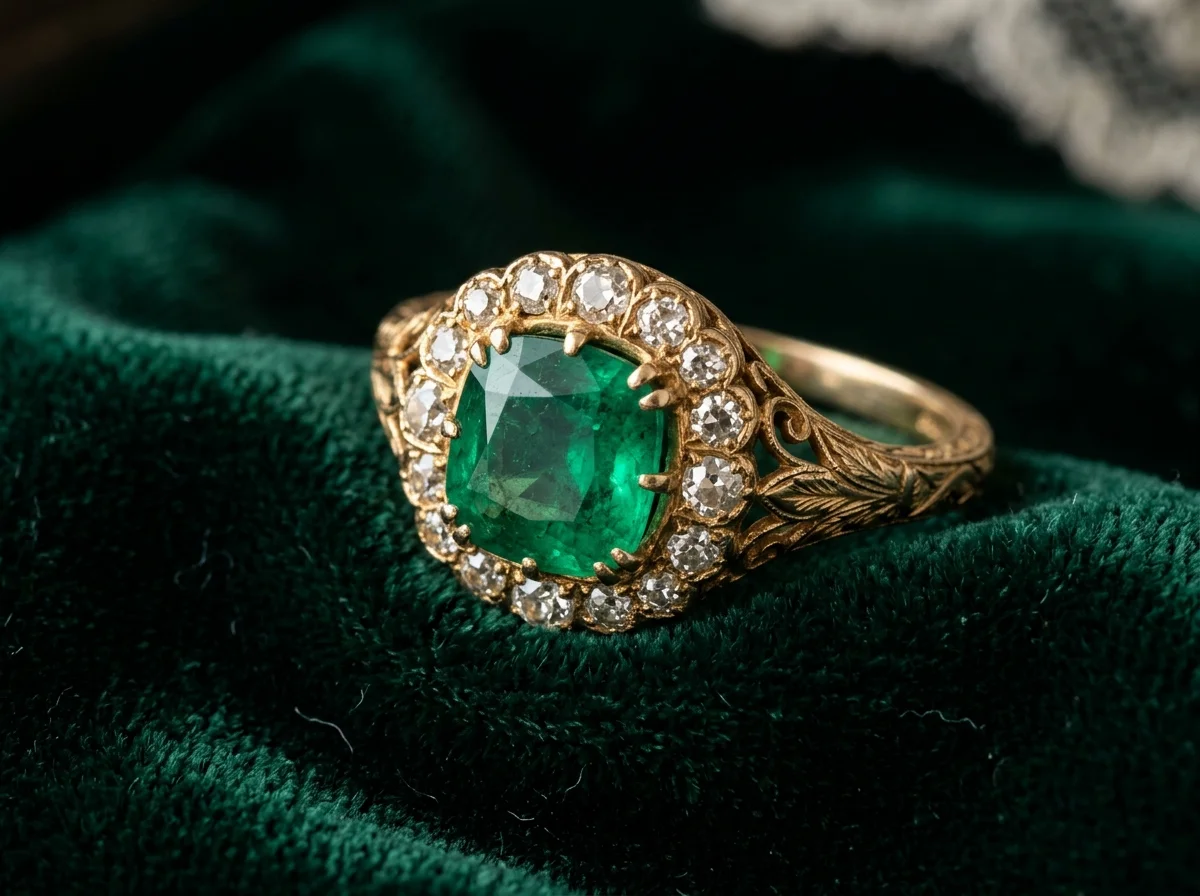
Unlike modern brilliant-cut diamonds, which are cut for maximum light return and sparkle under harsh pinpoint lighting, antique diamonds—such as Old Mine, Old European, and Rose cuts—feature larger, chunkier facets, higher crowns, and open culets. These stones perform best under broad, soft, diffused light sources that allow their deep, fiery flashes to register on camera without blowing out into pure white.
Depth of field plays a critical role in defining this aesthetic. While a standard Amazon listing requires edge-to-edge sharpness (typically shot at f/11 or f/16 and focus-stacked), vintage styling often employs a shallower depth of field (f/2.8 to f/5.6). This technique keeps the primary gemstone sharply in focus while allowing the textured background—like crushed velvet or an antique book page—to fall into a soft, creamy blur. This selective focus mimics the human eye's natural behavior and adds an editorial, nostalgic quality to the image.
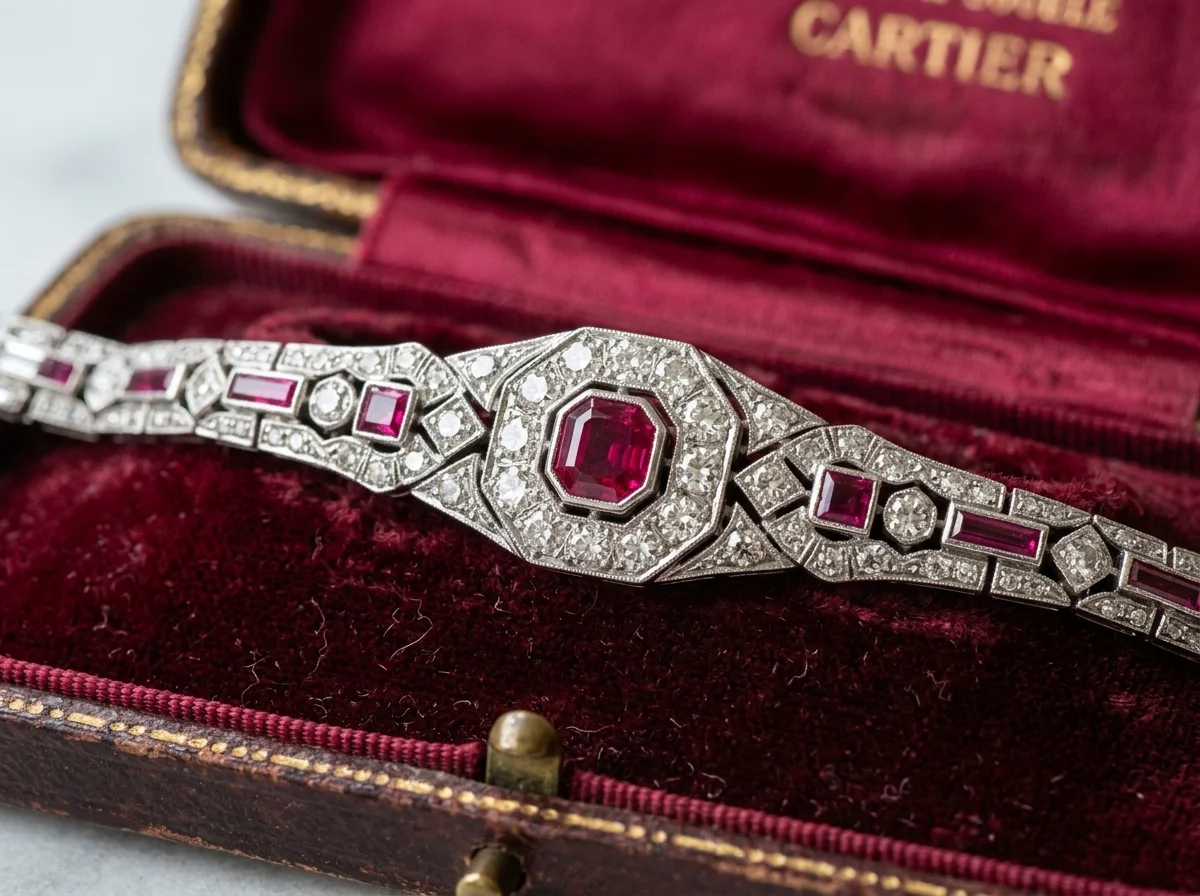
Prop selection is equally defining. The vintage aesthetic demands authentic-looking textures. High-gloss acrylic risers and clean geometric blocks are replaced by tarnished silver trays, raw silk, aged leather ring boxes, and matte cotton velvet. The objective is to create a scene that feels discovered rather than manufactured.
When to use vintage jewelry photography
Vintage jewelry photography is a highly specialized style that serves specific channels and buyer psychologies. It is not a one-size-fits-all solution, but when applied correctly, it drastically increases perceived value and conversion rates for specific types of inventory.
This aesthetic is mandatory for estate jewelers, antique dealers, and brands specializing in bespoke heirloom pieces. Buyers purchasing a $5,000 Art Deco platinum ring are not just buying carbon and metal; they are buying a piece of history. A sterile white background strips the piece of its romance. Styling the ring on a velvet-lined antique tray provides the visual context that justifies the premium price tag.
Channel-wise, vintage photography dominates on visual discovery platforms. It is highly effective for Instagram grids, Pinterest boards, and TikTok content, where users are looking for mood and inspiration. It is also the preferred aesthetic for Etsy storefronts and boutique Shopify sites where brand identity relies on a curated, artisanal feel. If you are selling at trunk shows or creating wholesale linesheets for independent boutiques, integrating editorial vintage shots alongside your standard packshots helps buyers visualize the collection's narrative.
Conversely, this style should be used sparingly on high-volume marketplace platforms like Amazon or Walmart, which strictly enforce pure white backgrounds (RGB 255,255,255) for primary listing images. In these environments, vintage photography should be reserved exclusively for secondary "lifestyle" carousel images or A+ Content modules.
Understanding buyer psychology is key to knowing when to deploy this style. The vintage aesthetic triggers feelings of nostalgia, permanence, and uniqueness. It signals to the buyer that the piece they are looking at is one-of-a-kind, inherently valuable, and crafted with techniques that are no longer common in mass production.
How to shoot vintage jewelry photography manually
Executing professional vintage jewelry photography in a studio requires precise control over lighting, specialized macro equipment, and a curated prop library. A typical studio booking for this aesthetic runs between $1,500 and $3,500 per day, largely due to the time required to source props and finesse the lighting for antique facets.
Camera and Lens Requirements
To capture the intricate details of vintage jewelry, you need a full-frame mirrorless or DSLR camera paired with a dedicated 1:1 macro lens, ideally in the 90mm to 105mm range. This focal length provides enough working distance to prevent your camera from casting a shadow over the piece while allowing you to fill the frame with a single ring or pendant.
The Lighting Diagram
Vintage jewelry requires a lighting setup that emphasizes texture. Flat, front-facing ring lights will wash out the patina and flatten the hand-engraving. Instead, use a single-source directional lighting setup.
Place a large softbox (or a strobe fired through a diffusion panel) at a 45-degree angle behind and to the left or right of the jewelry piece. This is effectively a modified Rembrandt lighting setup for macro photography. The light skimming across the surface of the metal will highlight the raised edges of milgrain and cast deep micro-shadows into the recessed areas, emphasizing the piece's age and craftsmanship.
To manage the shadows and prevent them from becoming pitch black, place a small white bounce card (a simple piece of foam core) on the opposite side of the light source. If you are shooting highly reflective metals like polished gold, you may need to introduce black flags (strips of black foam core) to block unwanted reflections from the room and create defined, dark edges on the metal, which gives the piece volume and shape.
Camera Settings
For editorial vintage shots where you want a moody, shallow depth of field, set your camera to Aperture Priority or Manual mode. Use an aperture of f/4 to f/5.6. Keep your ISO at 100 to ensure maximum dynamic range and zero digital noise. Because you are using a slightly stopped-down aperture and low ISO, your shutter speed will drop. If you are using continuous LED lighting (set to a warm 4000K), you must use a heavy, stable tripod and a remote shutter release to prevent camera shake during the longer exposure (e.g., 1/15s or 1/30s). If you are using studio strobes, sync your shutter speed to 1/125s or 1/160s.
Prop Styling and Materials
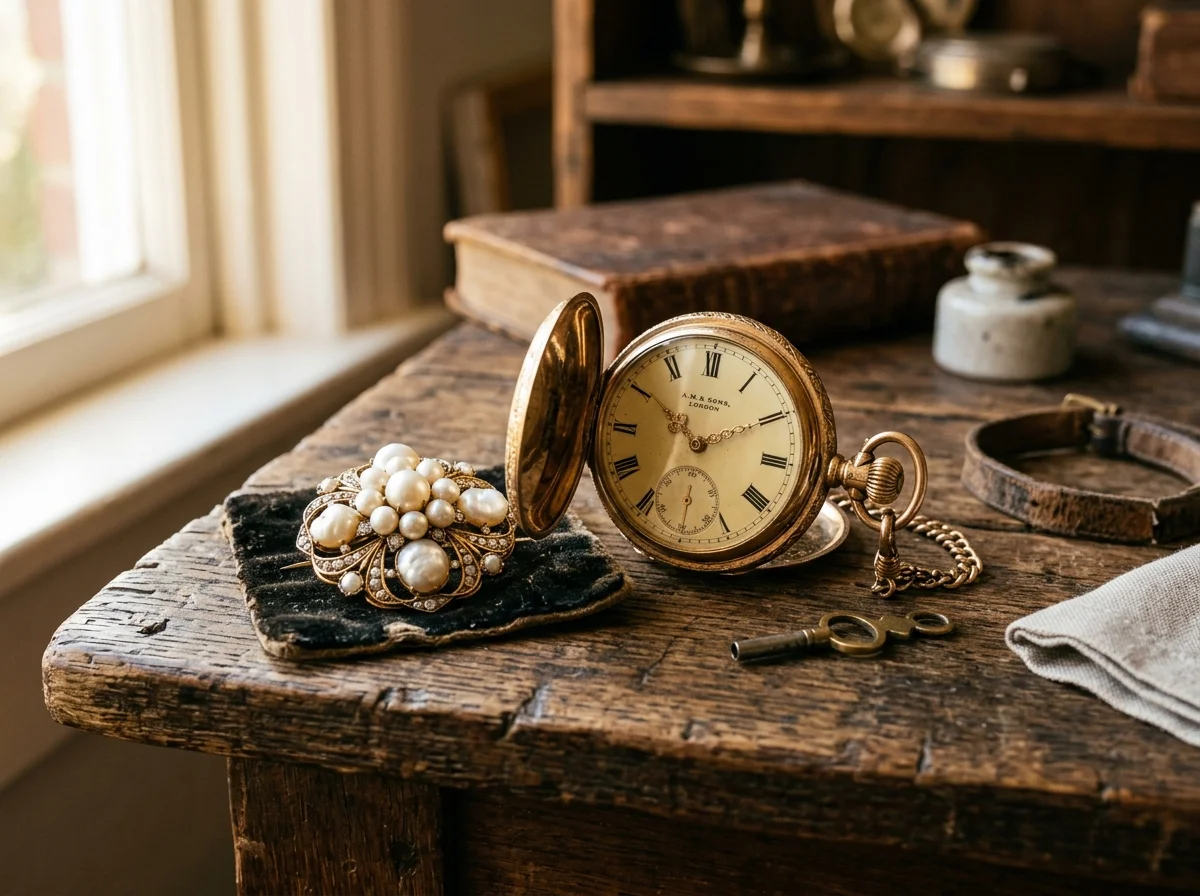
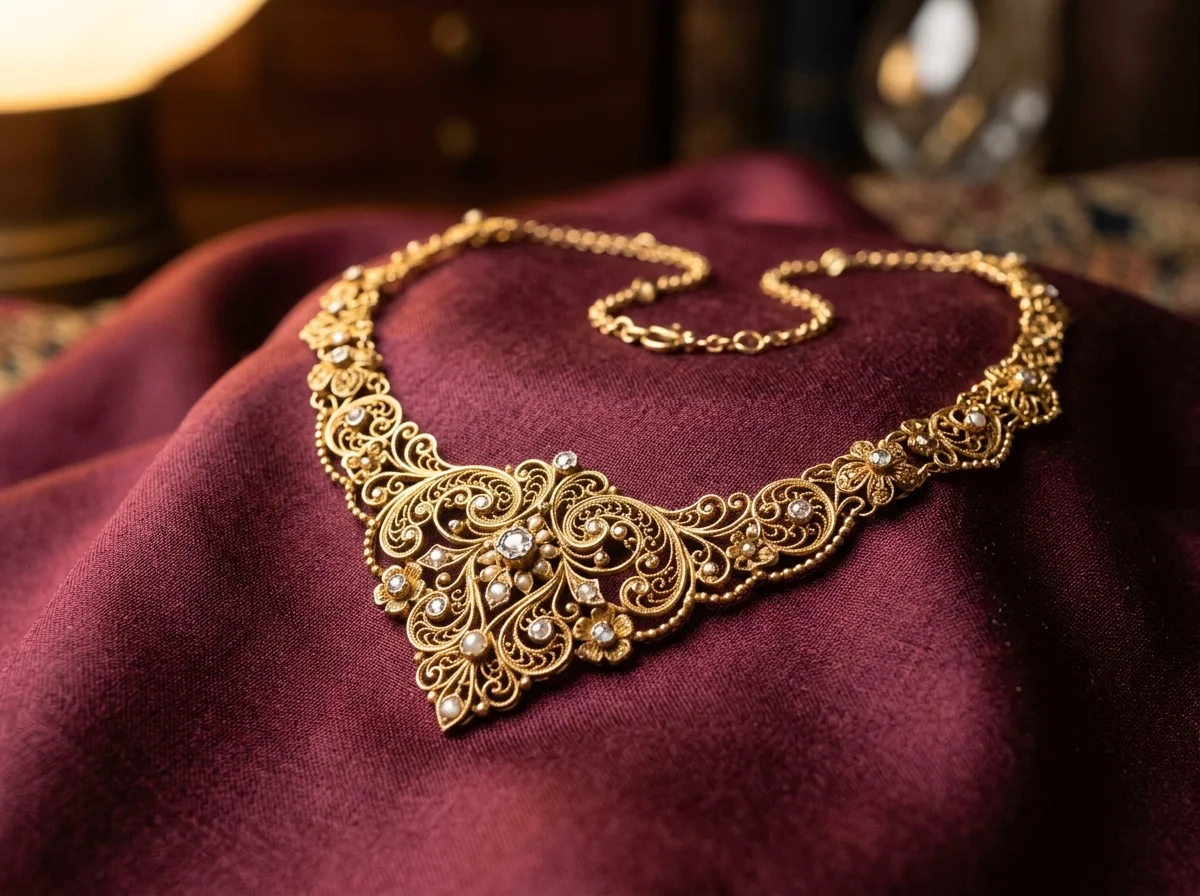
Prop selection will make or break the shot. Avoid synthetic, shiny fabrics at all costs. Cheap polyester velvet acts like a mirror under studio lights, creating blown-out white highlights that ruin the image. Source authentic cotton or silk velvet, which absorbs light and creates a rich, matte background. Other excellent props include raw linen, antique lace, distressed leather, oxidized brass trays, and the deckled edges of old books.
How to generate vintage jewelry photography with Hylo
Building a physical prop library and mastering directional macro lighting takes years and thousands of dollars. For jewelry brand owners who need to scale their content production without booking a $3,000 studio day, Hylo's AI Photoshoot offers a direct replacement, backed by a massive library of pre-tested visual data.
Hylo's public inspiration gallery currently curates 400 real, pass-graded, safety-checked jewelry looks. This isn't generic AI output; it is a meticulously categorized database of lighting scenarios and styling setups tailored specifically for jewelry. The gallery includes comprehensive coverage across categories, featuring 131 ring looks, 116 necklace looks, 42 pendant looks, 28 earring-stud looks, 17 bracelet looks, and 17 bangle looks.
To generate a vintage look using Hylo, you do not need an expensive macro lens or antique props. You simply need a clear, in-focus smartphone photo of your jewelry shot against a plain white background or a piece of white paper.
Once uploaded, use the Canvas Editor to dial in the aesthetic. You can select an "Antique" or "Vintage" preset from the Creative Library, or build a custom prompt based on successful looks from the inspiration gallery. A highly effective prompt structure in Hylo looks like this: "Macro shot of a [jewelry type] resting on deep burgundy cotton velvet, warm directional light from the top left, soft ambient fill, shallow depth of field, antique aesthetic, photorealistic."
Generalist AI tools like Photoroom, Canva, or Pebblely are excellent for basic background removal, but they frequently struggle with the complex physics of vintage jewelry. They tend to flatten the refractions of Old European cut diamonds or generate velvet textures that look plasticky and synthetic. Hylo is trained specifically on jewelry geometry. It understands how light interacts with a high-crown antique diamond versus a modern brilliant cut, and it preserves the crucial micro-shadows in filigree work while generating photorealistic, era-appropriate environments.
For brands managing large estate collections, Hylo's Brand Kit ensures consistency. You can lock in your preferred warm color temperature, shadow intensity, and specific prop textures (like aged leather or raw silk) so that all 50 pieces in your latest vintage drop look like they were shot on the same day, in the same studio, by the same professional photographer.
Examples across jewelry categories
Vintage styling requires different approaches depending on the category and scale of the piece. Leveraging the data and proven setups from Hylo's 400-look inspiration gallery, here is how to approach specific items.
Rings (131 Gallery Looks)
Rings are the most common subject for vintage photography, particularly Art Deco engagement rings featuring geometric sapphire halos or intricate platinum milgrain. The most effective way to style these is using elevated props that allow light to hit the side profile of the ring. Antique wooden ring cones, distressed leather ring slots, or resting the ring on the edge of a tarnished silver hand-mirror work exceptionally well. The lighting should skim across the top of the stone to highlight the chunky facets of older diamond cuts.
Necklaces and Pendants (116 Necklace Looks, 42 Pendant Looks)
Victorian lockets, Edwardian pearl drops, and heavy gold chains require flatlay styling to show their full length and drape. The best approach is to shoot these on textured fabrics like raw silk or antique lace. Use a shallow depth of field to keep the primary pendant or gemstone razor-sharp while allowing the chain to gently blur as it snakes toward the edge of the frame. This draws the buyer's eye directly to the focal point of the piece while maintaining the romantic context.
Earrings (28 Earring-Stud Looks)
Vintage earrings, such as Georgian paste studs or Victorian mine-cut drops, benefit from being shot at a slight angle rather than dead-on. Prop them on an oxidized brass tray or a piece of dark, matte slate. The dark background provides extreme contrast, allowing the warm, fiery flashes of the antique stones to stand out. Ensure your light source is positioned to catch the facets, as older stones can look dark and lifeless if lit too flatly.
Bracelets and Bangles (17 Bracelet Looks, 17 Bangle Looks)
Heavy Retro 1940s gold tank bracelets or delicate Edwardian filigree bangles require structured props. Drape bracelets over the spine of an antique book or rest them on a piece of rough-hewn marble. For heavy gold pieces, the use of black flags is critical. The flags will cast dark reflections into the polished gold links, defining their shape and emphasizing the weight and volume of the metal.
Common mistakes
Even experienced photographers can struggle when transitioning to vintage jewelry photography. Avoiding these common pitfalls will immediately elevate the quality of your images.
Over-cleaning the patina: The fastest way to ruin a vintage piece of jewelry is to aggressively polish it before a shoot. The dark oxidation in the crevices of a vintage silver or gold piece is what gives it depth and character. If you scrub away the patina, the piece will look flat, cheap, and overly bright under studio lights. Clean the gemstones meticulously, but leave the metal's natural aging intact.
Using synthetic props: As mentioned, cheap polyester velvet is the enemy of vintage photography. Under strobe lighting, synthetic fibers reflect light aggressively, creating a distracting, sparkling white background that competes with the jewelry. Always invest in 100% cotton or silk velvet, which absorbs light and creates a rich, matte void behind the piece.
Cluttered compositions: It is tempting to surround a vintage ring with typewriters, pocket watches, loose pearls, and fountain pens to force the "antique" narrative. This is a mistake. Props should frame the jewelry, not compete with it. The jewelry must always be the undisputed hero of the frame. Stick to one or two subtle textural elements—a single piece of lace or a textured background surface.
Lighting too flatly: Modern e-commerce photography relies on flat, even lighting to eliminate shadows. Applying this technique to vintage jewelry washes out the very details that make it special. Hand-engraving, filigree, and milgrain require directional light to create the micro-shadows that reveal their texture. If your lighting is too flat, a meticulously crafted Victorian ring will look like a smooth, untextured blob of metal.