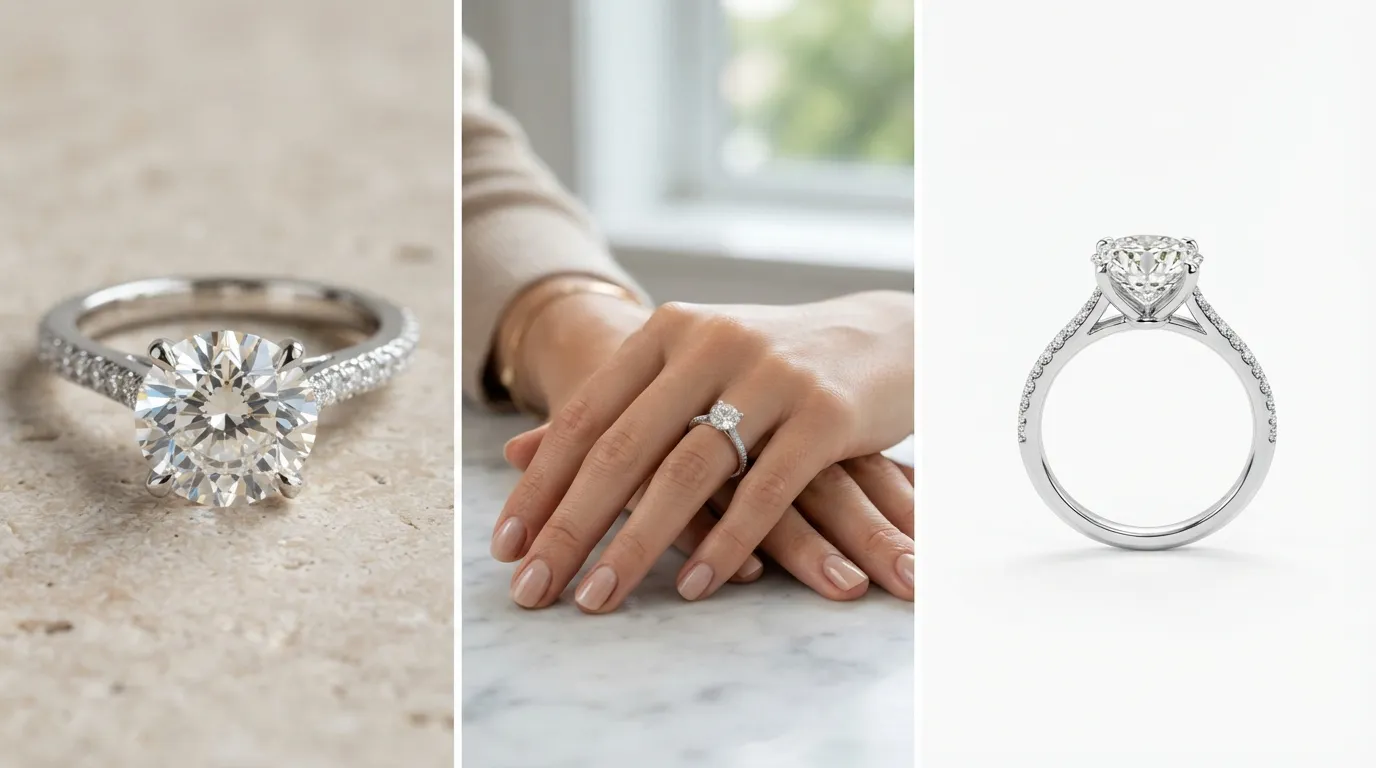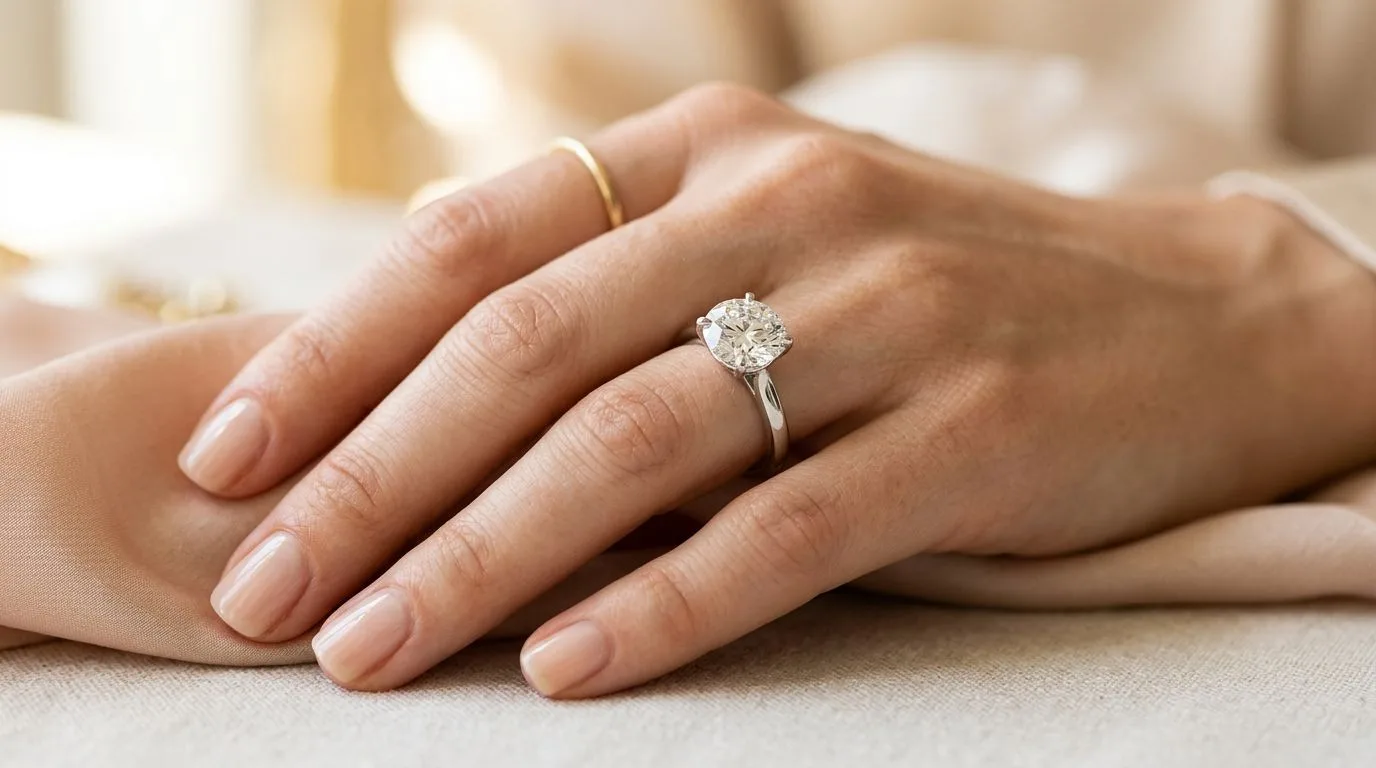
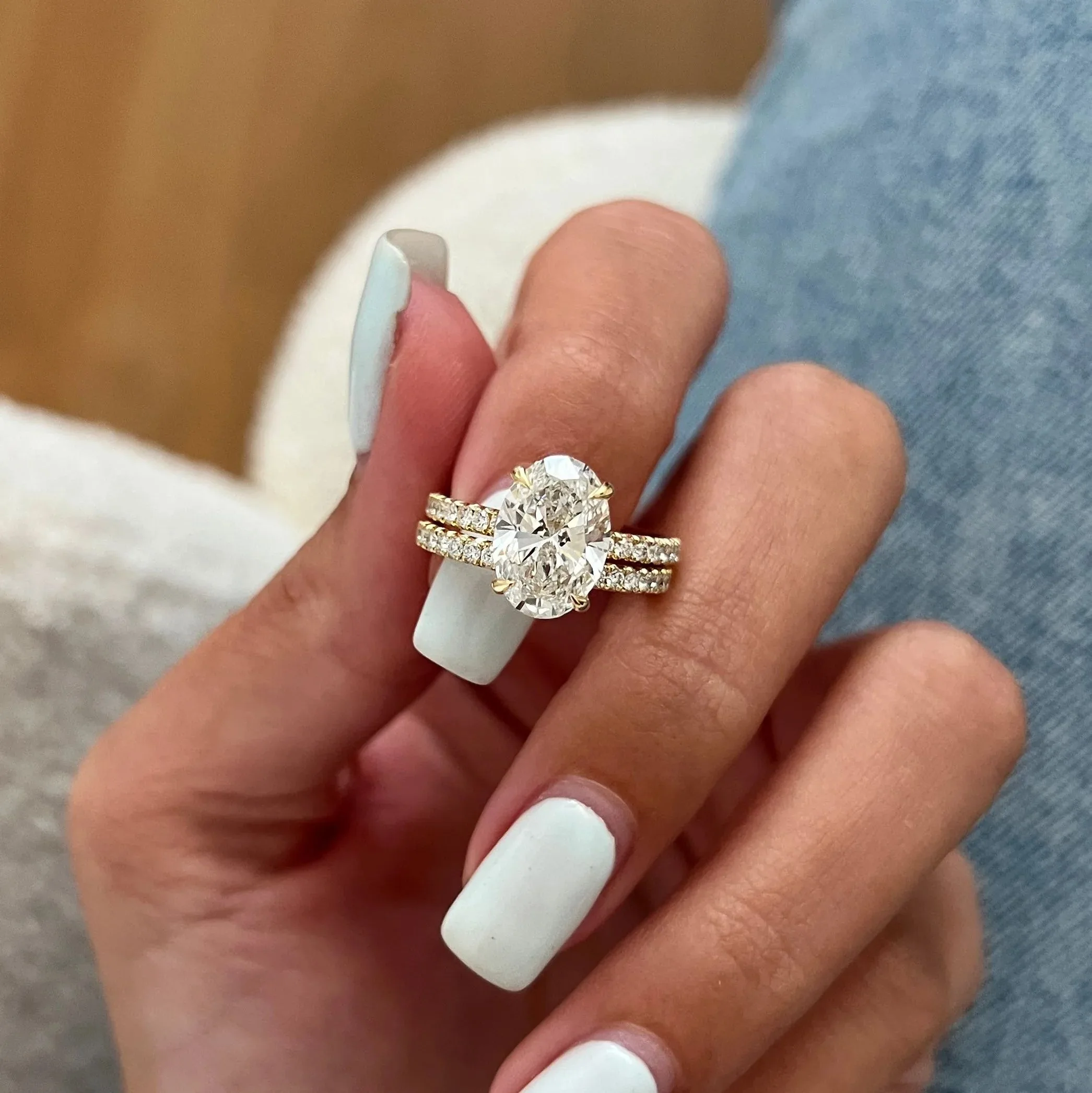
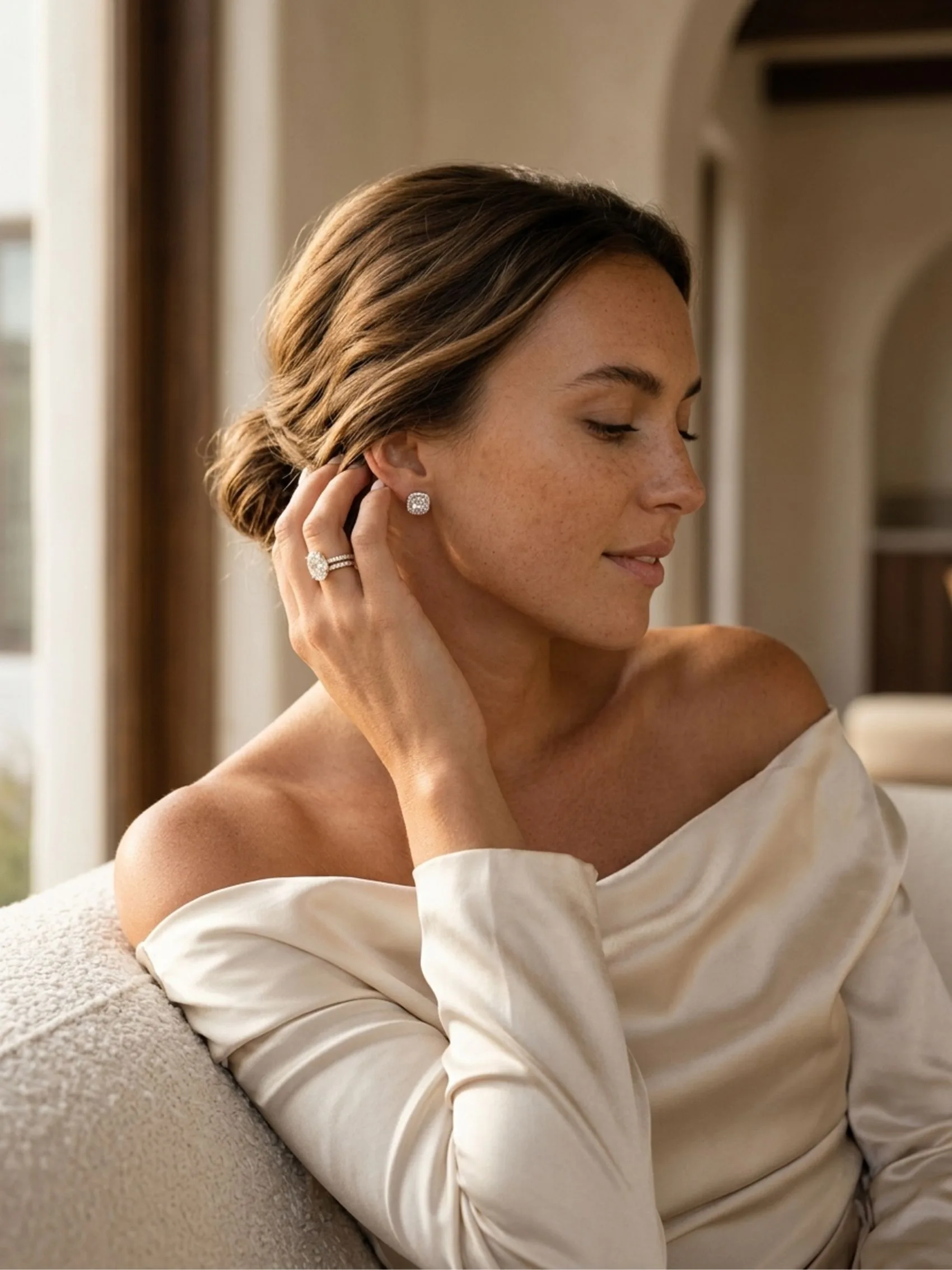
An engagement ring is one of the highest-consideration purchases in all of e-commerce. The buyer is often spending more than on any other single item they will buy online, the purchase is emotionally loaded, and they cannot touch the product before committing. Two photographs carry most of the weight in that decision: a macro that shows the stone, setting, and metalwork in detail, and an on-hand shot that shows scale and fit. Get both right and you remove the two things that stall the sale, doubt about quality and doubt about size. Skip either and you leave the buyer guessing on a purchase they will not gamble on.
This page explains how the two shots work together and how to produce them consistently across a full range, including the on-hand frames, without hiring a hand model for every ring.
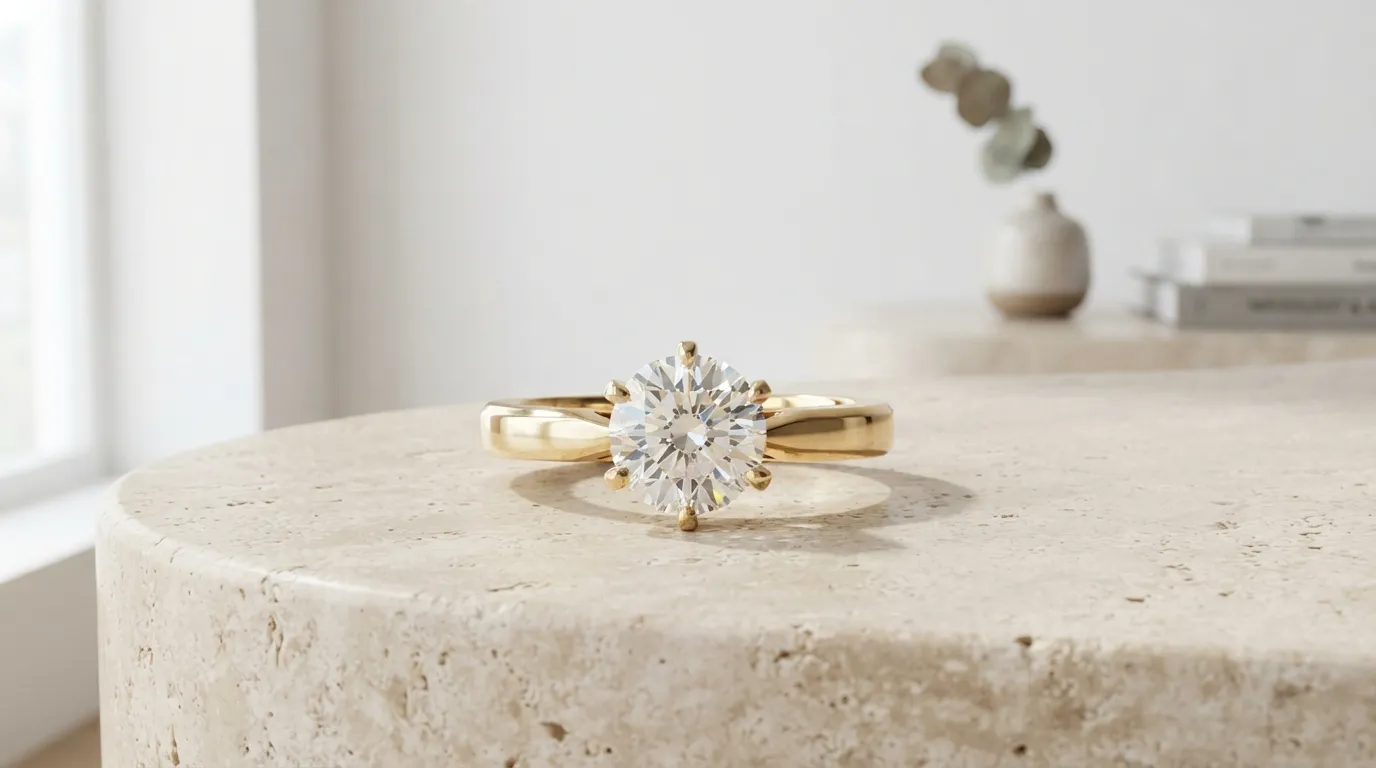
The macro builds desire
The macro is where the ring earns its price. It shows the cut and clarity of the stone, the precision of the setting, whether the prongs are clean, whether the pavé is even, and the finish of the metal, whether that is the warm tone of 18k yellow gold, the cool brightness of platinum, or the blush of rose gold. Buyers zoom into engagement ring macros more than almost any other product image, so sharpness and honest detail are non-negotiable.
Shoot the macro at f/11 for full sharpness through the stone and setting, on a tripod at ISO 100. Use a pin board to control reflections in the stone and prevent the dead grey center that comes from the stone reflecting the lens. A black background deepens contrast and makes the stone's fire and the metal's form stand out, which is why it suits hero macros. You will also need a clean white version for marketplace primary images.
The on-hand shot removes doubt
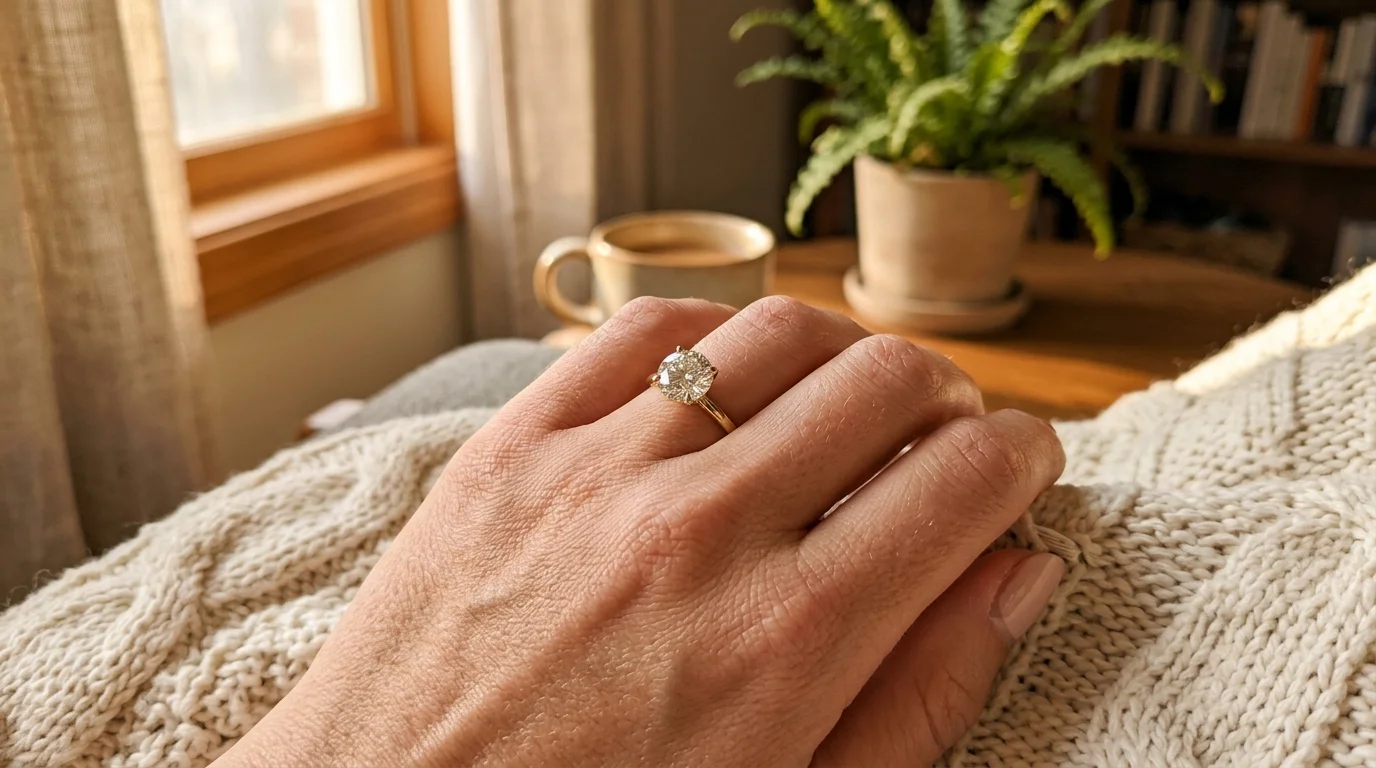
No matter how good the macro is, it cannot tell a buyer how big the stone looks face-up, how the ring sits on a real finger, or whether the proportions suit them. That uncertainty is the single biggest source of hesitation on an engagement purchase. The on-hand shot answers it. Seeing the ring on a hand turns an abstract object into something the buyer can imagine wearing.
Pose matters. A relaxed hand with a gently curled palm and the ring finger softly extended shows the ring clearly while looking natural. Splayed fingers look tense and fully closed fists hide the band. Light the hand with soft, directional light, large diffused window light is ideal, so the skin looks flattering and the stone has something bright to reflect. Keep a fill on the shadow side so the gaps between fingers do not go dark.
Honesty is critical here too. Keep the camera distance and angle consistent across your range so size comparisons between rings are fair, and use a hand with representative proportions. Shooting with an unusually small hand to inflate a stone's apparent size is the kind of trick that generates returns and one-star reviews.
Producing on-hand shots without a hand model
The practical obstacle to on-hand photography is the hand model. Booking and directing a hand model is slow and expensive, and for a brand with dozens of settings across multiple carat sizes, doing it per SKU is simply not viable. This is why many brands skip the on-hand shot entirely and lose sales because of it.
Hylo's AI Photoshoot solves this by placing a ring on a hand directly from your packshot. You shoot the ring once, well, and generate a consistent on-hand frame from it, preserving the stone's sparkle and the metal's true tone from your master shot. Because every on-hand frame comes from the same workflow, the pose, lighting, and crop stay uniform across the entire collection, which is exactly the consistency that reads as a premium brand. AI Retouch cleans any dust or stray reflections and evens the background while keeping the stone and metal honest.
Make the two shots a system, not a one-off
The strongest engagement ring listings treat the macro and on-hand frame as a repeatable pair applied to every ring, not a special effort for the hero product. Lock the macro setup, lock the on-hand framing, and apply one editing recipe across the collection. A buyer scrolling your range should see the same lighting, the same hand pose, and the same crop on every ring, so the differences they notice are the rings themselves, not the photography. That consistency is what separates a brand that looks like a serious jeweller from one that looks like a stall.
Lighting and reflections in the macro
The macro lives or dies on reflection control. A faceted stone reflects everything around it, so a careless setup fills the diamond with the cluttered shapes of the studio, the ceiling, or the photographer. Work on a clean surface, surround the stone with neutral cards, and use a pin board, a card with the lens poked through, so the only thing the stone reflects toward the camera is something you have chosen. A black pin board deepens contrast for a dramatic hero, while a white one fills the stone for a softer, brighter look suited to the marketplace version.
Mix your light sources deliberately. A small, hard source gives the facets distinct bright points that read as sparkle, while a larger soft source renders the metal of the band and setting cleanly. Build the shot by getting the metal right with the soft light first, then introducing the hard light and watching the stone come alive. For halo and pavé settings, make sure the accent stones receive enough hard light to sparkle too, or the surround reads as a dull grey band around a bright centre.
Matching imagery to the metal
The setting metal affects both the look and the lighting. Platinum and white gold are cool and bright and flatter a colourless stone; yellow gold is warm and casts a faint warm tone into the lower facets; rose gold sits between. Decide whether each metal should read true or be subtly flattered, then keep that decision consistent across the range so comparisons stay honest. Calibrate white balance to a grey card and reset it when you switch metals, because a single setting will not render platinum and yellow gold accurately at the same time.
Why scale honesty protects your brand
It is worth restating because it is so commonly abused: never manipulate apparent size. Using an unusually small hand, an extreme close focal length, or a misleading camera distance to make a stone look larger is the fastest route to returns and angry reviews on a high-value purchase. Engagement buyers measure, compare, and remember. A ring that arrives visibly smaller than it looked online does more damage to a jewellery brand than almost any other error, because the purchase is emotional and the disappointment is personal. Consistent camera distance, a representative hand, and accurate proportions across the range are not just ethical, they are commercially protective.
What a complete engagement ring listing includes
For each ring, plan: a macro on black for the hero and a clean macro on white for the marketplace primary, an on-hand scale frame, a top-down view showing the stone's face-up shape, a profile showing the setting height and band, and a detail of any hallmark or engraving. Each frame answers a real buyer question, quality, scale, shape, profile, and authenticity, and together they give a high-consideration buyer the confidence to commit.
Treat that set as the standard every ring in the collection receives, produced through a locked macro setup and a single on-hand workflow so the whole range stays visually uniform. When the photography is consistent and the information is complete, the only variable left for the buyer to weigh is the ring itself, which is exactly where you want their attention on the most considered purchase in your catalog.
One last point worth stressing: because the engagement ring purchase is so emotionally and financially loaded, the cost of an incomplete listing is higher here than anywhere else in jewelry. A missing scale shot or an over-flattered macro does not just risk a return; it risks a return on a milestone purchase, with the disappointment and lost trust that carries. Getting the macro and the on-hand frame right, honestly and consistently, is the single most valuable investment you can make in this category, because it directly removes the two doubts that otherwise stop a buyer from committing.
Try Hylo free — no studio booking required.