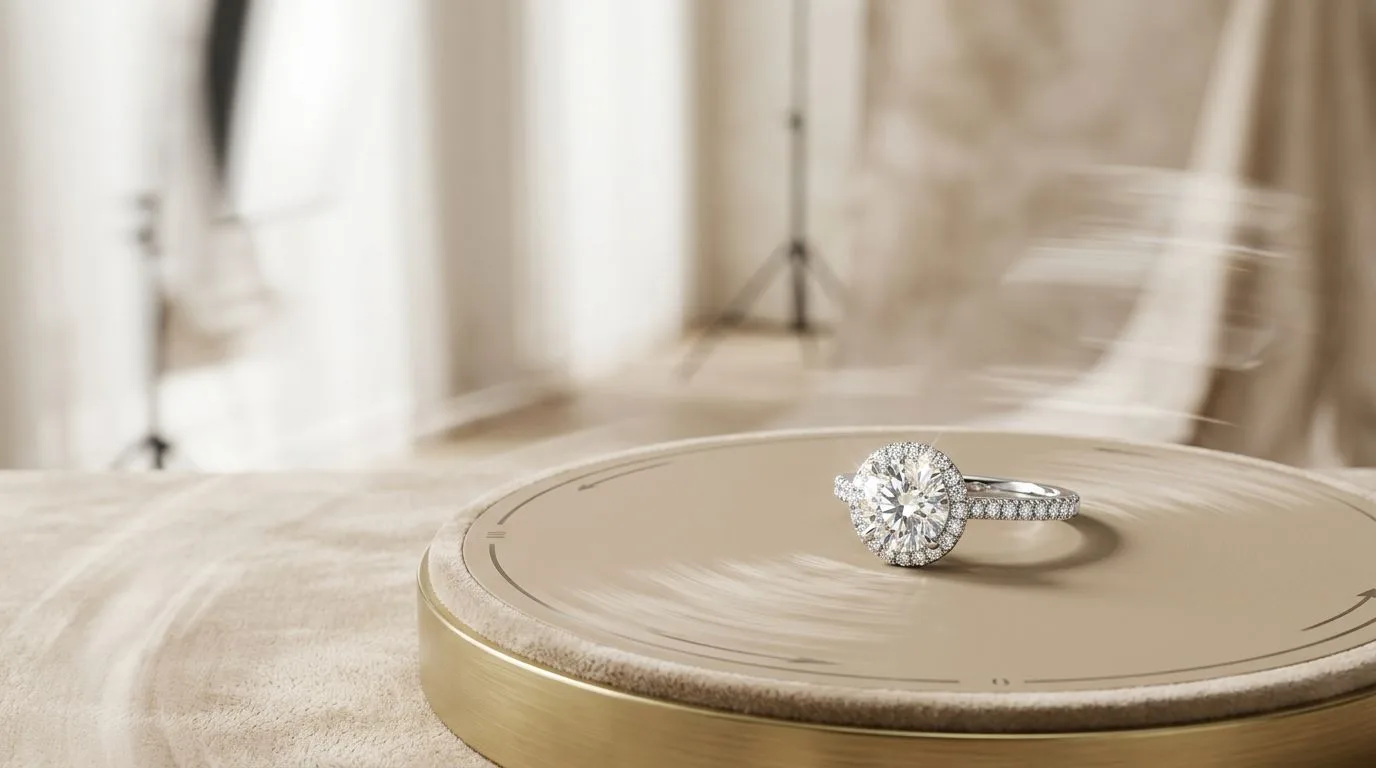
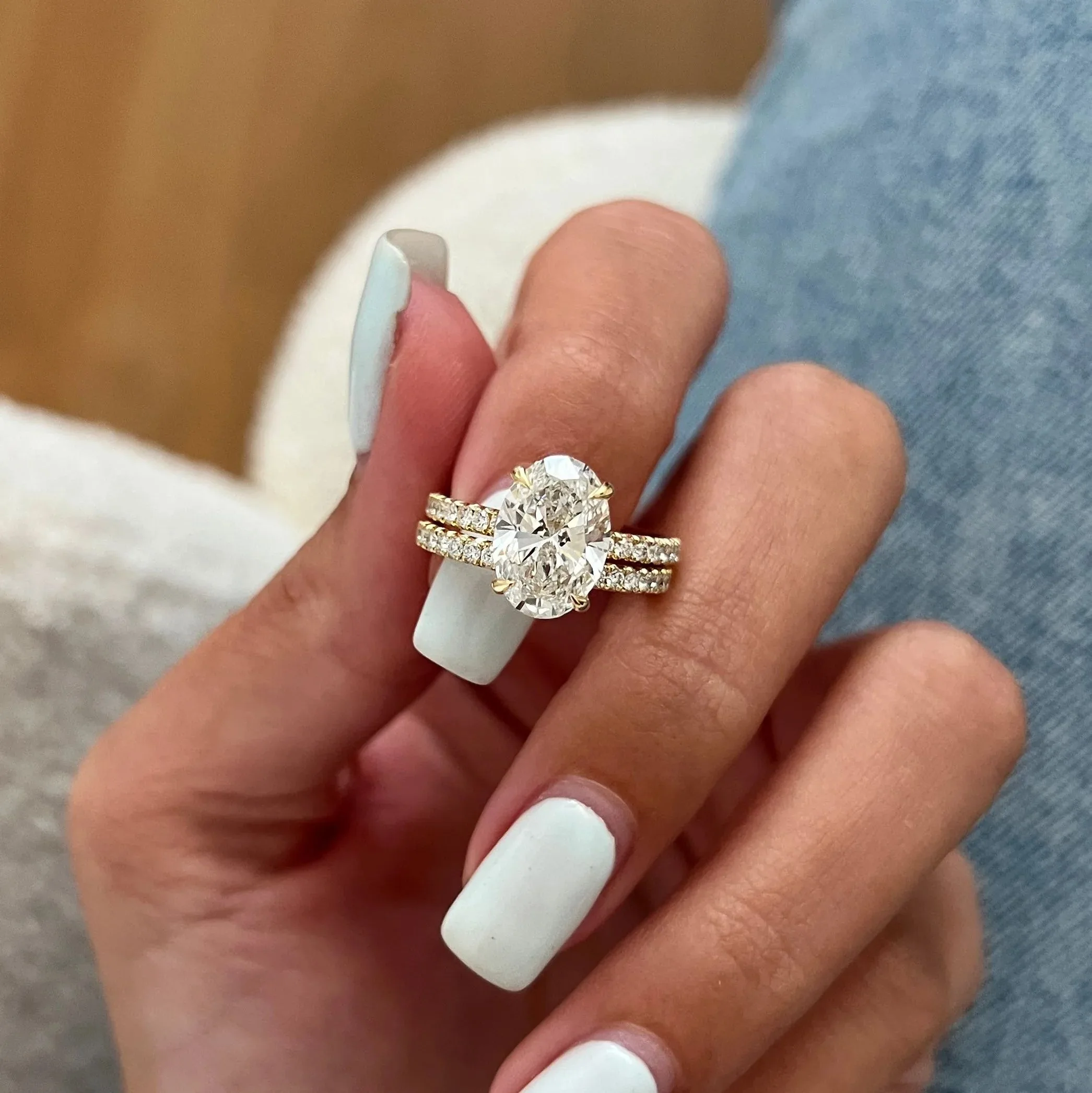
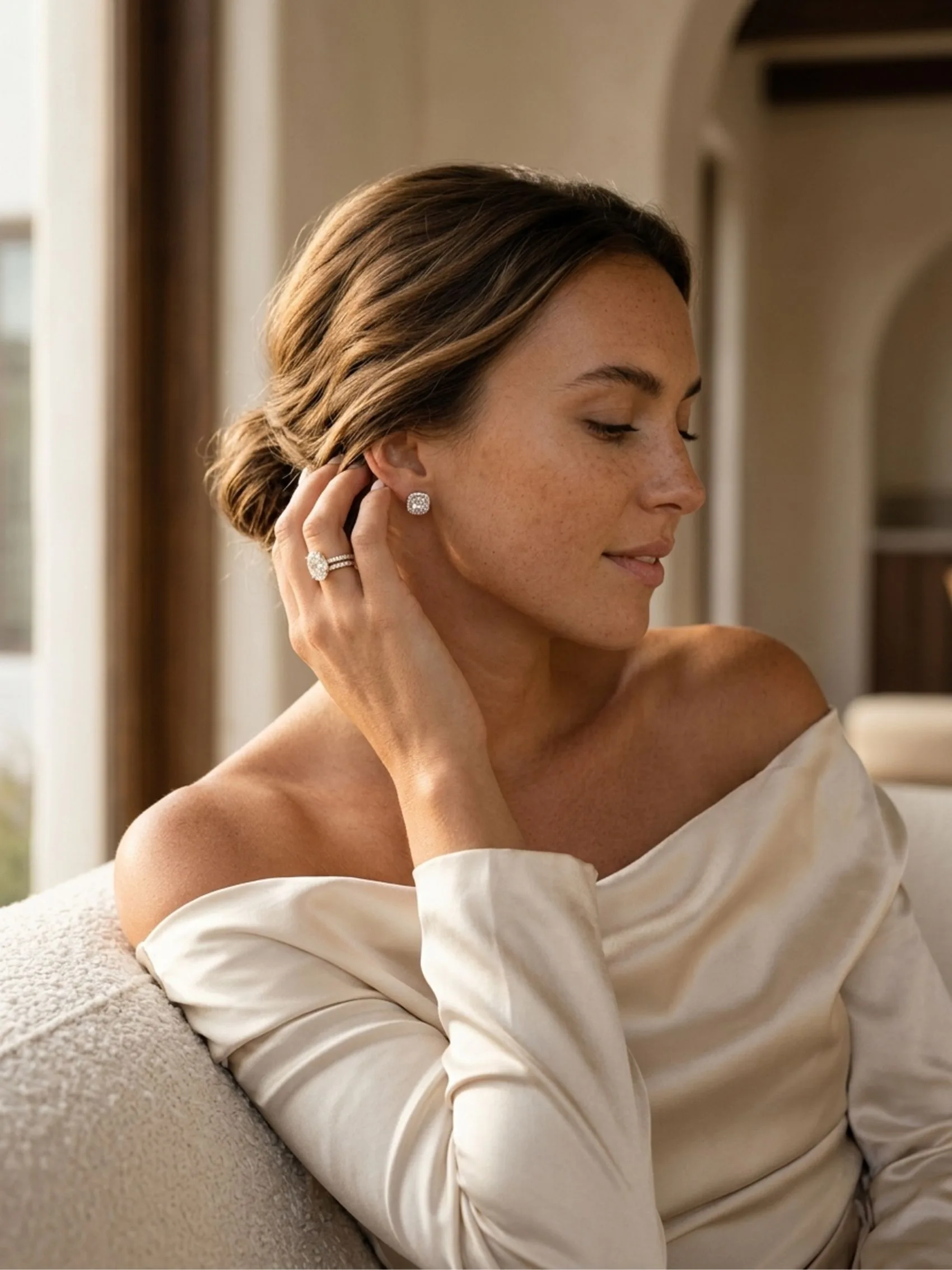
Stills will always do the heavy lifting in a jewelry listing, but they have a built-in limitation: jewelry is sold on how it moves light, and a photograph freezes exactly the thing that makes a piece desirable. Video closes that gap. A slow rotation that sends light travelling across a faceted stone, or a sweep that makes gold flash, communicates sparkle, depth, and scale in a way no single frame can, and it carries an emotional pull that converts. The obstacle has always been production: filming every SKU is even more demanding than photographing it. Image-to-video generation removes that obstacle.
Why motion matters for this category specifically
Some product categories gain little from video. Jewelry is the opposite case, because its core appeal, sparkle, luster, the play of light, only exists in motion. A buyer watching a ring turn sees how the stone catches light from different angles, gets a truer sense of its dimensionality, and reads scale more accurately than from a flat shot. For high-consideration purchases where the buyer is trying to be sure before committing, that extra information reduces hesitation, and the simple fact that motion is more engaging than a static image helps a listing or post hold attention.

Where video shows up
There are two main homes for jewelry video, and they want different shapes. Marketplace listings increasingly support and surface product video, and your own store can feature it prominently in the product media gallery; these contexts generally use horizontal or square video. Social platforms, meanwhile, are built around short-form vertical video, Reels, Stories, TikTok, in 9:16. A jewelry seller who has video can participate in all of these surfaces, while one with only stills is limited to the shrinking share of attention that static images command. The practical implication is that you want the same piece of motion in more than one aspect ratio.
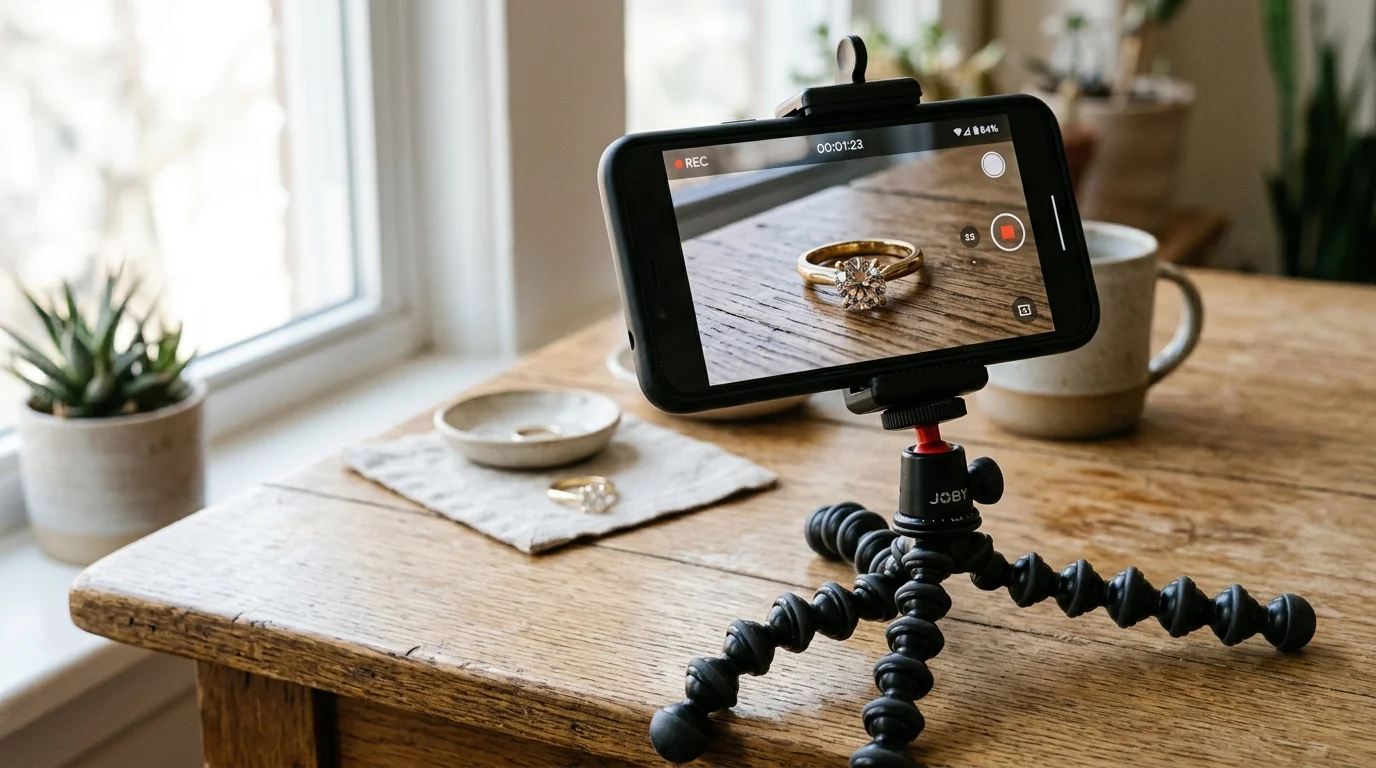
Making video without a video shoot
Image-to-video generation turns a product photo into motion, a gentle rotation, a light sweep that catches the piece's sparkle, without filming anything. For sellers who already struggle to photograph a large catalog, this is what makes video feasible at all: it works from the product photos you have rather than requiring a separate video production for every SKU. You can generate motion that reveals the material and detail of the piece, and for earrings and necklaces in particular you can use on-model motion to show how a piece moves and sits when worn, which is something neither a still nor a simple rotation can convey.
What kinds of motion actually sell jewelry
Not all motion is equally effective, and a few types do most of the selling. The slow rotation is the workhorse: turning a ring or pendant through a controlled arc lets light travel across the metal and stone, revealing sparkle, dimensionality, and the profile of a setting that a flat image flattens. The light sweep, where the lighting or the piece moves so a highlight travels across the surface, is especially effective for gold and for faceted stones because it triggers the flash of brilliance that is the whole emotional appeal of jewelry. The macro push-in, slowly moving closer to reveal detail, works for intricate pieces where craftsmanship is the selling point, such as Kundan, Polki, or filigree work.
On-model motion is a distinct category and uniquely valuable for certain pieces. Earrings, particularly jhumkas and chandeliers, are designed to move, and a clip of them swinging gently as a model turns conveys something no still or rotation can: how the piece behaves in real life. Necklaces and mangalsutras benefit from on-model motion that shows drape and how the piece sits against the body. The right motion depends on the piece, and the best listings often use more than one, a rotation to reveal the object and an on-model clip to show it worn, so the buyer gets both the product and the experience of wearing it.
Video on marketplaces versus social
Although the same source can feed both, marketplace video and social video do different jobs and reward different treatment. Marketplace listing video is informational: it sits within the product gallery and its purpose is to remove doubt by showing the piece clearly in motion, after the buyer has already arrived at the listing with intent. It should be clean, well-lit, focused on the product, and usually horizontal or square to fit the gallery. There is no need for it to grab attention, because attention is already given; its job is to confirm and convert.
Social video, by contrast, is discovery-driven and has to earn attention in a fast-scrolling feed. A 9:16 vertical Reel competes against everything else on the platform, so the first second matters enormously, the motion has to hook immediately, and the piece should look aspirational and in-context rather than catalogue-clinical. The same rotation that works as a calm marketplace clip might be cut faster, set to music, or combined with on-model footage for social. Understanding this difference is what stops sellers from posting clinical listing videos to social, where they fall flat, or from using attention-grabbing social cuts as marketplace listings, where they can feel gimmicky. Plan the source so both cuts are possible, then treat each channel according to its job.
Why generated video lowers the barrier
The reason most jewelry sellers have historically skipped video is cost and complexity, not a belief that video does not work. Filming jewelry well is genuinely hard: it requires controlled lighting, a way to rotate the piece smoothly, macro focus that holds as the subject moves, and considerable time per SKU, far more than a still shoot. For a catalog of dozens or hundreds of pieces, filming each one is simply not feasible for most businesses, so video gets reserved for a handful of hero products or abandoned entirely. This is why so many jewelry listings remain stills-only even as the platforms increasingly favour motion.
Image-to-video generation changes the economics by producing motion from a single still, so the work you have already done photographing a piece becomes the input for its video rather than requiring a second, harder production. A clean product photo can become a controlled rotation or a light sweep without a turntable, a videographer, or a re-shoot, which means video becomes feasible across the whole catalog rather than for a privileged few SKUs. The result is that a small seller can have motion on every listing and a steady supply of social clips, competing on the surfaces that reward video without building a video production operation.
Placing video in the buyer's journey
Where video sits matters as much as having it. In a marketplace or store listing, the video belongs after the core stills, not before them, because a buyer first wants to confirm what the piece is, see it clearly, and check scale through the packshot and scale shots, then have the motion deepen their conviction. A video placed first can actually slow a decisive buyer who just wants to see the product clearly. On social, the logic inverts: the video is the entry point, the hook that stops the scroll and pulls a stranger toward the piece, with the goal of driving them to the listing where the stills then do their work. Designing for both placements from one source means thinking about how the same motion functions as a closer in one context and an opener in the other.
One source, every channel
The efficient workflow is to treat one strong product photo as the source and produce the motion you need from it in the ratios each channel wants: a horizontal or square cut for marketplace listings, a 9:16 vertical cut for Reels and Stories. Framing the piece so it reads well in each ratio is worth planning up front. Within a listing, video belongs after the core stills, so a shopper sees a clear packshot and scale shot first and then the motion seals the decision; on social, the video is often the hook itself.
The same accuracy rule that governs images governs video. Motion is presentation, but the piece shown has to match what ships, with stone count, metal colour, and proportion faithful to the real item, or video just becomes another way to generate returns. Hylo's image-to-video generation produces jewelry motion from a single product photo, and the same source photo can also be turned into packshots and on-model frames with Hylo's AI Photoshoot, so the social-ratio and marketplace-ratio variants all trace back to one input while keeping each piece true to the real product.