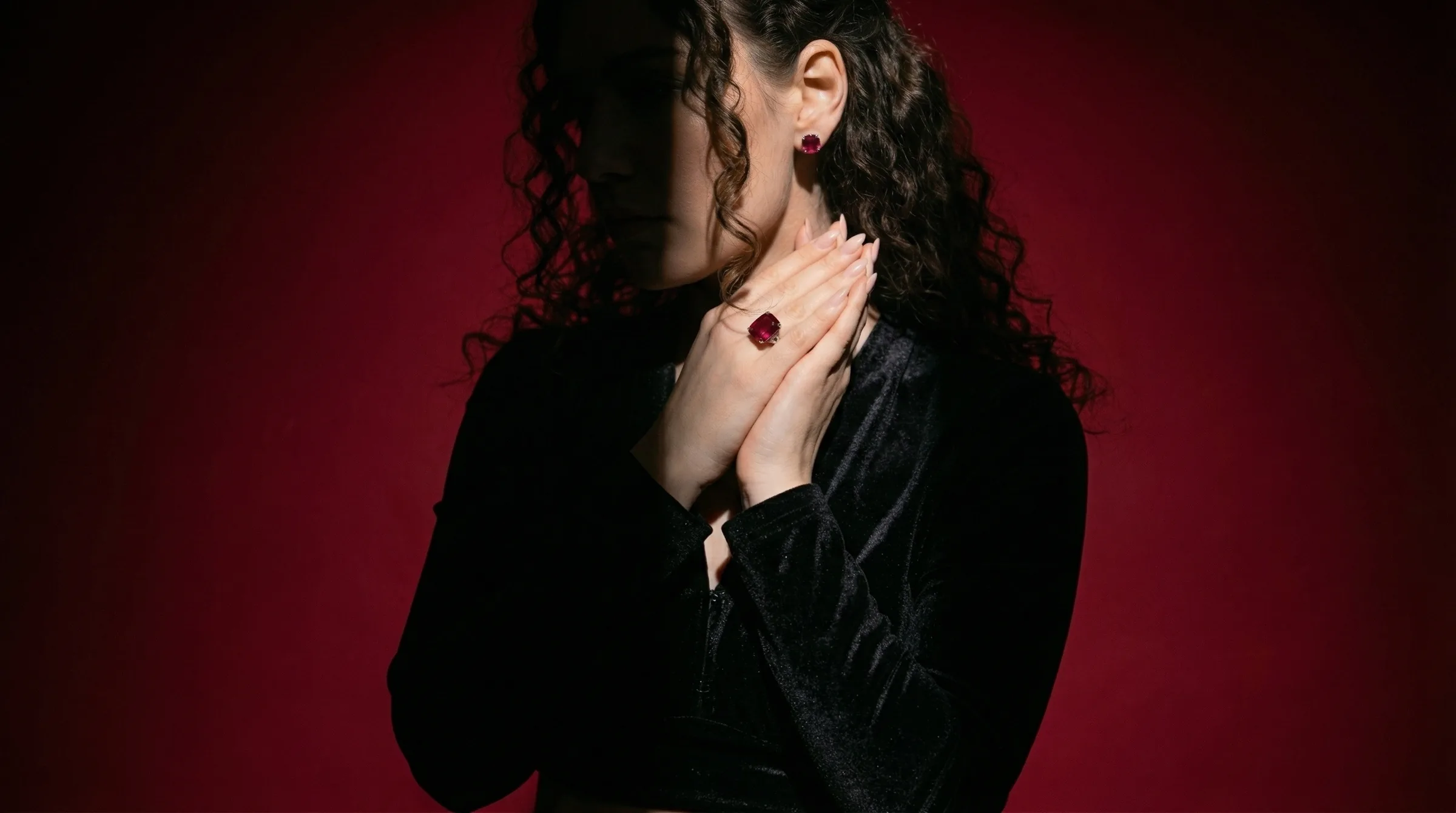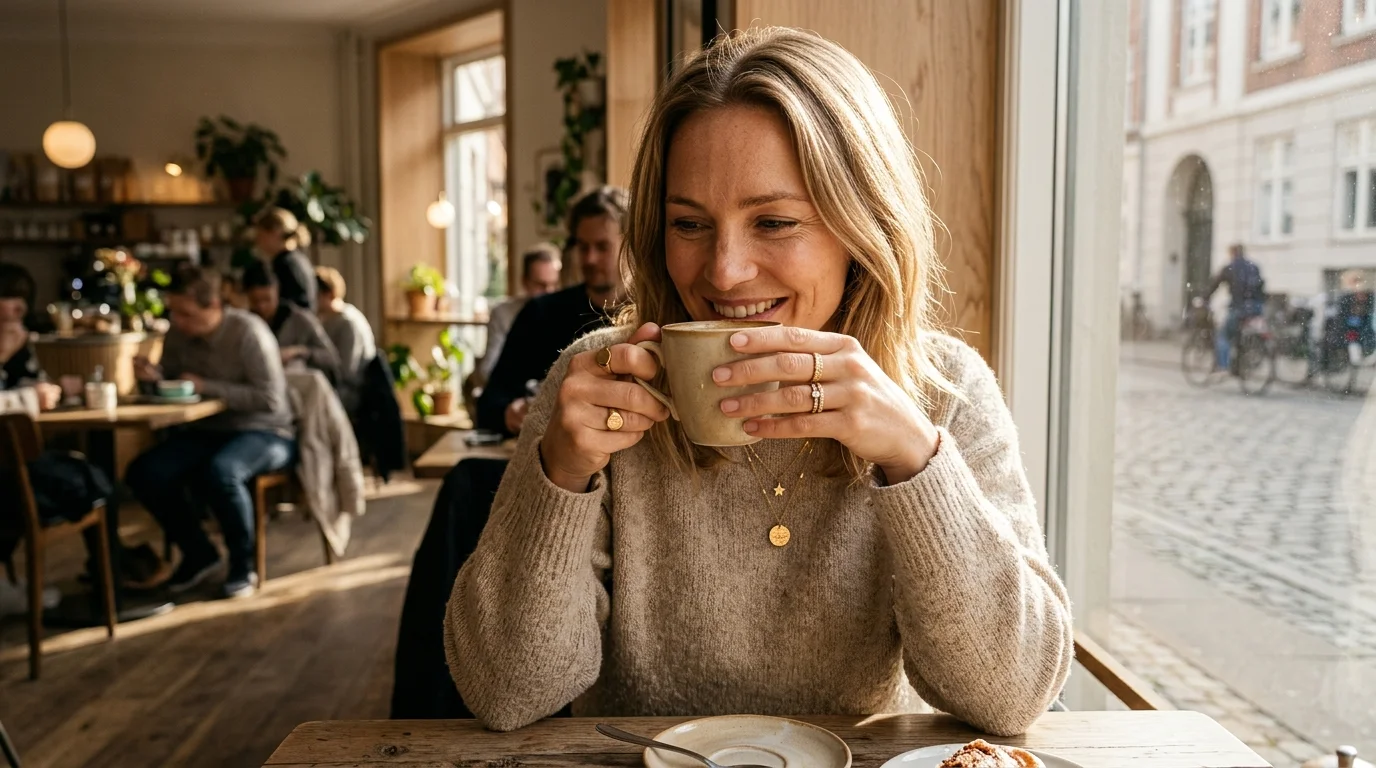
What defines lifestyle jewelry photography
If a pure white packshot proves that a piece of jewelry exists, a lifestyle photograph proves that it belongs in your customer's life. Lifestyle jewelry photography is the visual bridge between the technical specifications of a piece—metal karat, carat weight, setting style—and the emotional reality of wearing it. It relies on context, environment, and mood to tell a story.
At its core, lifestyle jewelry photography is defined by three visual hallmarks:
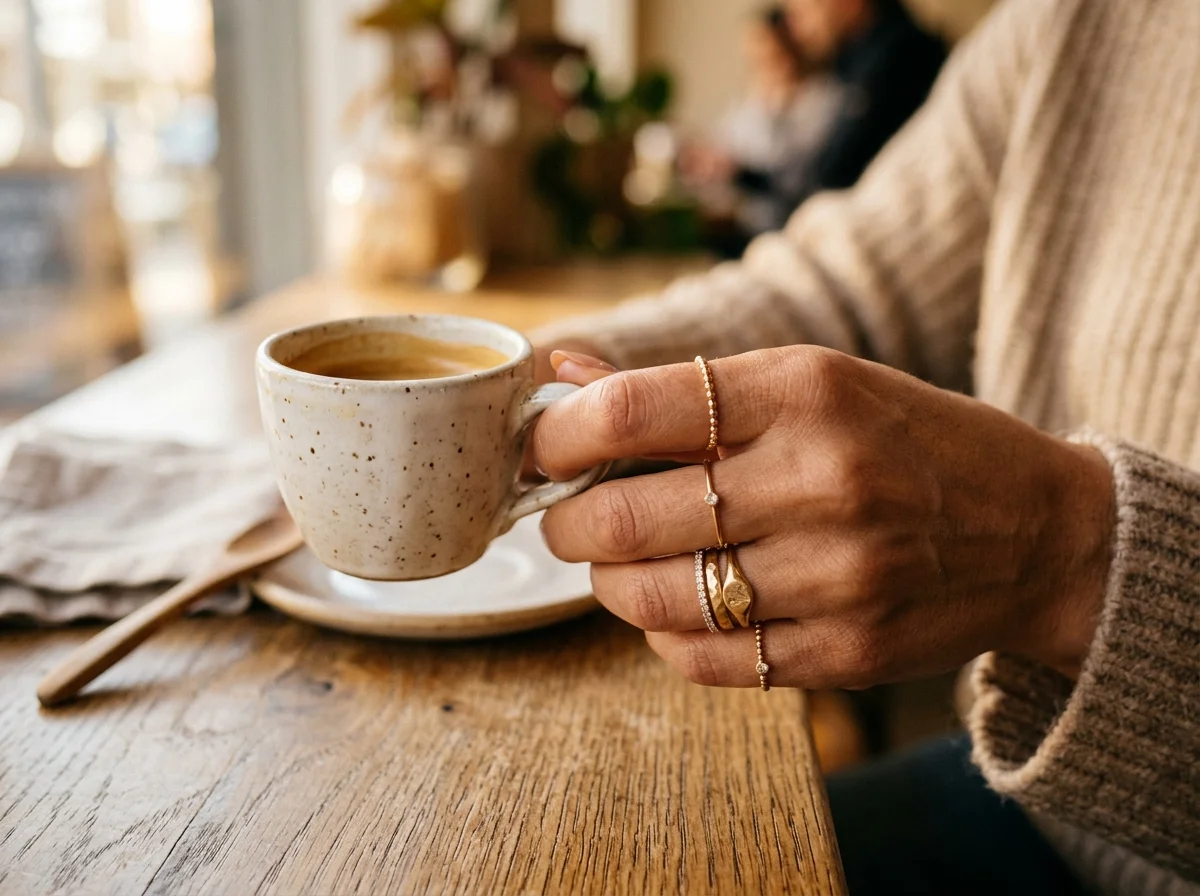
1. Environmental Context and Props Unlike e-commerce photography, which isolates the jewelry in a vacuum, lifestyle photography grounds it in reality. This might mean a 1ct round-cut solitaire resting on a textured linen napkin next to a ceramic espresso cup, or a gold herringbone chain draped over a piece of raw travertine. The environment provides immediate, subconscious cues about the brand's identity. A sustainable, earth-conscious brand might utilize raw wood, moss, and dappled sunlight. A high-end bridal atelier might rely on silk, velvet, and soft, diffused window light.
2. Natural or Emulated Natural Light Even when shot in a high-end commercial studio using $10,000 worth of Profoto strobes, lifestyle photography aims to look organic. It avoids the flat, shadowless, ultra-bright illumination of catalog work. Instead, it embraces directional light, soft shadows, and occasionally, deliberate light leaks or sun flares. The goal is to make the customer feel as though they are looking at the piece on a sunny Saturday morning or during a golden hour dinner.
3. Shallow Depth of Field In standard packshot photography, you typically shoot at f/11 or f/16 to ensure every single prong and facet is in razor-sharp focus. Lifestyle photography frequently employs a shallower depth of field—usually between f/2.8 and f/5.6. This technique, known as selective focus, gently blurs the background props and environment, drawing the viewer's eye directly to the jewelry while maintaining the mood of the surrounding scene.
When to use lifestyle jewelry photography
Jewelry brands operating across multiple channels—Shopify, Instagram, Pinterest, wholesale linesheets, and retail displays—need a diverse asset mix. Lifestyle photography serves specific, high-value functions within the buyer's journey.
Top of Funnel: Social Media and Discovery Platforms like Instagram, TikTok, and Pinterest are inherently lifestyle-driven. Users do not scroll these feeds to look at sterile product catalogs; they are looking for inspiration, aesthetics, and mood boards. A beautifully styled shot of stacked rings holding a matcha latte will generate exponentially more saves, shares, and engagement than a flatlay of the same rings on a white background. Lifestyle imagery is the engine of your organic social media strategy.
Mid-Funnel: Homepage Banners and Email Marketing When a customer lands on your WooCommerce or Shopify storefront, the first thing they see is the hero banner. A strong lifestyle image here sets the emotional tone for the entire browsing experience. It contextualizes your pricing. If you are selling a $2,500 tennis bracelet, the lifestyle imagery must look like it belongs in a $2,500 world. Similarly, email marketing campaigns—whether launching a new collection or promoting a Mother's Day sale—rely heavily on lifestyle shots to create visual interest and break up text.
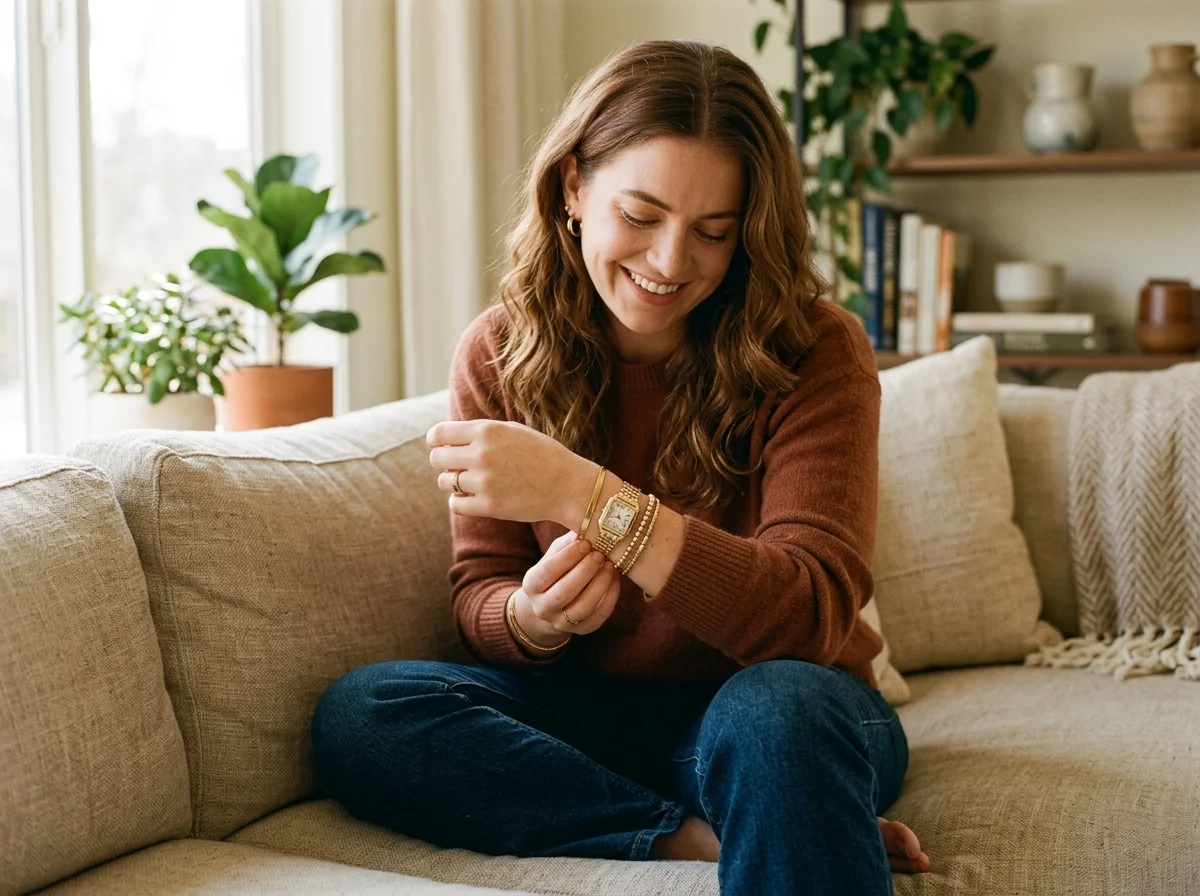
Bottom Funnel: Product Detail Pages (PDPs) for Scale A common mistake jewelry brands make is relying solely on packshots for their product pages. While you absolutely need clean shots of the front, side, and back of the piece, you must also include 1-2 lifestyle images. Why? Because the average consumer cannot visualize what a "15mm pendant" or a "2mm band" actually looks like in reality. A lifestyle shot—whether worn by a model or styled next to a recognizable object—instantly communicates scale. It answers the customer's silent question: How big will this look on me?
How to shoot lifestyle jewelry manually
Executing high-end lifestyle jewelry photography manually requires a sophisticated understanding of lighting, focal planes, and styling. It is not as simple as placing a ring on a table and taking a picture with a smartphone. To achieve editorial-grade results, you need the right gear and a controlled setup.
Equipment and Lenses You need a high-resolution, full-frame camera body (such as a Canon R5, Sony A7R V, or Nikon Z8) to capture the micro-details of the metal and gemstones. Lens selection depends on the type of lifestyle shot. For macro lifestyle (close-ups of rings or earrings resting on props), a 90mm or 100mm macro lens is non-negotiable. For wider lifestyle shots involving a model's full face or torso, a 50mm f/1.2 or 35mm f/1.4 lens provides the necessary environmental context and beautiful background compression.
The "Faux Window" Lighting Diagram The most reliable and universally flattering lighting setup for lifestyle jewelry is the emulated window light.
- The Key Light: Place a large strobe (e.g., Profoto D2) modified with a 120cm octabox or a large softbox about 45 degrees to the side and slightly behind the jewelry setup. This creates soft, directional light that rakes across the piece, highlighting the texture of the metal and the facets of the stones.
- The Modifier: To make the light look organic, place a cucoloris (a cookie) or a real botanical element (like a palm frond or an olive branch) between the key light and the jewelry. This casts organic, dappled shadows across the scene, simulating sunlight filtering through a tree.
- The Fill: Place a white V-flat or a silver reflector on the opposite side of the key light to bounce light back into the shadows. You want the shadows to be soft and moody, not pitch black.
Camera Settings When shooting still-life setups on a tripod, keep your ISO at 100 to maximize dynamic range and eliminate grain. Set your shutter speed to 1/125s (or whatever your strobe sync speed dictates). Aperture is the critical variable. If you shoot at f/1.4, the front prong of the ring might be in focus, but the back of the band and the props will be an unrecognizable blur. For lifestyle macro, f/4 to f/5.6 is usually the sweet spot—it keeps the entire piece of jewelry sharp while allowing the background to fall softly out of focus.
Styling Tools Professional jewelry stylists rely on a hidden toolkit. You will need museum wax (to stand rings upright on hard surfaces without leaving residue), acrylic blocks (to create varying heights in your composition), precision tweezers (for placing delicate chains), and compressed air (to blow away microscopic dust right before triggering the shutter).
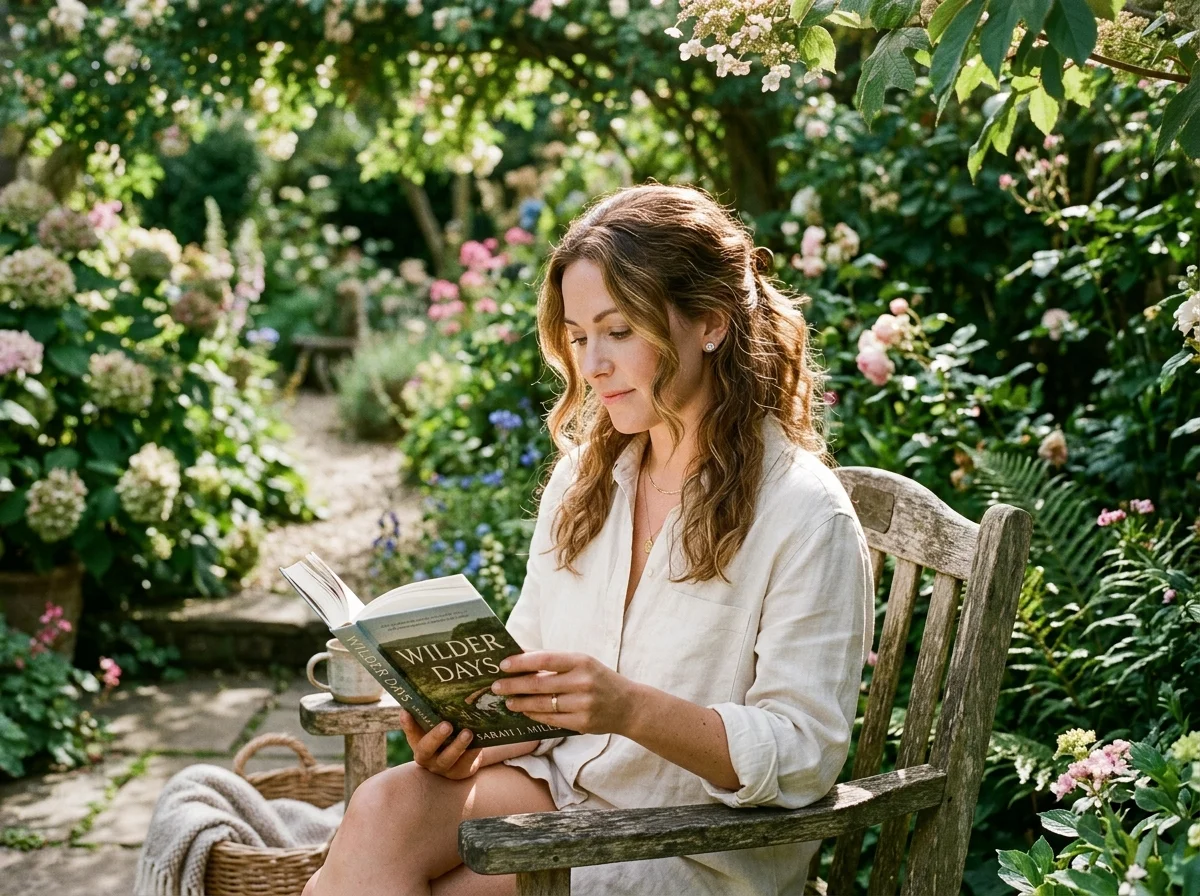
How to generate lifestyle jewelry photography with Hylo
Booking a professional jewelry photographer, renting a studio, sourcing props, and hiring models typically runs between $2,000 and $5,000 per day. For an independent designer or a growing DTC brand, doing this for every new product launch or seasonal campaign is financially unsustainable.
Generalist AI image generators and background removers like Canva, Photoroom, Pebblely, or Booth are excellent for flat consumer goods like skincare bottles or sneakers. However, they consistently fail with jewelry. Jewelry is entirely reflective; it acts like a mirror to its environment. When you paste a studio-lit ring into a generic AI-generated beach scene, the ring still reflects the white studio lights, making it look like a cheap sticker. Furthermore, generic AI tools often hallucinate prongs, warp chain links, and destroy the precise CAD geometry of your pieces.
Hylo is engineered specifically for the optical physics of jewelry. It replaces the $4,000 studio day with a workflow that takes minutes.
The Hylo Workflow:
- Upload: Start with a clean, flat-lit packshot of your jewelry piece on a white or transparent background.
- Position: Use the Canvas Editor to scale and position the piece exactly where you want it in the frame.
- Select an Environment: Access the Creative Library to choose from hundreds of pre-configured lifestyle environments, or use your custom Brand Kit to ensure the lighting and props perfectly match your brand's aesthetic guidelines.
- Generate: Hylo's AI Photoshoot engine generates the environmental scene around the jewelry. Crucially, it maps accurate reflections and environmental lighting back onto the metal and gemstones, ensuring the piece looks organically grounded in the space.
- Refine: Use AI Retouch to instantly clean up any minor imperfections, adjust contrast, or fine-tune the shadow density.
Lifestyle examples across jewelry categories
To understand how versatile lifestyle photography can be, we can look at Hylo's public inspiration gallery. This gallery currently curates 400 real, pass-graded, safety-checked jewelry looks across multiple categories, serving as a first-party visual reference for what high-end lifestyle imagery should look like.
Rings (131 looks) Rings require the most precise styling because of their size. A successful lifestyle shot often involves the ring interacting with a tactile surface. For example, an engagement ring resting on a spool of raw silk ribbon, or a heavy gold signet ring placed on the edge of a leather-bound journal. The texture of the props contrasts with the high polish of the metal, making the ring pop.
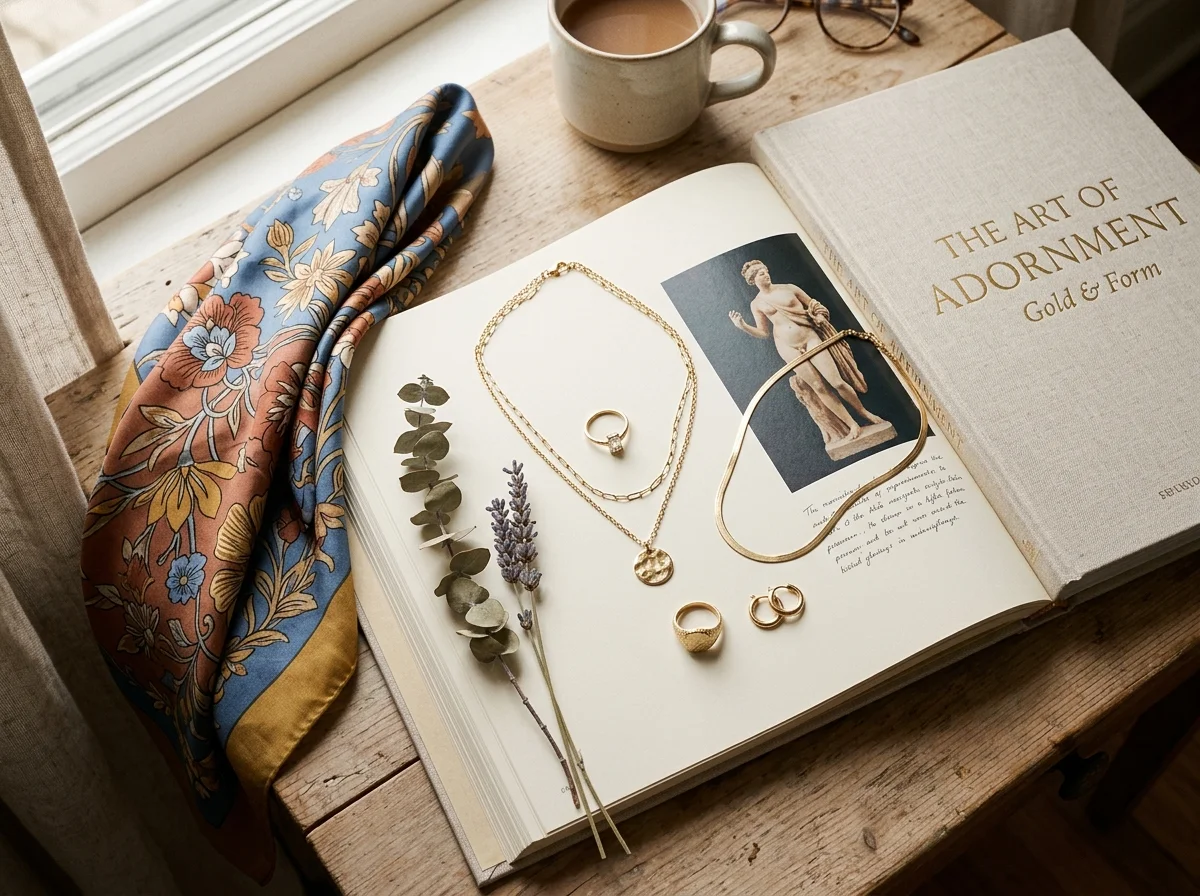
Necklaces (116 looks) and Pendants (42 looks) Necklaces and pendants are notoriously difficult to shoot manually because chains tangle and rarely lay flat. In lifestyle photography, this fluidity is an asset. A delicate pendant draped over a sunlit marble vanity, or layered gold chains resting inside an open, velvet-lined jewelry box, instantly communicates luxury. The key is allowing the chain to fall naturally, creating organic curves rather than rigid lines.
Earring-Studs (28 looks) Stud earrings are small and can easily get lost in a busy lifestyle scene. The best approach is minimalist lifestyle. Place the studs on a highly textured but monochromatic surface—like a piece of raw slate or a ribbed ceramic tray—and use strong directional window light to cast long, dramatic shadows that emphasize the height of the settings.
Bracelets (17 looks) and Bangles (17 looks) Bracelets and bangles benefit immensely from structural props. A rigid gold bangle leaning against a geometric plaster block, or a diamond tennis bracelet cascading over the edge of a mirrored tray, highlights the flexibility and structure of the pieces. Because these items are larger, you can incorporate larger props, like perfume bottles or sunglasses, to establish a broader lifestyle narrative.
Common mistakes in lifestyle jewelry photography
Whether you are shooting manually with a DSLR or generating scenes with Hylo, certain foundational rules of composition and styling apply. Avoiding these common pitfalls is the difference between an amateur snapshot and an editorial-grade asset.
1. Competing Props and Clutter The most common mistake in lifestyle photography is forgetting the subject. If you surround a delicate 1.5mm gold band with brightly colored flowers, vintage teacups, and scattered coffee beans, the customer's eye will be drawn to the props, not the product. Props should frame the jewelry, not compete with it. Stick to monochromatic or muted color palettes for your environments, allowing the brilliance of the diamonds and the warmth of the gold to take center stage.
2. Unrealistic Scale Scale is everything in jewelry. If you are styling a ring next to a coffee cup, the proportions must be physically accurate. A ring that looks as large as the cup's handle immediately shatters the illusion of reality, making the image look heavily photoshopped or poorly generated. Always anchor your piece to real-world dimensions.
3. Missed Reflections As mentioned earlier, jewelry is a mirror. If you shoot a silver bangle in a cluttered living room, the bangle will reflect the television, the ceiling fan, and the photographer wearing a neon t-shirt. In manual photography, you must use black and white foam core boards to control what the metal reflects. When using AI, you must use a specialized tool like Hylo that understands how to calculate and render accurate environmental reflections, rather than relying on generic background-replacement tools that leave the metal looking flat and artificial.
4. Inconsistent Brand Aesthetics Your Instagram grid and Shopify storefront should tell a cohesive story. If you post a dark, moody, vintage-inspired lifestyle shot on Tuesday, and a bright, sterile, ultra-modern minimalist shot on Wednesday, you confuse your customer. Define your brand's lifestyle aesthetic—whether that is "sun-drenched Mediterranean," "dark academia," or "clean girl aesthetic"—and stick to it across all your lifestyle assets.