What defines minimalist jewelry photography
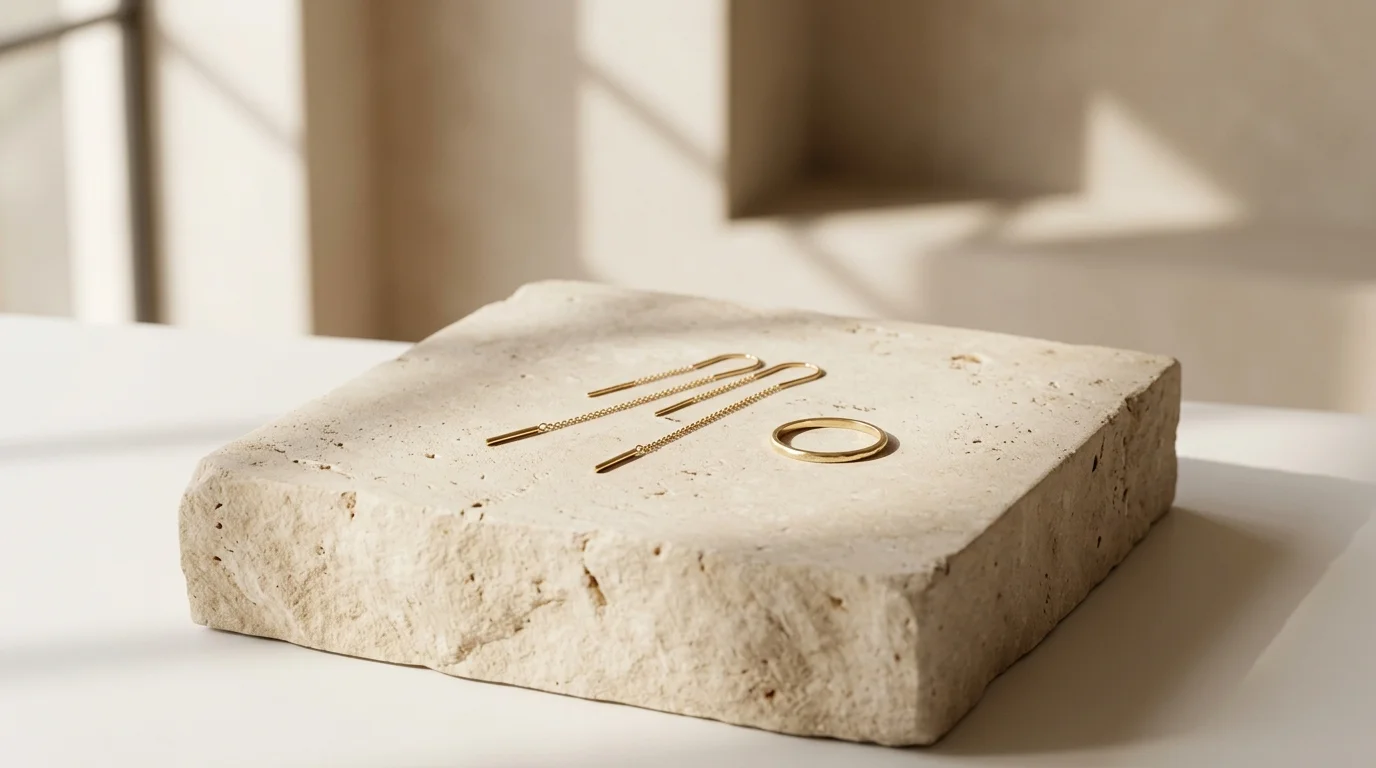
Minimalist jewelry photography is defined by intentional restraint. It strips away visual noise, complex narratives, and heavy propping to force the viewer's eye directly onto the product. In a digital landscape where consumers scroll past hundreds of images a minute, minimalism acts as a visual palate cleanser.
To achieve this aesthetic, photographers rely on four core pillars:
- Negative Space: The empty space around the jewelry is just as important as the piece itself. Minimalist compositions often dedicate 60% to 70% of the frame to negative space, creating a sense of luxury and breathability.
- Neutral Palettes: Backgrounds and props are typically restricted to off-whites, warm beiges, soft grays, and muted taupes. High-contrast colors are avoided unless they are part of strict brand guidelines.
- Soft, Diffused Lighting: Harsh, directional shadows distract from the jewelry. Minimalist photography uses large light modifiers to wrap the subject in soft, even light, producing gentle gradient shadows that ground the piece without dominating the frame.
- Geometric or Natural Props: When props are used, they are understated. Think raw plaster blocks, smooth acrylic cylinders, untextured limestone, or a simple ripple of water. The prop exists solely to elevate the jewelry, never to compete with it.
Minimalism should never be confused with a lazy white-background packshot. A pure #FFFFFF background with a floating piece of jewelry is a technical cutout; a minimalist photograph still contains subtle textures, grounded shadows, and a sense of physical space.
When to use a minimalist aesthetic
Minimalist jewelry photography is the workhorse of modern e-commerce. While highly stylized editorial shots are excellent for top-of-funnel brand awareness, minimalist imagery is designed to convert.
E-commerce Product Pages (Shopify, WooCommerce)
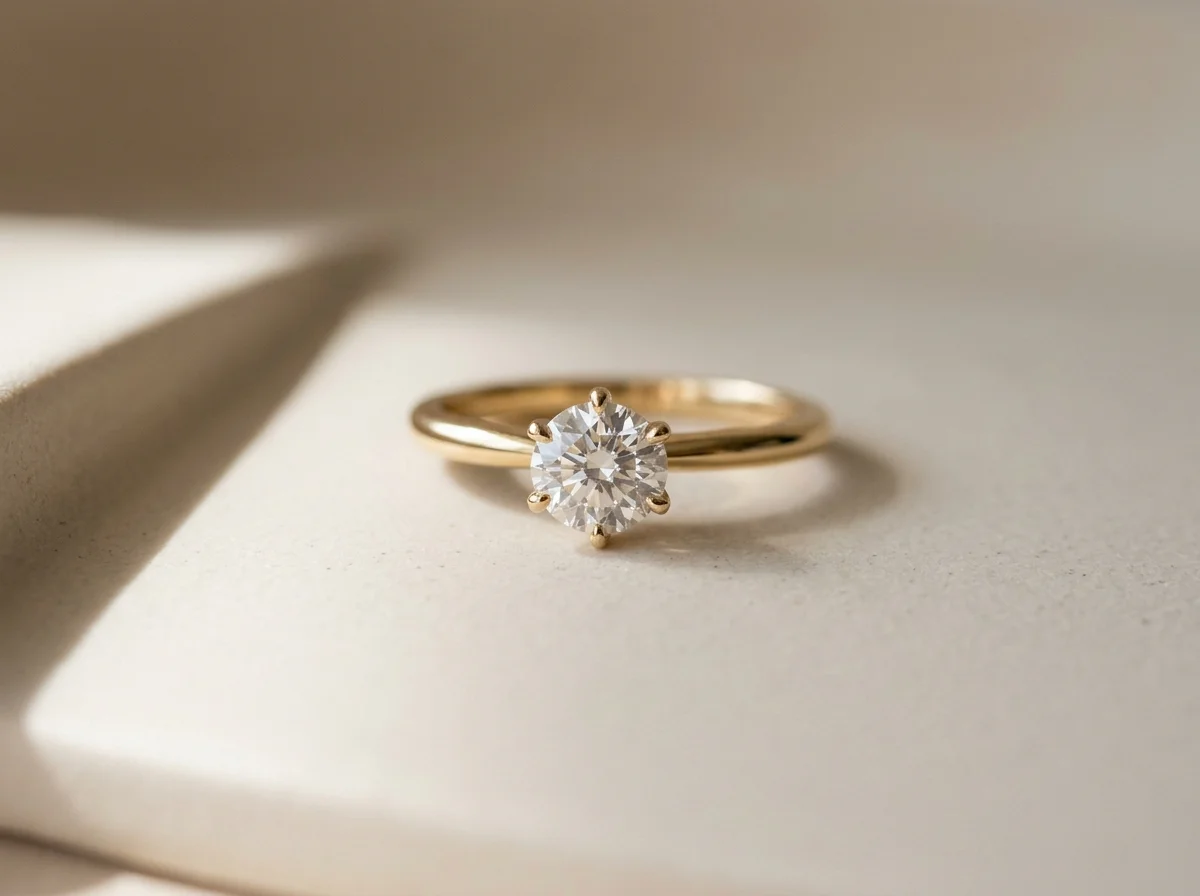
When a customer lands on a product page, they are in the evaluation phase. They need to see the exact proportions of a bezel setting, the clarity of a center stone, and the finish of the metal. Minimalist photography removes distractions, providing the visual clarity required to justify a $500 or $5,000 purchase.
Crowded Marketplaces (Etsy, Amazon)
On platforms where your product sits in a grid next to dozens of competitors, visual clutter is your enemy. A clean, minimalist thumbnail with ample negative space stands out against a sea of busy, poorly lit lifestyle photos. It instantly signals professionalism and premium quality.
Social Media Grids (Instagram, Pinterest)
For DTC brands, a minimalist Instagram grid creates a cohesive, modern brand identity. By alternating between extreme macro shots of a pavé band and minimalist flatlays of necklaces on soft linen, brands can maintain a high-end aesthetic without exhausting their creative budget on complex editorial shoots.
Buyer Psychology
Minimalism communicates transparency. By presenting the jewelry with nothing to hide behind, you signal confidence in your craftsmanship. It tells the buyer, "The design and quality of this piece speak for themselves."
How to shoot minimalist jewelry photography manually
Executing minimalist jewelry photography in a studio requires precision. Because there are no elaborate props to hide behind, any flaw in lighting, focus, or styling will be immediately obvious.
Essential Equipment
- Camera: A full-frame DSLR or mirrorless camera (e.g., Canon R5, Sony A7R IV) to capture maximum detail.
- Lens: A dedicated macro lens (100mm f/2.8 or 90mm f/2.8) is non-negotiable for rings and earrings.
- Support: A heavy-duty tripod with a geared head for micro-adjustments.
- Lighting: At least two studio strobes (e.g., Profoto D2) or high-output continuous LED lights (e.g., Aputure 300d).
The Lighting Setup
To achieve the soft, shadowless look characteristic of minimalism, you need massive diffusion.
- The Key Light: Place a large softbox (at least 3x4 feet) directly overhead or at a 45-degree angle behind the jewelry. This creates a soft, wrapping light that highlights the top facets of gemstones and creates smooth gradients on metal.
- The Fill: Place white foam core bounce cards on the left, right, and front of the jewelry. These cards reflect the overhead light back onto the piece, filling in deep shadows and creating the bright, airy look essential to minimalism.
- Controlling Reflections: Highly polished metals (like 18k gold or platinum) act as mirrors. You must ensure the jewelry is reflecting the white bounce cards and diffusion material, not the black camera lens or the ceiling of your studio. Use a white cone or a piece of white paper with a hole cut out for the lens to shoot through.
Camera Settings
| Setting | Recommendation | Reason |
|---|---|---|
| Aperture | f/8 to f/11 | Provides enough depth of field to keep the entire piece in focus while allowing the background to fall slightly out of focus. |
| Shutter Speed | 1/125s to 1/200s | The standard sync speed for studio strobes. Ensures a sharp image without capturing ambient room light. |
| ISO | 100 | Keeps the image clean and free of digital noise, which is critical for macro jewelry photography. |
Post-Production
Minimalist photography requires immaculate retouching. You will need to focus-stack multiple images to achieve edge-to-edge sharpness on rings, clone out microscopic dust particles, and carefully dodge and burn to enhance the natural gradients of the metal. A professional retoucher typically charges $15 to $30 per image for this level of detail.
How to generate minimalist jewelry photography with Hylo
Shooting minimalist photography manually requires a $5,000+ equipment investment and hours of post-production. Hylo's AI-powered studio allows you to generate editorial-grade minimalist imagery in seconds, replacing the traditional studio workflow entirely.
Hylo's public inspiration gallery currently curates 400 real, pass-graded, safety-checked jewelry looks. This gallery serves as a blueprint for generating perfect minimalist imagery. By analyzing these looks, you can replicate the exact aesthetic without touching a camera.
Step 1: Configure your Brand Kit
Before generating images, set your Brand Kit in Hylo to enforce a minimalist aesthetic. Select neutral color palettes—soft taupes, warm whites, and pale grays. Ensure your lighting preferences are set to "Soft Diffused" or "Studio Overhead" to avoid harsh, directional shadows.
Step 2: Use the AI Photoshoot
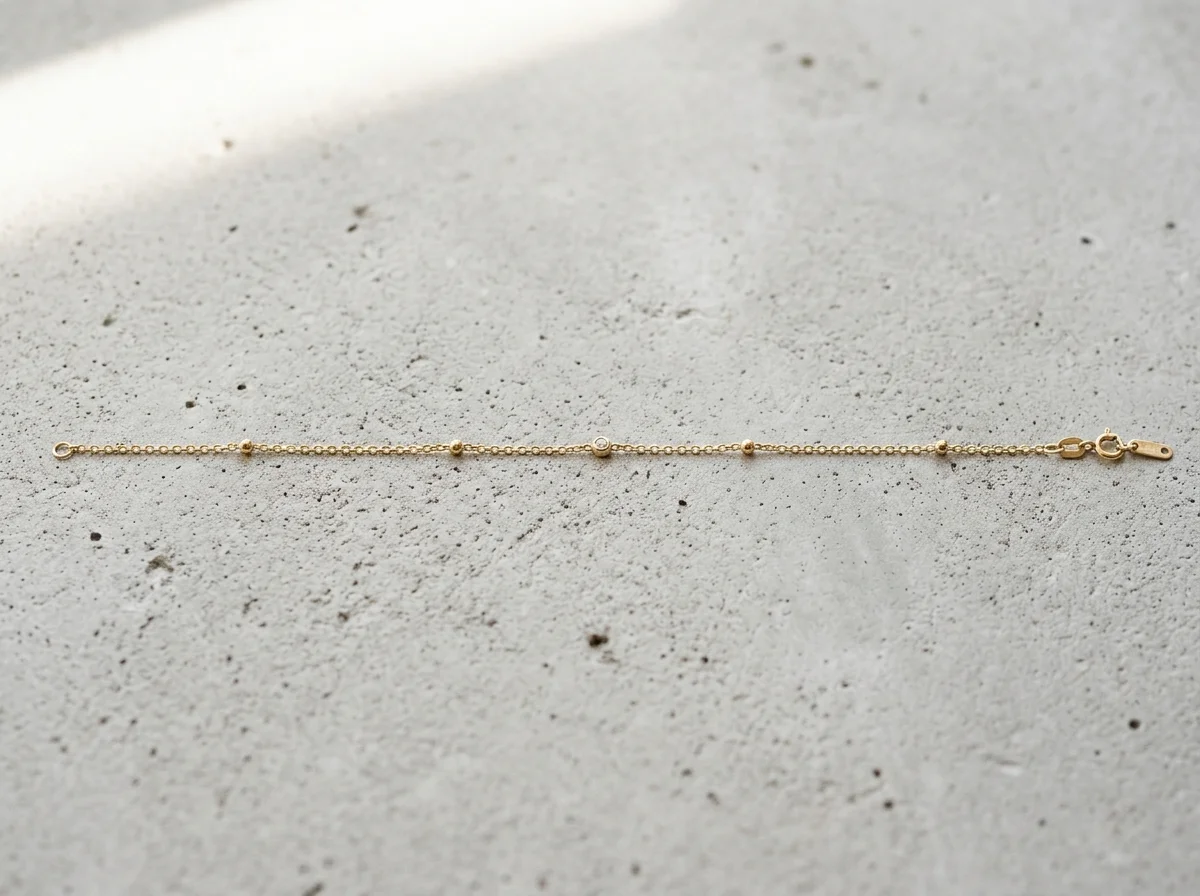
Upload a simple smartphone photo of your jewelry on a white background. Hylo's AI will isolate the piece, preserving the intricate details of the prongs, facets, and metal finish.
Step 3: Prompting for Minimalism
When using the Canvas Editor, use specific, minimalist prompts to guide the AI. Draw inspiration from the 400 pass-graded looks in the Hylo gallery. Effective prompts include:
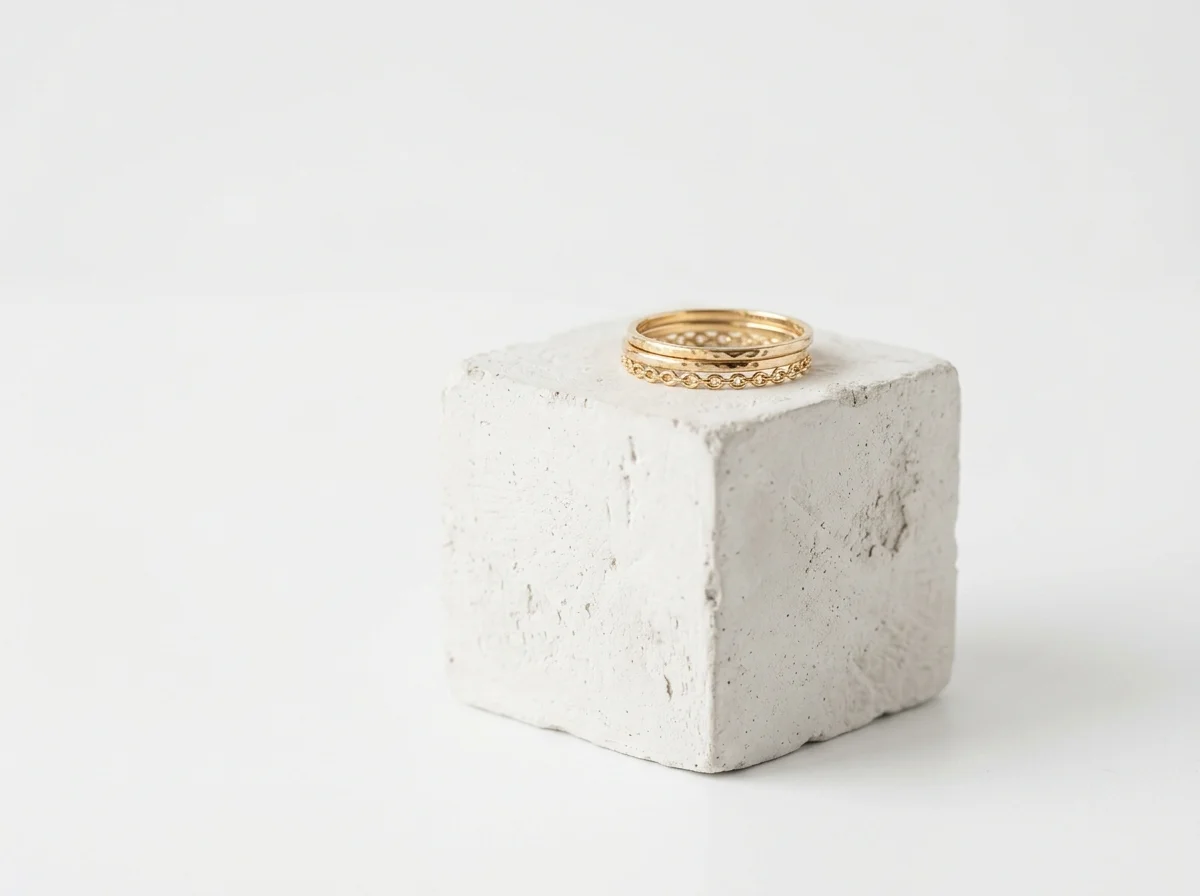
- "A minimalist studio shot of a gold ring resting on a smooth white plaster block, soft overhead diffusion, ample negative space, warm neutral background, photorealistic."
- "A delicate necklace draped over a matte acrylic cylinder, soft gray seamless background, gentle gradient shadows, high-end e-commerce lighting."
Because Hylo understands the physics of light and metal, it generates grounded, realistic shadows that anchor the jewelry to the surface—a critical component that standard background removal tools fail to achieve.
Examples across jewelry categories
The minimalist approach adapts beautifully to every type of jewelry, but the styling nuances change depending on the category. The Hylo inspiration gallery provides concrete examples of how to execute this across different pieces.
Rings (131 Gallery Looks)
Rings are the most common subjects for minimalist photography. Because they are small, they require extreme macro detail. In the gallery, you will see solitaires resting on smooth acrylic cylinders or raw stone slabs. The key is to keep the prop smaller than the ring itself, ensuring the gemstone remains the undisputed focal point.

Necklaces (116 Looks) & Pendants (42 Looks)
Necklaces and pendants require more physical space, making negative space even more critical. Minimalist styling often involves draping the chain over an untextured stone or suspending the pendant in mid-air against a soft beige background. The chain should form clean, intentional lines—never tangled or chaotic.
Earrings (28 Stud Looks)
Stud earrings benefit from being shot in pairs, often resting flat on a smooth marble or plaster surface. Drop earrings can be suspended or draped over the edge of a geometric riser. The minimalist approach highlights the symmetry and scale of the earrings without the distraction of a model.
Bracelets (17 Looks) & Bangles (17 Looks)
Bangles and bracelets are highly structural. Minimalist photography emphasizes this structure by stacking them on neutral linen or sliding them over geometric cones. The soft, diffused lighting creates long, elegant highlights along the curve of the metal.
Common mistakes in minimalist jewelry photography
While minimalism seems simple, it is incredibly unforgiving. Here are the most common pitfalls brands encounter:
Mistaking "Minimalist" for "Boring" Minimalism requires flat, clean backgrounds, but it does not require flat lighting. If your lighting lacks direction or gradients, the jewelry will look dull and lifeless. You still need specular highlights on polished metal and deep contrast within the gemstones to create a three-dimensional feel.
The "Floating Sticker" Effect Tools like Photoroom, Canva, and Adobe Express are excellent for quick background removal. However, they often leave the jewelry looking like a floating sticker cut out of a magazine. Minimalist photography requires a grounded, realistic shadow to anchor the piece to its environment. If you remove the background, you must generate or composite a physically accurate shadow. This is where AI generation, like Hylo's AI Photoshoot, significantly outperforms basic background removers.
Cluttered Negative Space Negative space must be intentional. If you crop the image too tightly, the composition feels claustrophobic. If you leave too much space without balancing the frame, the jewelry gets lost. Follow the rule of thirds and ensure the empty space draws the eye toward the product, rather than away from it.
Ignoring Metal Reflections In a minimalist setup, any reflection of the room, the camera, or the photographer will ruin the clean aesthetic. You must use white bounce cards to create a "tent" around the jewelry, ensuring the metal reflects only pure, soft light.