What defines creative jewelry photography
Standard e-commerce photography exists to answer logical questions: What does the clasp look like? How thick is the band? Are the prongs secure? Creative jewelry photography exists to answer an emotional question: How does this piece make me feel?
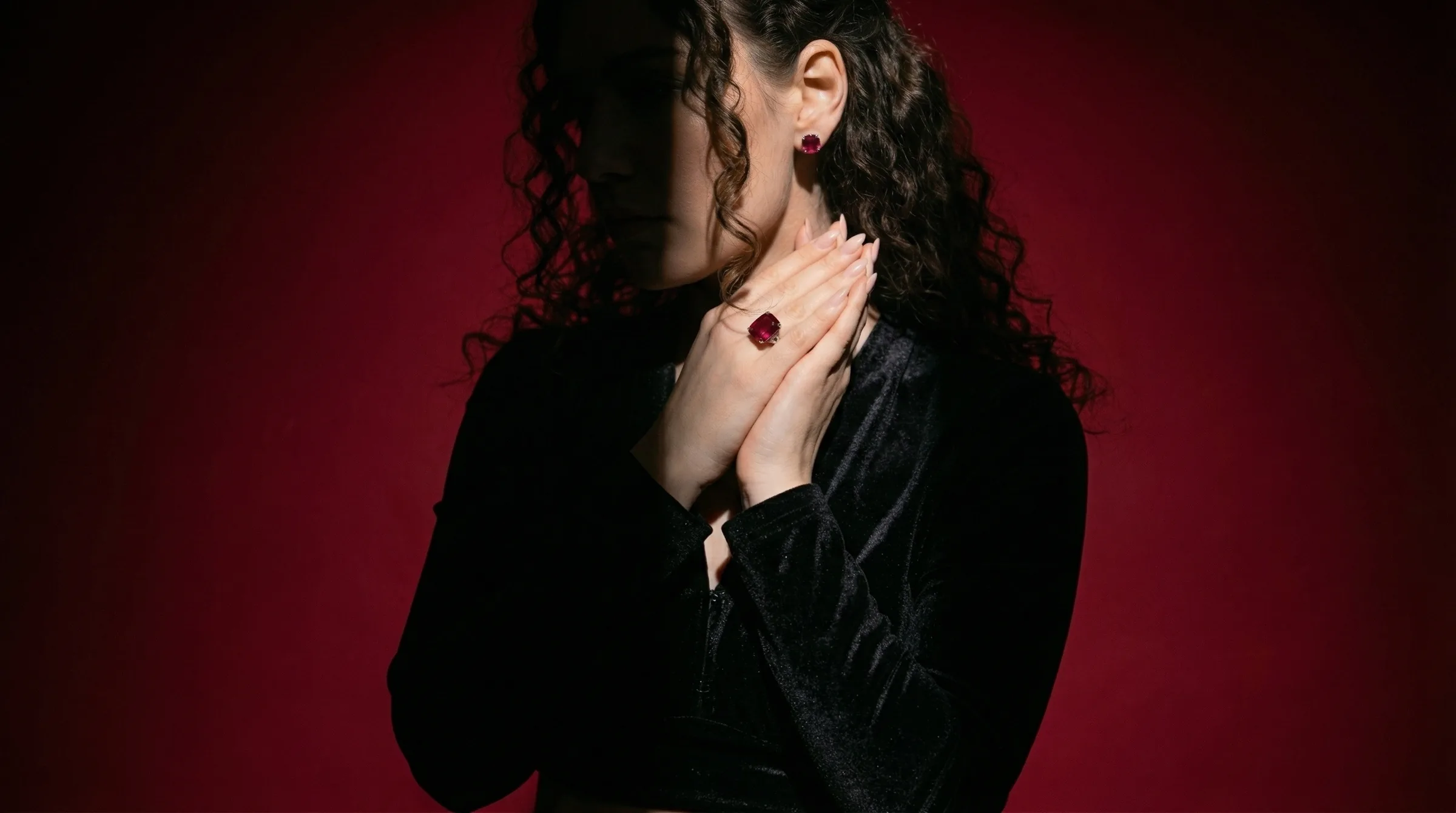
Where catalog packshots require flat, shadowless lighting on a pure white seamless background, creative jewelry photography thrives on atmosphere, context, and visual tension. It is the editorial magazine spread of the e-commerce world.
To execute this style effectively, photographers rely on several distinct visual hallmarks:
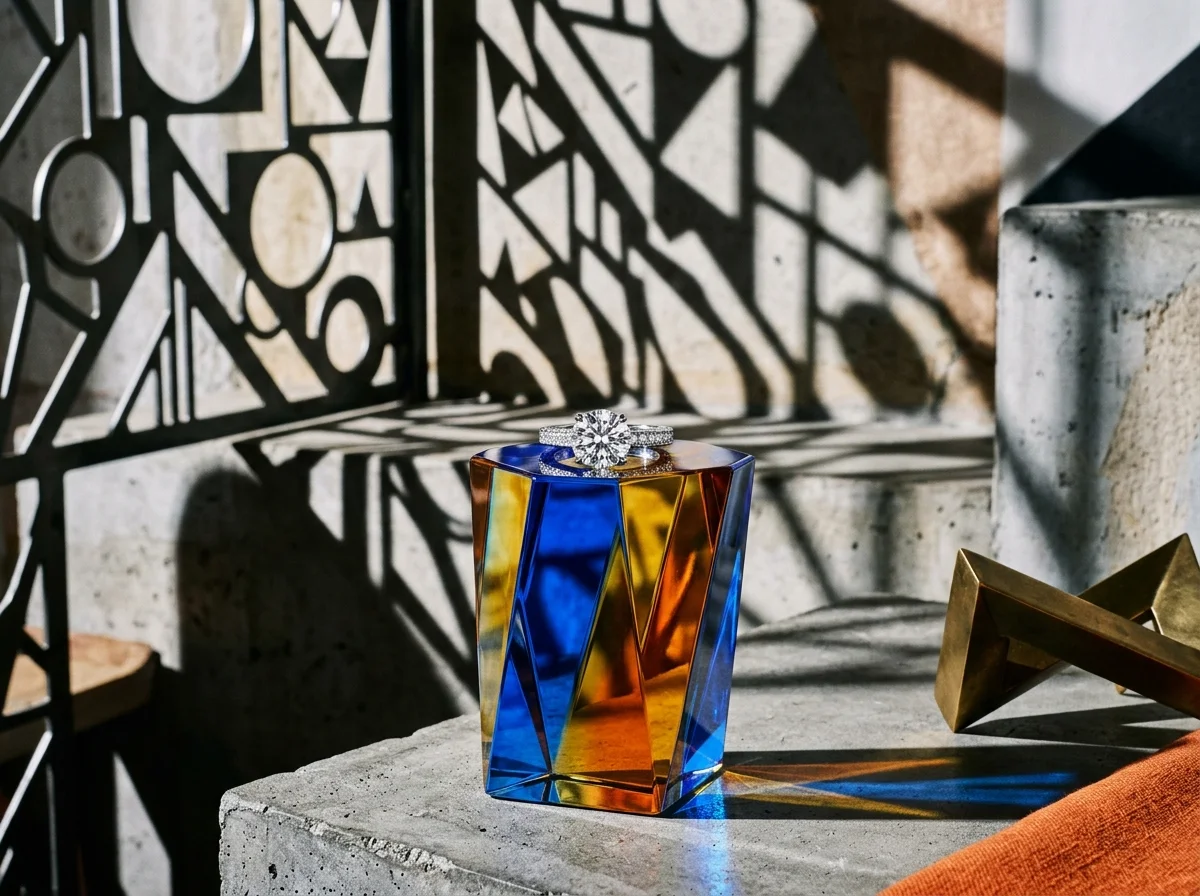
- Conceptual Props: Instead of standard velvet neck forms or ring clips, creative photography uses architectural elements. Think raw travertine slabs, polished acrylic blocks, ribbed glass, draped silk, botanical elements, or even shallow pools of water.
- Dramatic Lighting: Flat lighting is abandoned in favor of directional, shaped light. Photographers use optical snoots to project hard shadows (like window blinds or palm fronds), colored gels to create mood, or deep contrast to isolate the jewelry against dark, moody backgrounds.
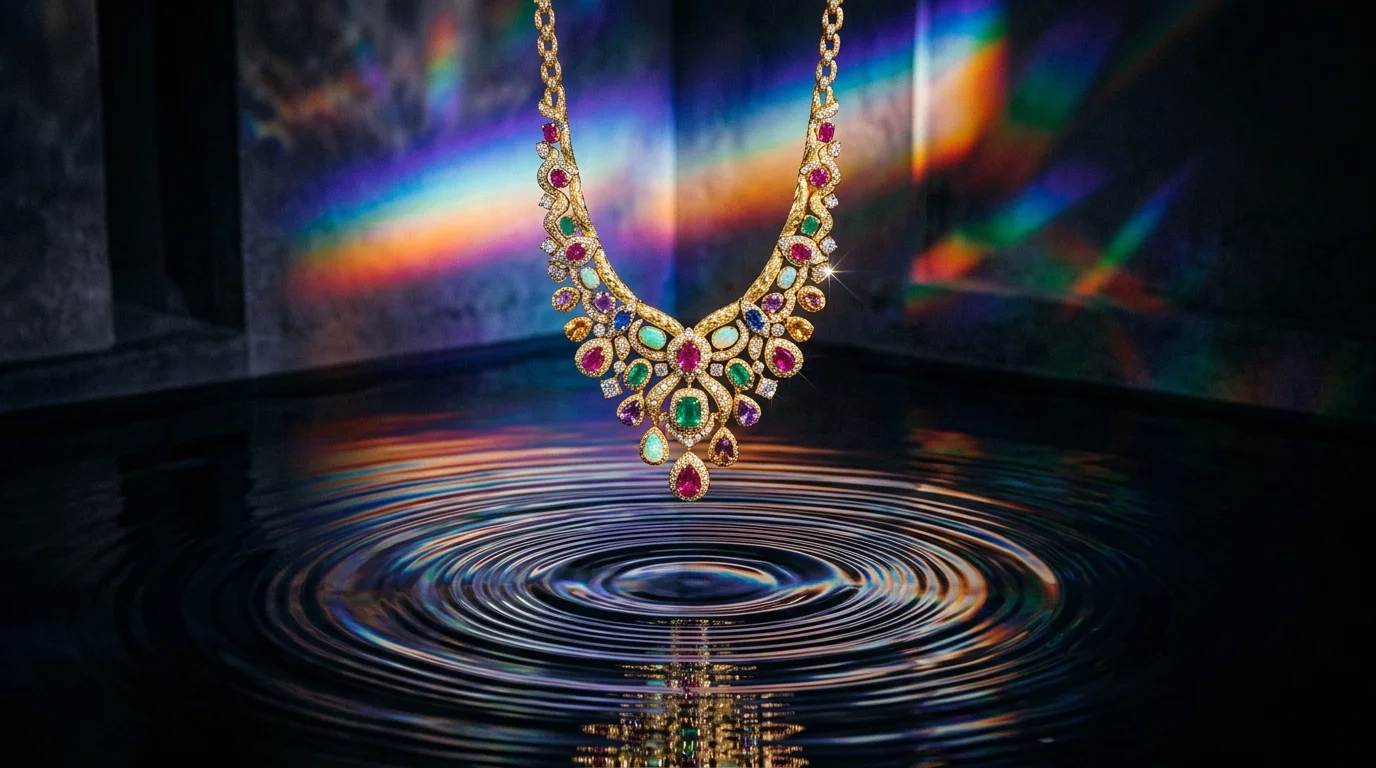
- Unconventional Angles: Pieces are often captured in motion or defying gravity. Rings balance on their edges, necklaces are suspended in mid-air, and earrings are shot from extreme macro perspectives that abstract the overall shape to focus on a single, brilliant facet.
- Textural Contrast: The high-polish, pristine surface of fine jewelry is deliberately juxtaposed against rough, organic textures—a flawless 2ct VVS diamond resting on a piece of coarse volcanic rock, emphasizing the refinement of the craftsmanship.
Ultimately, creative jewelry photography builds a visual universe around the product. It signals to the buyer that they are not just purchasing metal and stone; they are buying into a specific lifestyle, aesthetic, and brand identity.
When to use creative jewelry photography
Every jewelry brand needs standard white-background packshots—they are required by marketplaces like Amazon and are necessary for the final "add to cart" decision. But relying solely on packshots is a fast track to commoditization. Creative jewelry photography is your top-of-funnel engine. It is the visual hook that interrupts the scroll and pulls a potential customer into your brand's ecosystem.
Core Channels for Creative Assets
1. Social Media (Instagram, TikTok, Pinterest) Social platforms are visual discovery engines. A flatlay of a gold chain on a white background will be ignored. A macro shot of that same gold chain submerged in rippling water, catching hard sunlight, will generate saves, shares, and clicks. Creative photography is mandatory for Instagram grids, TikTok cover images, and Pinterest inspiration boards.
2. Homepage Hero Banners When a visitor lands on your Shopify or Webflow site, you have roughly three seconds to establish your brand's value proposition. A massive, high-resolution creative shot sets the tone immediately. If you are selling a $4,000 engagement ring, the hero image must look like it costs $4,000.
3. Email Marketing Campaigns Launch announcements, holiday sales, and editorial newsletters require compelling visuals. Creative photography allows you to theme your emails—using moody, dark-stone aesthetics for a Black Friday campaign, or bright, floral setups for a Mother's Day release.
4. Lookbooks and Wholesale Linesheets When pitching to retail buyers on Faire or directly to boutiques, your linesheet needs to communicate your brand's merchandising potential. Creative lifestyle shots show buyers how the collection feels, making it easier for them to envision your pieces in their display cases.
Buyer Psychology
Jewelry is an emotional, discretionary purchase. No one needs a diamond tennis bracelet. They buy it for status, sentiment, or self-expression. Creative photography validates that emotional impulse. It elevates the perceived value of the piece, justifying premium pricing. If your visuals look cheap, the customer will assume the manufacturing is cheap, regardless of the actual karat weight or stone clarity.
How to shoot creative jewelry photography manually
Executing high-end creative jewelry photography in a physical studio is a technically demanding process. It requires specialized gear, a deep understanding of light physics, and significant post-production time. A typical full-day booking for an experienced jewelry photographer ranges from $2,000 to $5,000, not including prop sourcing or retouching fees.
If you are building an in-house studio, here is the exact setup required to produce editorial-grade creative imagery.
1. Camera and Lens Requirements
A standard kit lens will not work. Fine jewelry requires extreme magnification and corner-to-corner sharpness.
- Camera: A full-frame DSLR or Mirrorless body (e.g., Canon R5, Sony A7R V) with at least 40 megapixels to allow for heavy cropping.
- Lens: A dedicated 100mm or 105mm Macro lens (1:1 reproduction ratio). This is non-negotiable for capturing prong details and pavé settings.
- Support: A heavy-duty studio tripod equipped with a geared head (like the Manfrotto 410) and a macro focusing rail. When shooting at high magnification, moving the camera a millimeter completely changes the focal plane.
2. The Lighting Setup
To create dramatic, creative lighting, you need absolute control over your light sources. Continuous LED lights rarely have the power needed to shoot at the required apertures. You will need 2 to 3 studio strobes (e.g., Profoto D2 or Godox AD600).
- The Key Light: For dramatic, hard shadows, place your main strobe at a 45-degree angle to the jewelry. Instead of a softbox, use a standard reflector with a honeycomb grid, or an optical snoot. An optical snoot allows you to insert metal gobos (templates) to project shapes—like window panes or leaf silhouettes—directly onto the set.
- The Fill Light: To ensure the shadows don't go completely black and lose detail, use a large softbox or a white bounce card on the opposite side of the key light. Keep this light at a very low power—just enough to lift the shadows slightly.
- The Sparkle Light: Diamonds and faceted stones need a direct, hard, pinpoint light source to "fire" and show their brilliance. A small, bare-bulb strobe or a highly focused LED flashlight positioned directly over the stone will create that necessary sparkle.
3. Grip and Styling Tools
Creative setups require precision styling. Your toolkit should include:
- Museum Wax: A clear, sticky wax used to stand rings upright on hard surfaces without being visible to the camera.
- Acrylic Risers and Blocks: Used to elevate pieces and create floating effects or reflections.
- Anti-Static Brushes and Microfiber Cloths: Every speck of dust looks like a boulder through a macro lens. Clean the jewelry meticulously before every shot.
- Tweezers and Cotton Gloves: Never touch highly polished metal with bare hands; fingerprint oils will ruin the shot.
4. Camera Settings and Focus Stacking
When shooting macro photography, your depth of field is razor-thin. Even at f/16, you cannot get the front prong and the back of the band in focus simultaneously.
- Settings: Set your camera to ISO 100 for maximum dynamic range, a shutter speed of 1/125s (or your camera's flash sync speed), and an aperture between f/8 and f/11 (the sweet spot for lens sharpness).
- Focus Stacking: To get the entire piece in focus, you must shoot a sequence of images. Take one photo focused on the front edge, move the focus rail a millimeter, take another, and repeat until you have 10 to 20 frames covering the entire depth of the jewelry.
- Post-Production: Merge these frames using specialized software like Helicon Focus or Adobe Photoshop to create a single, perfectly sharp image. Then, spend hours in Photoshop removing dust, smoothing metal reflections, and compositing out the museum wax.
How to generate creative jewelry photography with Hylo
Manually shooting a creative campaign takes days of planning, shooting, and retouching. For a jewelry brand releasing new collections monthly, that workflow is a massive bottleneck.
Hylo replaces the $4,000 studio booking and the hours of focus stacking by allowing you to generate editorial-grade creative photography instantly using AI.
General-purpose AI tools like Photoroom, Canva, or Pebblely are excellent for quick background removal on apparel or CPG products, but they frequently struggle with the complex geometry of fine jewelry. They tend to "melt" prongs, warp thin chains, and blur diamond facets. Hylo's AI is specifically trained on high-end jewelry, ensuring that the structural integrity of your pieces remains flawless.
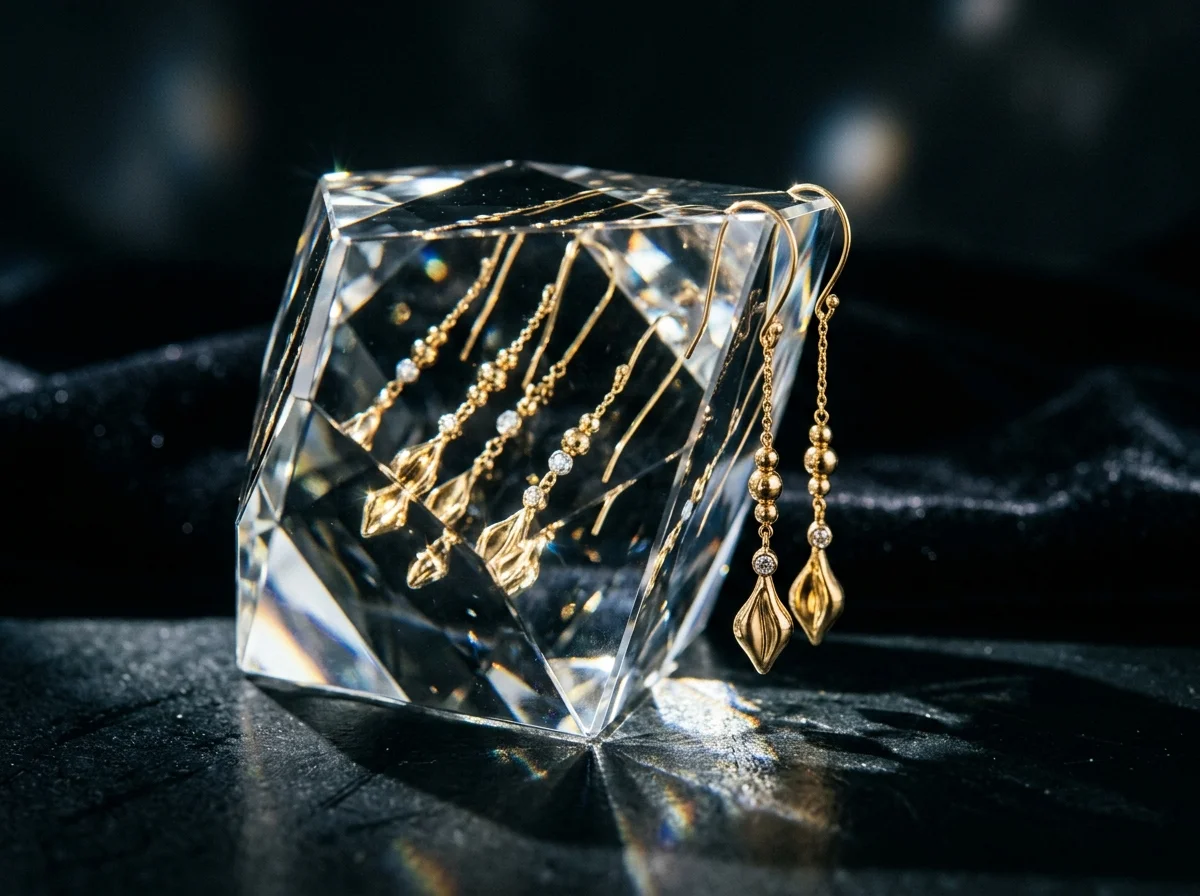
The Hylo Workflow for Creative Imagery
1. Start with a Basic Image You don't need a professional photo to begin. Upload a simple flatlay shot on your iPhone, or an existing white-background packshot.
2. Prepare in the Canvas Editor Use Hylo's Canvas Editor to instantly remove the background. You can then adjust the angle, scale, and positioning of your jewelry to match the perspective of your desired creative concept.
3. Explore the Inspiration Gallery If you aren't sure how to style your piece, Hylo provides a public Inspiration Gallery featuring 400 real, pass-graded, safety-checked jewelry looks. You can browse by category and instantly apply the exact lighting, prop setup, and mood to your own piece with a single click.
4. Lock in Consistency with Brand Kit Creative photography only works if it feels cohesive. With Hylo's Brand Kit, you can lock in your specific brand colors (e.g., sage green, matte black) and preferred prop styles (e.g., raw travertine, polished acrylic). When you run an AI Photoshoot, Hylo ensures every generated image adheres strictly to your brand's visual identity, creating a consistent lookbook across hundreds of SKUs.
Examples across jewelry categories
Different types of jewelry require different creative approaches. Based on the 400 curated looks in Hylo's Inspiration Gallery, here is how creative photography breaks down by category:
Rings (131 Looks)
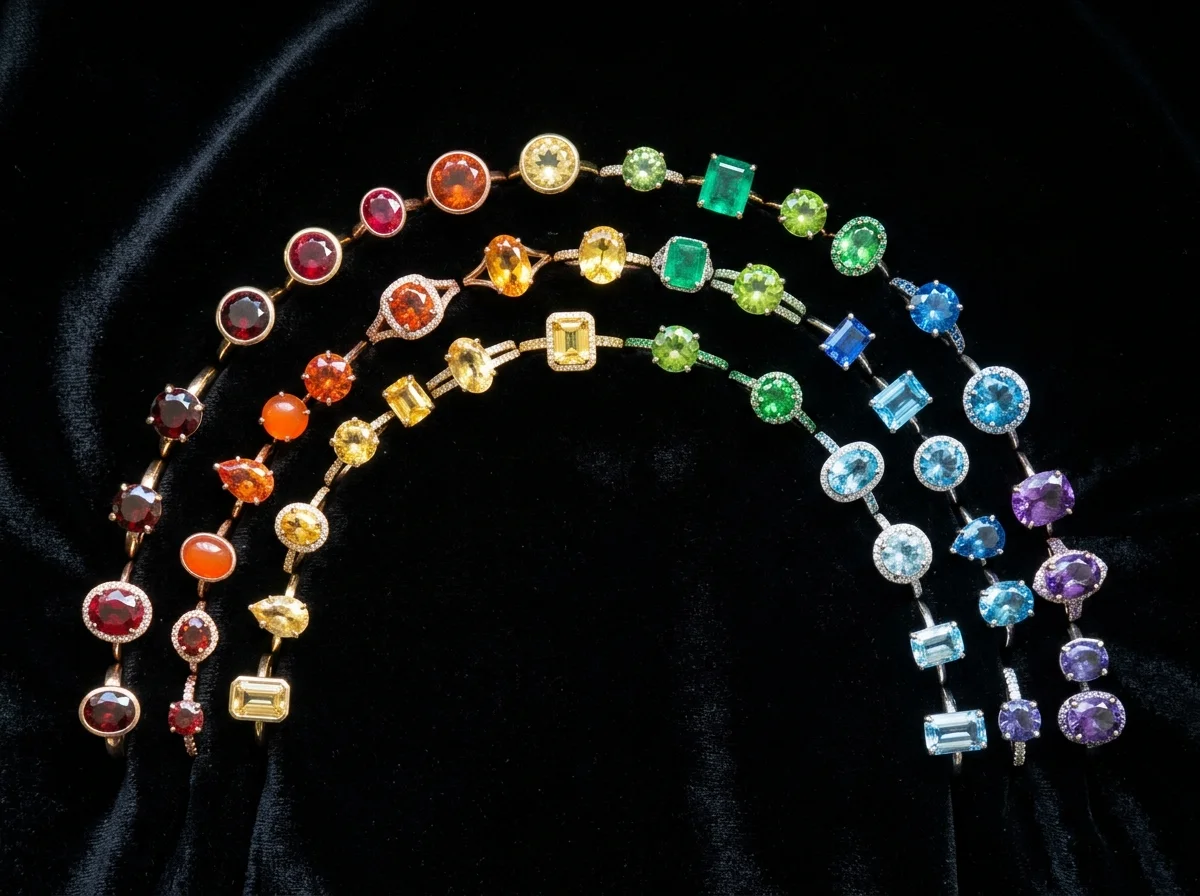
Rings are the most frequently styled category because they require the most structural context. Creative shots often feature rings balancing on their edges using invisible wax (or AI generation). Popular setups include rings resting on raw quartz or dark slate, utilizing dramatic, directional shadows to highlight the center stone's cut and clarity.
Necklaces (116 Looks) & Pendants (42 Looks)
Necklaces and pendants require scale and drape. Creative photography moves away from standard velvet busts, instead draping chains over abstract plaster forms, suspending them in mid-air against painted canvas backdrops, or laying them across textured fabrics like raw silk. Pendants benefit heavily from macro shots that isolate the pendant resting on a reflective acrylic surface.
Earrings: Studs (28 Looks)
Stud earrings are notoriously difficult to shoot because of their small size. Creative photography solves this by using mirrored acrylic reflections to add volume to the composition, or by shooting extreme macro focus on pavé details, blurring out the background entirely to create a soft, luxurious bokeh effect.
Bracelets (17 Looks) & Bangles (17 Looks)
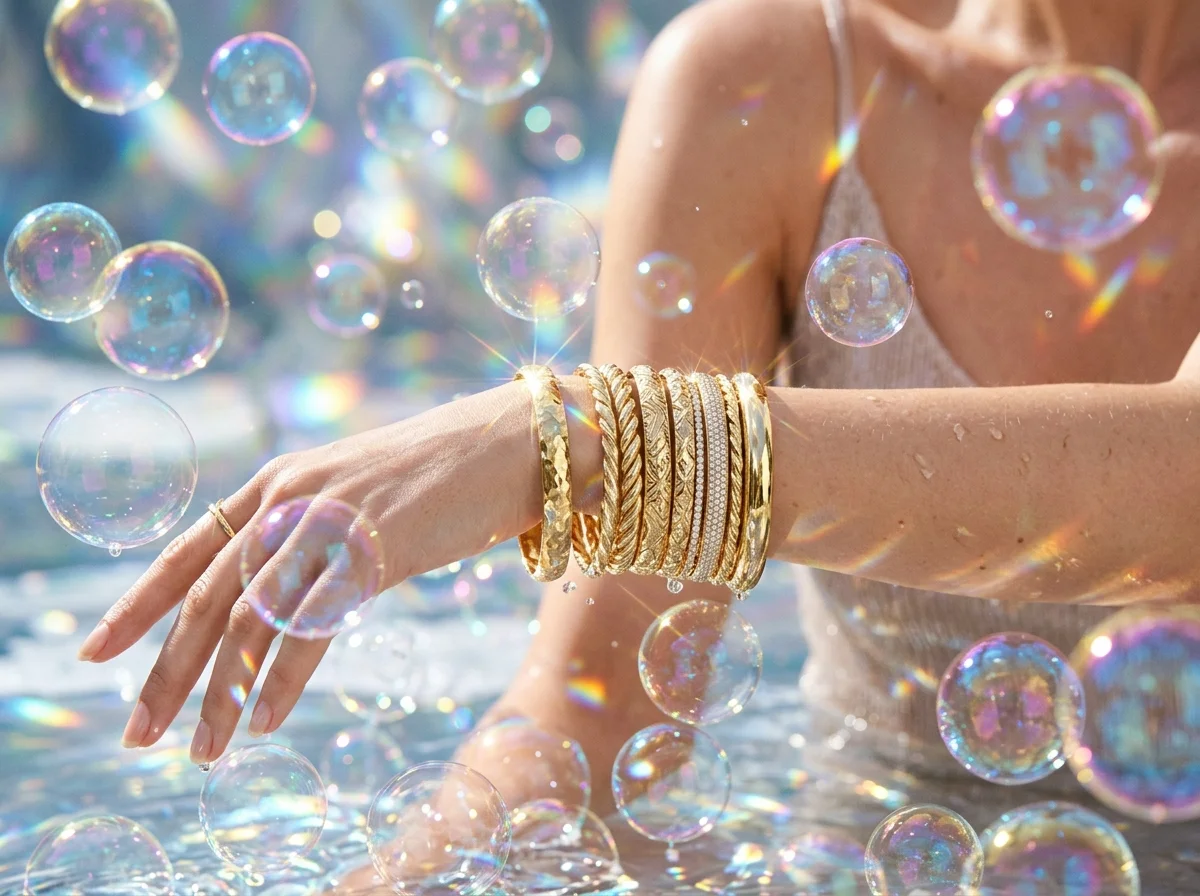
Bracelets and bangles need to show structure and clasp mechanisms. Creative setups often feature bangles stacked on marble cylinders or geometric risers. Dynamic, off-kilter angles are used to show the rigidity of a bangle versus the fluid drape of a tennis bracelet, often utilizing hard lighting to emphasize the metal's polish.
Common mistakes in creative jewelry photography
Whether you are shooting manually or generating with AI, creative jewelry photography requires a delicate balance. Here are the most common pitfalls that ruin a shot:
1. Overpowering the Product The props and background should elevate the jewelry, not compete with it. If you use a highly patterned marble slab or brightly colored floral arrangements, the eye will be drawn to the props instead of the product. The jewelry must always remain the undisputed hero of the frame.
2. Losing the Metal's True Color Highly polished gold and silver act like mirrors. If you place a gold ring next to a bright green plant, the metal will reflect the green, making your 18k gold look tarnished or discolored. You must control your environment and use white or neutral bounce cards to ensure the metal reflects clean light.
3. Missing the Focus on the Main Stone In an attempt to create a "moody" or "artistic" shot, photographers sometimes shoot wide open (e.g., f/2.8) to get a blurry background. However, this often results in the main diamond or gemstone falling out of focus. The center stone and the primary prongs must always be tack-sharp.
4. Ignoring Ugly Reflections When shooting manually, it is incredibly common to accidentally capture the reflection of the camera lens, the photographer's hand, or the studio room in the surface of a polished dome ring or a flat pendant. Managing reflections requires meticulous placement of white foam core boards to create a seamless "tent" of light around the piece.