The Psychology of Props in Jewelry Photography
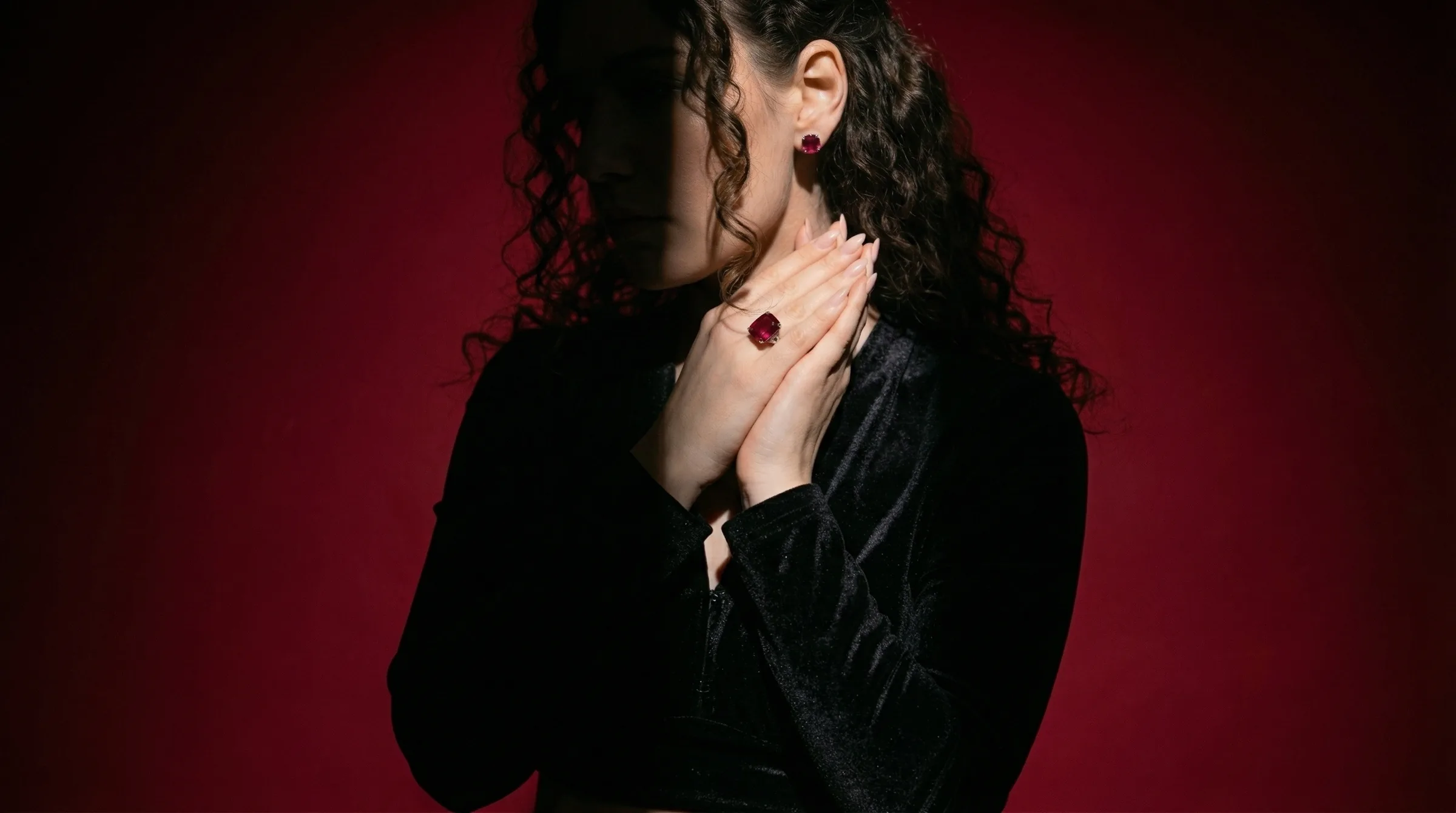
While pure white backgrounds are mandatory for marketplace compliance (Amazon and Google Shopping), they are completely ineffective for building luxury brand identity. When a customer visits your Shopify store or your Instagram page, they aren't just buying a piece of metal; they are buying into a curated lifestyle aesthetic.
Props provide three critical psychological elements to a jewelry photograph:
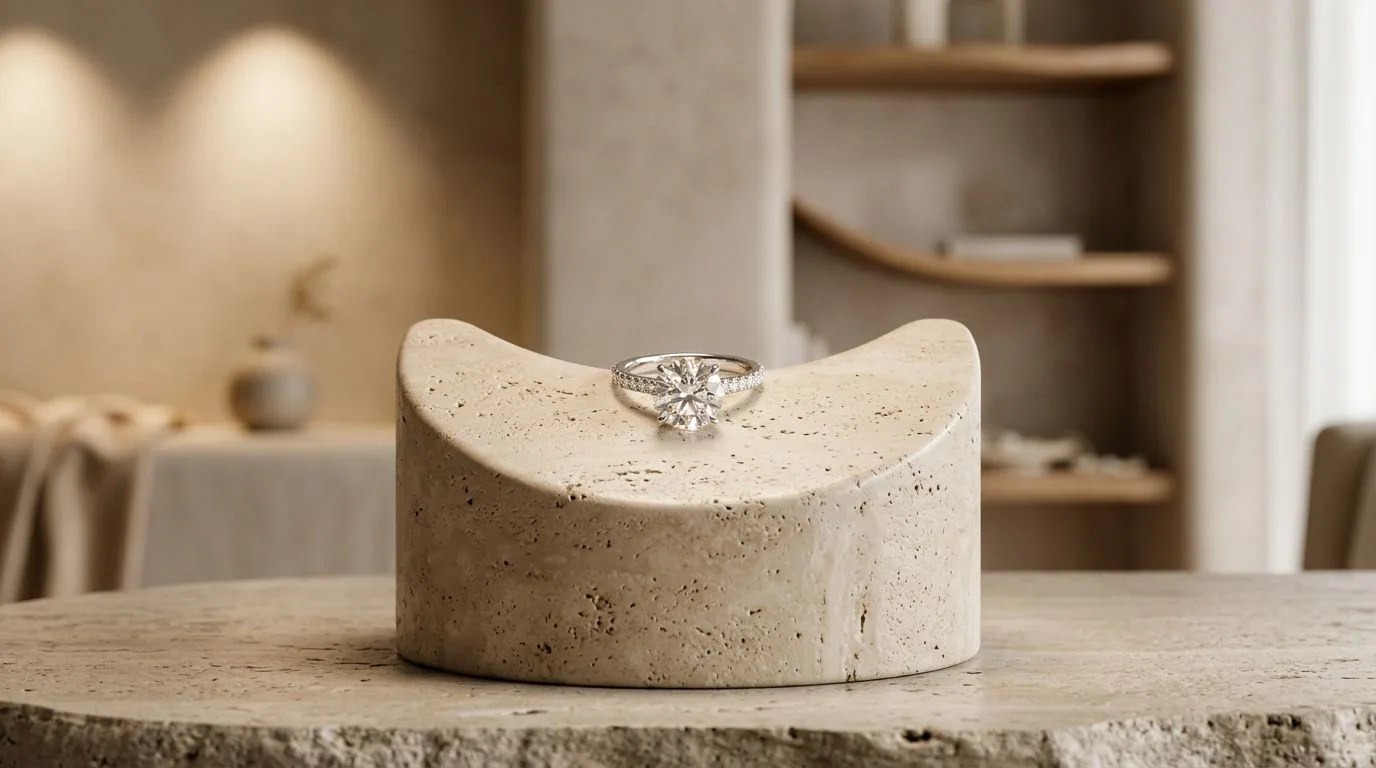
- Scale Reference: A ring floating in infinite white space has no size reference. Placing it on a recognizable object (like a travertine tile) helps the buyer immediately understand its true dimensions and weight.
- Material Contrast: Placing a high-polish, flawless silver ring on a matte, porous piece of raw stone creates visual friction. This contrast makes the silver look exponentially shinier and more perfect than it would on a plain white table.
- Brand Identity: The specific props you curate (e.g., raw driftwood vs. polished black marble) instantly communicate to the buyer whether your brand is earthy and accessible, or modern and exclusively luxurious.
The 4 Best Jewelry Prop Categories for 2026
When selecting props, the golden rule is Subordination. The prop must never be more visually dominant than the jewelry. Here are the four best categories of props for modern, high-end jewelry styling.
1. Geometric Acrylic Blocks
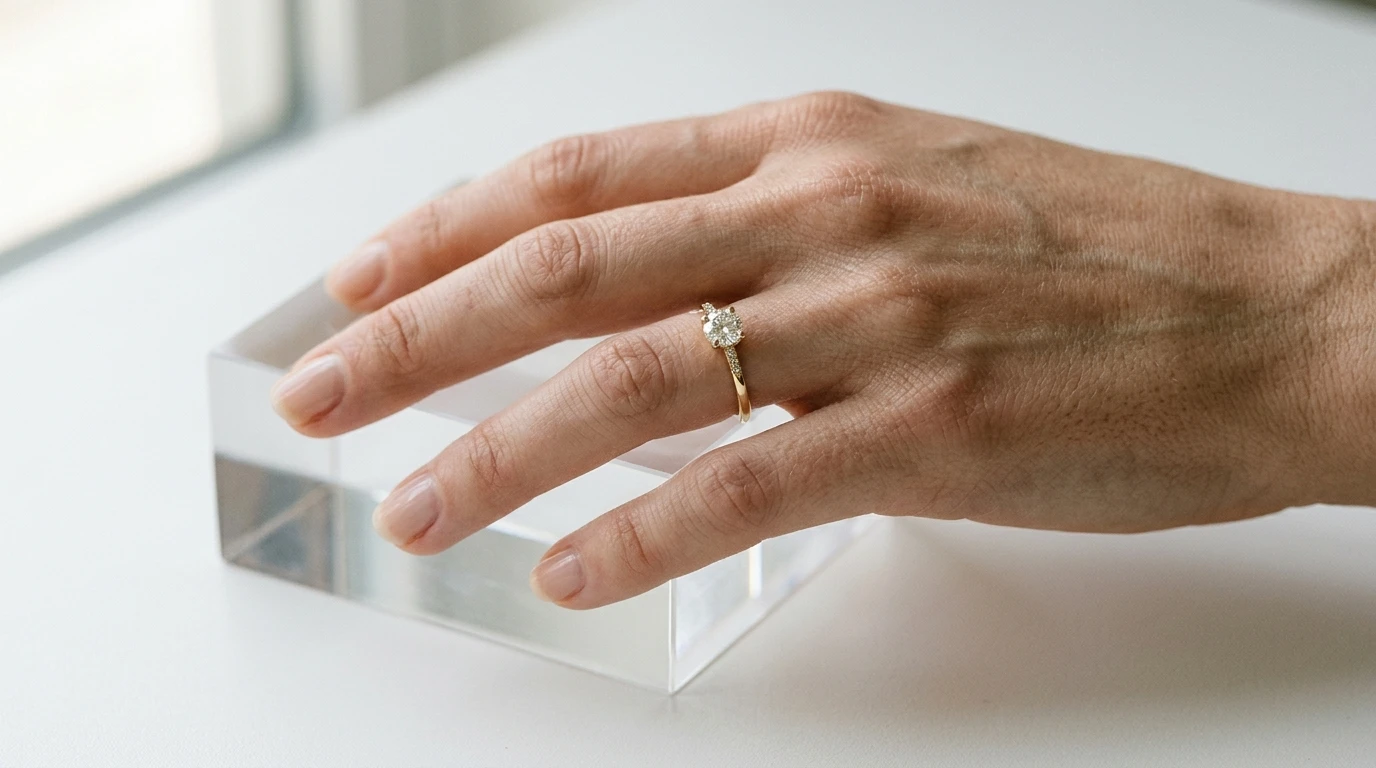
Clear or frosted acrylic shapes are the absolute best ROI investment a jewelry photographer can make.
- Why they work: They lift the jewelry off the table, allowing you to shoot from lower angles without the background horizon line intersecting the piece. Clear acrylic also creates stunning, sharp reflections of the jewelry, doubling its visual impact.
- How to style them: Stack a small clear acrylic cylinder on top of a larger frosted square block. Place a ring on top. Light it forcefully from the side to cast dramatic, geometric shadows through the transparent block.
2. Natural Geological Stone (Marble, Travertine, Slate)
Raw geological elements are a natural, elemental pairing for diamonds and precious metals.
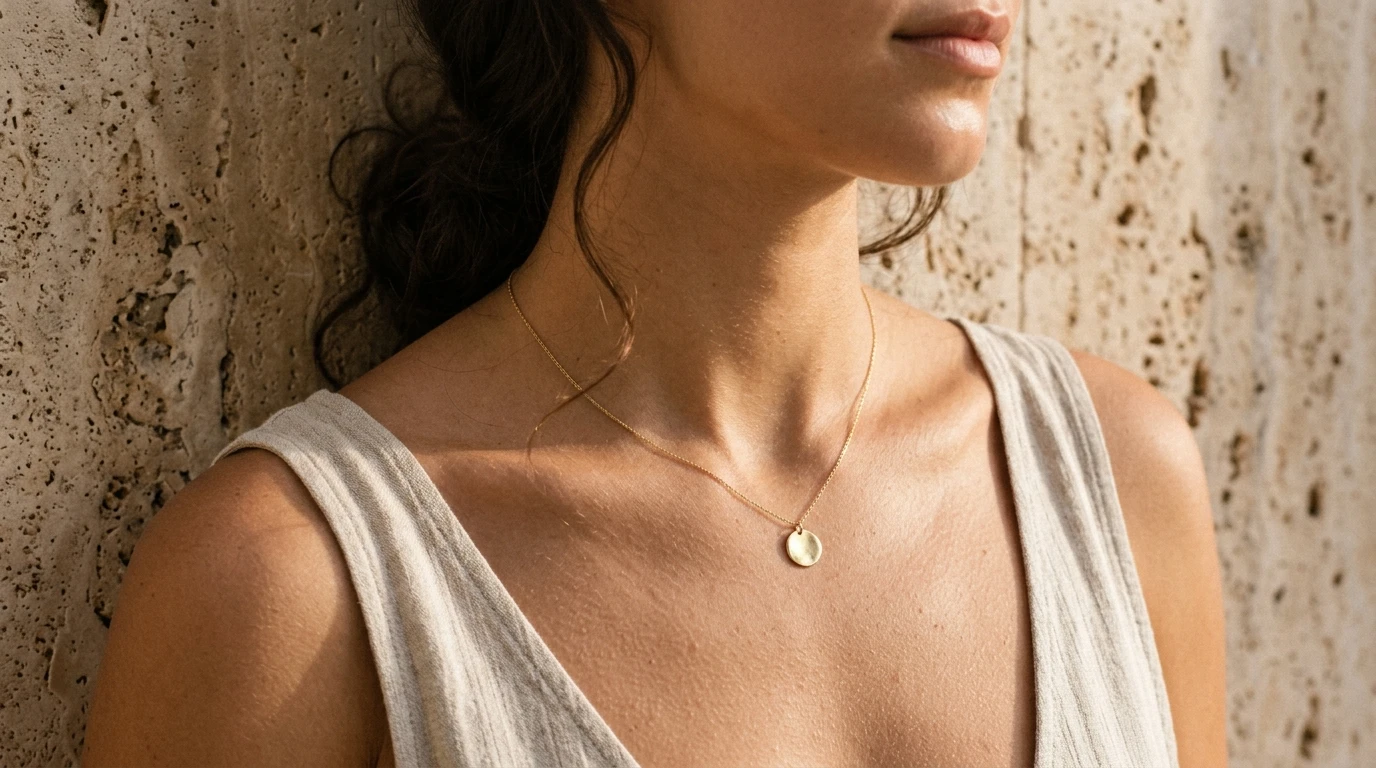
- Why they work: The heavy, matte, and porous texture of a travertine slab creates massive contrast against the delicate, flawless polish of a gold band.
- How to style them: Source 'sample' tiles from a high-end tile or hardware store for a few dollars. Lay a gold necklace across a piece of white Carrara marble. Ensure the marble veining is subtle; if the veins are too dark and chaotic, they will act as camouflage and hide the links of a thin chain.
3. Ribbed Plaster and Architectural Miniatures
Plaster columns, arches, and ribbed podiums currently dominate high-end editorial jewelry photography.
- Why they work: They introduce classical, architectural height and cast beautiful, repetitive shadows that add structural depth to the frame without adding distracting colors.
- How to style them: Lean a heavy gold hoop earring against a small plaster archway, or drape a diamond tennis bracelet organically down the steps of a miniature plaster staircase.
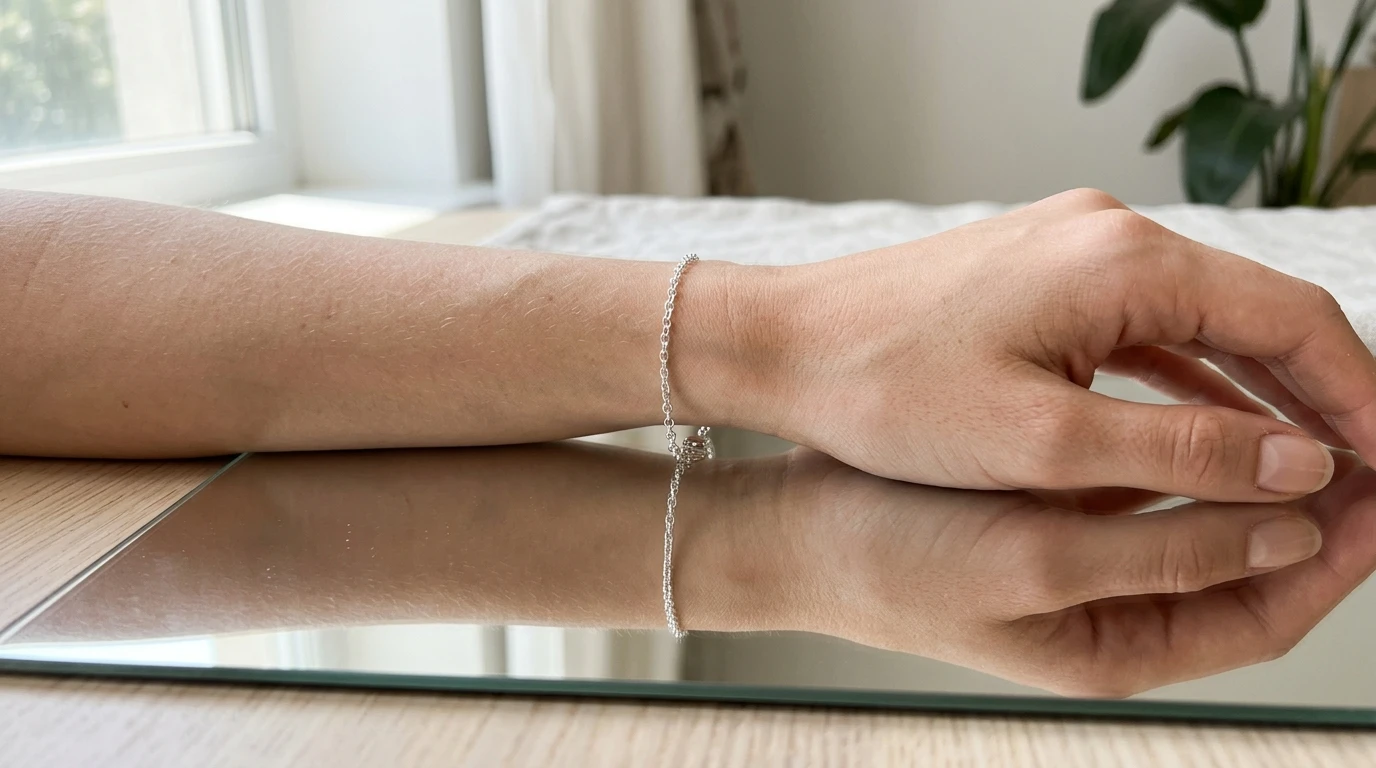
4. Mirrors and Reflective Surfaces
Using a mirror as a base creates an immediate sense of luxury and doubles the visual volume of the jewelry.
- Why they work: It reveals the underside of the jewelry (such as the intricate gallery of a ring setting) while maintaining focus on the top stone.
- How to style them: Clean the mirror obsessively with isopropyl alcohol. Any microscopic dust will be doubled in the reflection. Shoot at a low angle, but ensure the mirror is reflecting a plain white ceiling or a black flag—not your messy studio ceiling.
Props You Must Avoid
- Large, brightly colored florals: A massive red rose will entirely overwhelm a delicate silver pendant. The human eye is naturally drawn to the loudest color in the frame. If you must use botanicals, use dried, neutral elements (like pampas grass or dried eucalyptus).
- Busy patterned fabrics: Plaid, houndstooth, or heavily embroidered fabrics will camouflage the delicate links of a chain, making the product invisible.
- Cheap plastic retail displays: Standard black velvet neck busts and plastic 'ring hands' look exactly like what they are: cheap wholesale displays. Using them in your photography immediately degrades the perceived value of your jewelry.
Accessing Infinite Digital Props with AI
Building a physical prop library is expensive. Sourcing custom marble slabs, perfectly cut acrylics, and plaster shapes can easily cost hundreds of dollars, and storing them requires dedicated studio space.
Furthermore, staging physical props manually takes immense trial and error to get the balance, focus, and lighting right.
With generative AI platforms like Hylo, your prop library is infinite and entirely digital.
- Shoot your jewelry on a plain table with your smartphone.
- Upload it to Hylo.
- Type your exact creative vision into the AI Prompt or select from the Brand Kit library. For example: 'A white marble slab resting on a bed of fine white sand, illuminated by soft morning sunlight.'
- Hylo will perfectly mask out your jewelry and instantly generate the entire scene, mathematically rendering accurate drop shadows and environmental reflections onto the digital props.
You can test 50 different high-end styling concepts in 5 minutes without spending a single dollar on physical props.