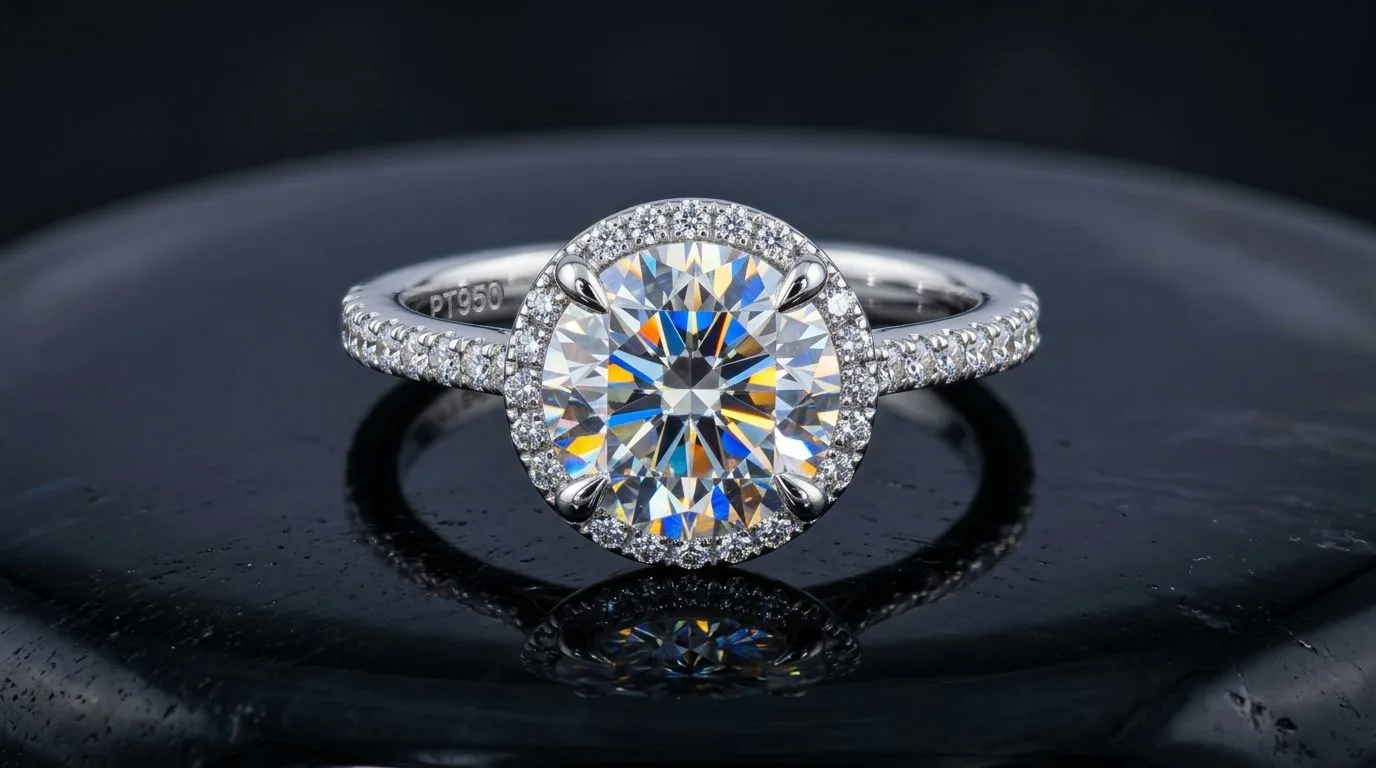
The Physics of Diamond Scintillation
Photographing diamond sparkle requires the exact opposite lighting methodology used for photographing polished metal ring bands.
The fundamental rule of diamond photography is understanding what 'sparkle' (technically known as scintillation) actually is. Sparkle is not just light; it is extreme, rapid contrast. It is the immediate visual transition between a pure white flash of light and a pure black shadow inside the pavilion of the stone.
If you place a diamond inside a white light tent, diffused light hits the stone from every possible angle simultaneously. The facets all illuminate at once, effectively destroying the contrast. The diamond will look like a dull piece of glass or a block of ice.
You must introduce deep darkness to create brilliant sparkle.
Lighting Comparison: Softbox vs. Point-Source LED
| Lighting Strategy | Metal Band Appearance | Diamond Appearance | Contrast Level |
|---|---|---|---|
| Light Tent / Softbox | Perfect, smooth reflections | Dull, grey, flat like glass | Very Low |
| Point-Source LED | Harsh, jagged shadows | Brilliant spectral fire | Extreme |
The Professional Sparkle Setup
To capture fire and scintillation, you will need:
- A DSLR or modern smartphone with a dedicated macro lens.
- A heavy tripod (essential for maintaining precise focal planes on sub-millimeter facets).
- A sparkler light (a specialized, focused 5000K LED flashlight) or the raw LED flash on a second smartphone.
- A completely dark room with all overhead lights and window light blocked.
- An 18% grey card for precise custom white balance.
Step-by-Step Point-Source Lighting
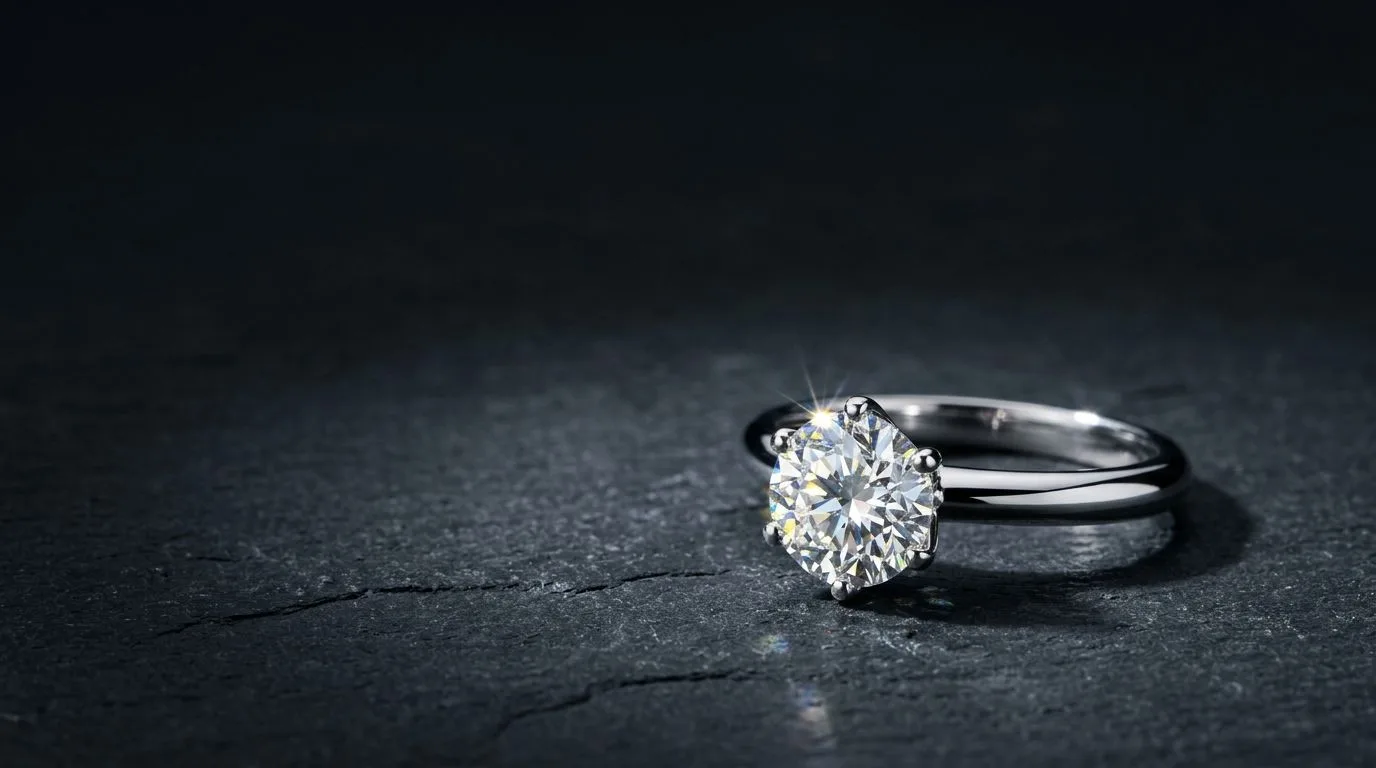
1. Black Out the Studio
Turn off all overhead room lights. Close the blinds. If you have softboxes set up for photographing the metal band, power them down completely. Your studio should be pitch black, giving you absolute control over the single beam of light you are about to introduce.
2. Calibrate Custom White Balance
Diamonds are rigorously graded on their color (or lack thereof). If your camera's auto-white balance (AWB) miscalculates the color temperature of your LED light, a flawless D-color (colorless) diamond might photograph with a yellow tint (resembling a lower-grade J-color diamond). Place an 18% grey card where the ring will go, illuminate it with your sparkler light, and lock in your custom white balance.
3. Introduce the Point-Source Light
Take your sparkler light (or the LED flashlight on a secondary smartphone) and hold it approximately 12 to 18 inches away from the diamond. Aim the concentrated beam directly at the table (the flat top) of the stone.
4. 'Dance' the Light for Fire
A stationary light will only illuminate a specific subset of facets. To discover the maximum sparkle, slowly 'dance' the flashlight in a tiny circle around the physical lens of your camera. Watch the diamond through your camera's LCD screen. You will see different facets ignite and flash as you alter the angle of incidence. Stop when you find the exact angle that produces the most brilliant fire (spectral colors).
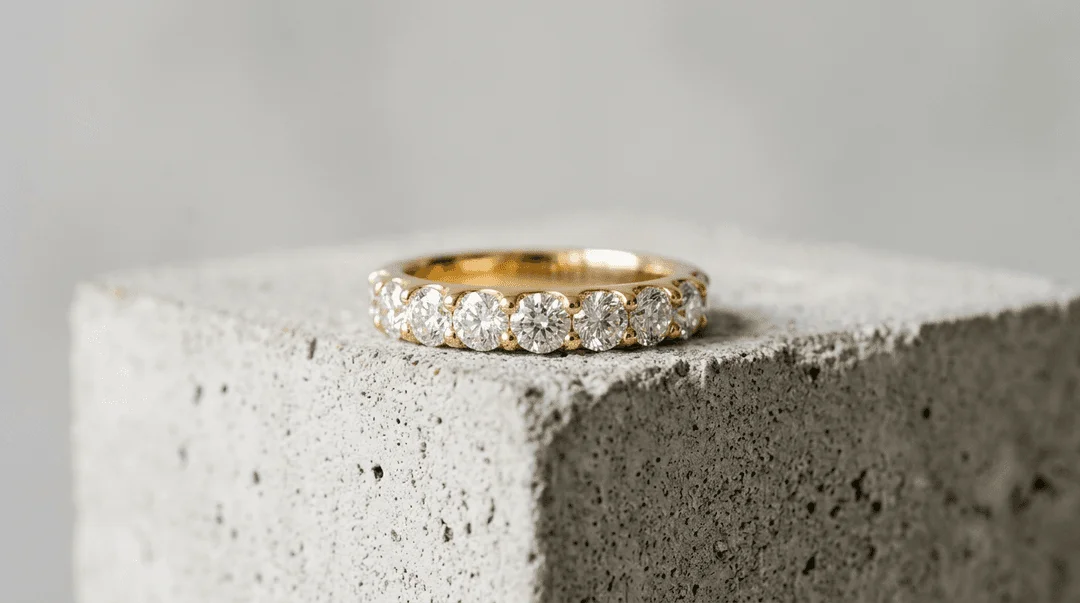
5. The Two-Exposure Composite (The Industry Secret)
You now face a structural problem: The diamond looks incredible under the hard point-source light, but because the room is dark, the polished metal ring band looks terrible (covered in harsh, jagged black shadows).
Professional high-end jewelers solve this by executing a two-exposure composite without moving the camera:
- Exposure A: Shoot with soft, diffused tent lighting (yielding a perfect metal band but a dull diamond).
- Exposure B: Shoot with hard point-source lighting in the dark (yielding perfect diamond sparkle but a ruined metal band).
The retoucher then merges these two exposures in Photoshop, meticulously masking the sparkling diamond over the soft-lit metal band to create a physically impossible, perfect image.
Algorithmic Light Dispersion via AI
The two-exposure compositing technique is the industry standard for Cartier and Tiffany, but it requires advanced Photoshop masking skills and literally doubles your studio shooting time.
With generative AI physics engines like Hylo, you can bypass the complex lighting setup entirely.
- Take a standard, single-exposure photo of your ring using whatever soft light you have available to make the metal look good.
- Upload the raw image to Hylo.
- Hylo's AI is specifically trained on the optical physics of diamond light dispersion. It automatically detects the geometric cut of the stone (Round Brilliant, Princess, Emerald, Asscher, etc.).
- It algorithmically regenerates the internal facet structure, mathematically simulating perfect point-source lighting. It adds hyper-realistic scintillation and spectral fire to the stone, while simultaneously preserving the soft-lit reflections on the metal band.
You achieve the impossible 'two-exposure' editorial look in a single click, perfectly balancing the physics of the metal and the gemstone.