The Definition of Ghost Mannequin Photography
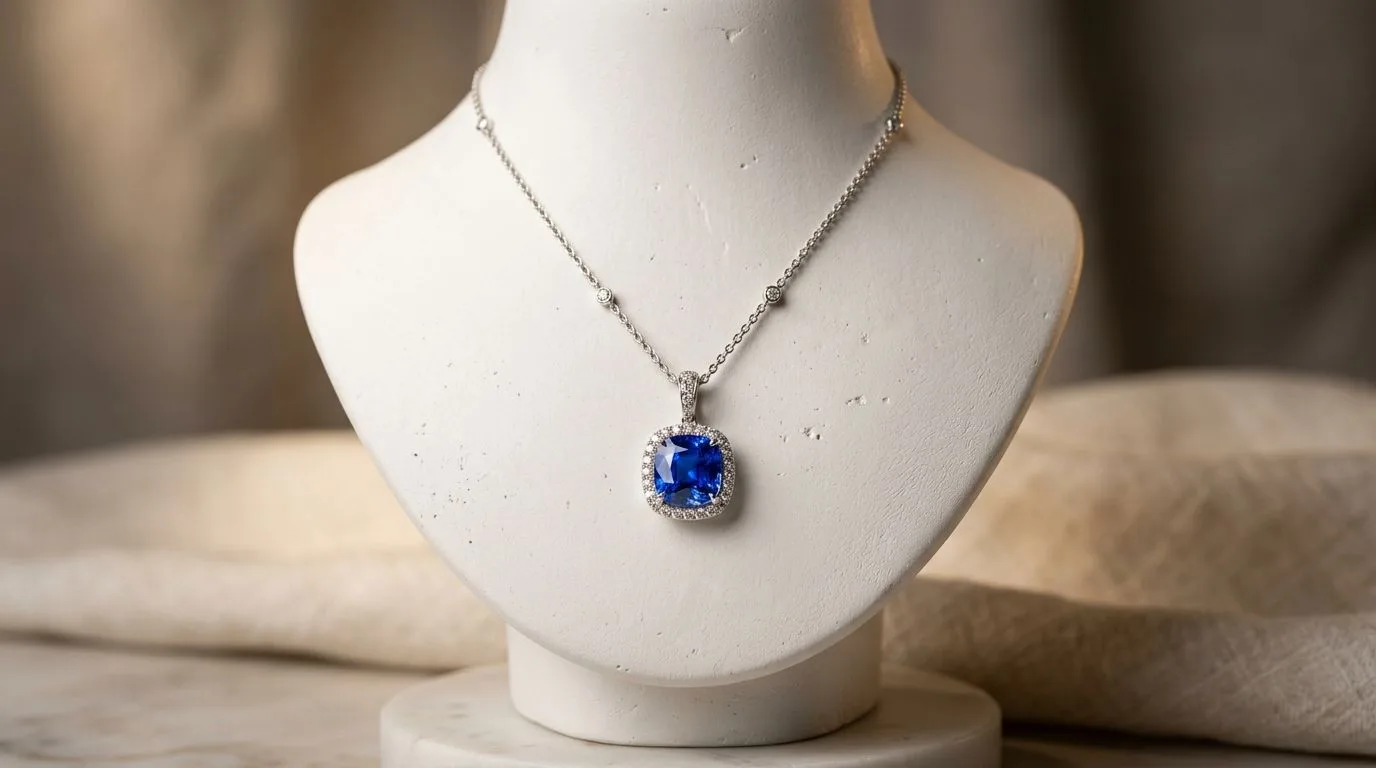
Ghost mannequin photography is a merchandising technique designed to display clothing and jewelry with three-dimensional volume, eliminating the visual distraction of a physical mannequin, neck bust, or human model.
By removing the physical support structure in post-production, the product retains its natural drape, gravity, and silhouette. For fine jewelry—specifically necklaces, heavy pendants, and layered chains—this technique is the industry gold standard. It demonstrates exactly how the piece will sit against the sternum and collarbone, a feat physically impossible to achieve with a standard 2D flat lay on a table.
The Technical Composite Workflow (Manual)
Manually creating the ghost mannequin effect is an expensive, labor-intensive compositing process requiring expert Photoshop execution.
1. The Primary Form Shot
First, the necklace is mounted on a matte, non-reflective neck bust (typically light grey or white). The photographer establishes the lighting, ensuring the metal reflects beautifully without casting harsh shadows from the bust onto the seamless background. The photo is captured from a straight-on, eye-level perspective to mimic human height.
2. The Inlay Shot (The Back Chain)
Because the physical neck bust obscures the back half of the necklace (the clasp and the chain wrapping around the nape of the neck), the photographer must capture a secondary exposure. The necklace is removed from the bust and held up by the clasp against the identical background lighting, capturing the interior curve of the chain as it would hang behind the neck.
3. The Photoshop Stitch
In post-production, the retoucher uses the Pen Tool to cut the necklace out from the primary shot, completely deleting the neck bust. This leaves a 'floating' pendant with the top of the chain awkwardly severed. The retoucher then masks out the back chain from the Inlay Shot and meticulously stitches it behind the primary layer. Finally, drop shadows are manually painted inside the back chain to create realistic 3D depth, finalizing the illusion of an invisible neck.
Ghost Mannequin vs. Flat Lays
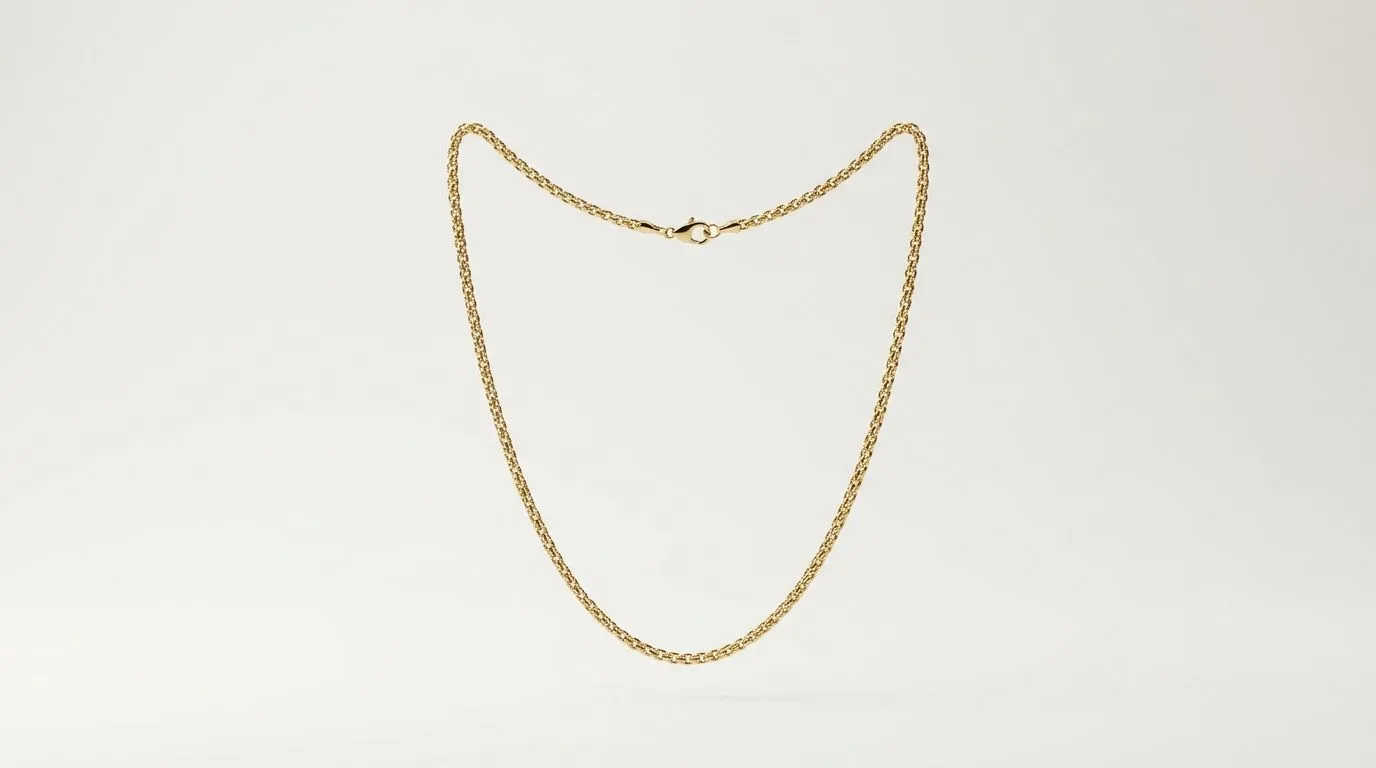
While flat lays are cost-effective and standard for minimalist, everyday jewelry brands, ghost mannequin photography is strategically superior for specific merchandise:
- Heavy statement necklaces: A 2D flat lay cannot accurately demonstrate how gravity will pull a heavy bib necklace or a multi-layered chain. A ghost mannequin proves the true physical drape.
- Chokers: Chokers look like rigid straight lines when laid flat. On a ghost mannequin, they curve naturally, demonstrating their true anatomical fit.
- Premium Perceived Value: Luxury houses (like Cartier or Van Cleef & Arpels) rely heavily on the invisible mannequin effect because the 3D volume feels substantially more luxurious, expensive, and substantial than a flat photograph.
The Operational Bottleneck of Manual Composites
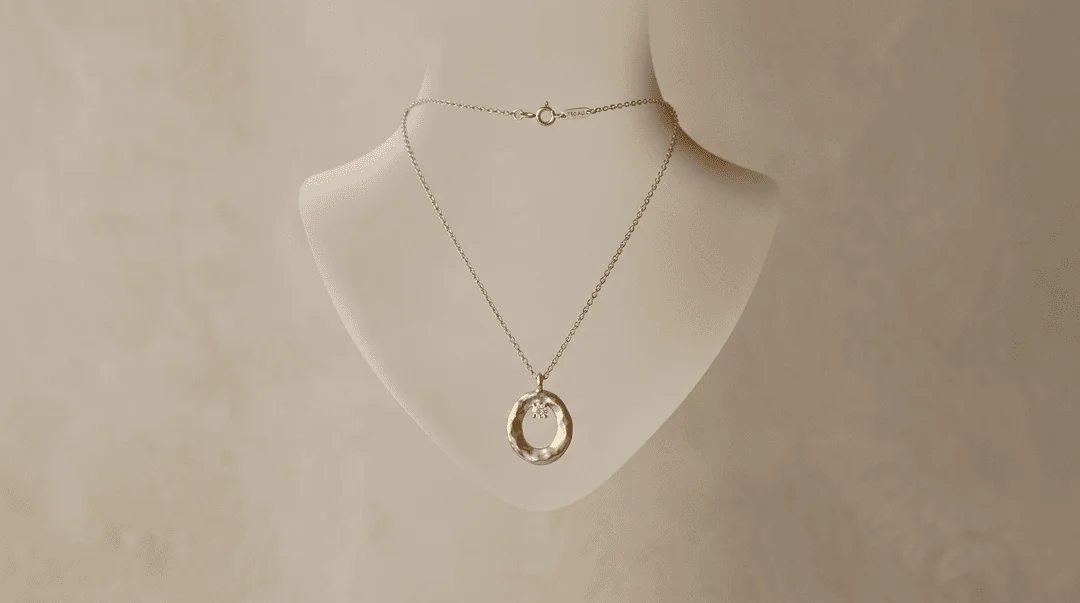
The manual composite process introduces massive operational friction. A skilled retoucher requires 15 to 30 minutes to perfectly composite a single necklace. If a brand needs to launch 500 SKUs, the post-production costs rapidly exceed the initial studio photography budget.
Furthermore, lighting a physical neck bust is inherently difficult. The convex curve of the bust often blocks key light from hitting the top links of the chain, resulting in dark, muddy metal near the collarbone that is notoriously difficult to dodge and burn in post.
Algorithmic 3D Draping via AI
With the deployment of jewelry-specific AI physics models like Hylo, the manual two-shot composite workflow is becoming obsolete for modern e-commerce brands.
Today, a brand can take a simple, single-exposure flat lay photo of a necklace on a desk. When uploaded, Hylo's AI analyzes the physics of the chain links and the center-of-gravity of the pendant. With a single click, the algorithm digitally 'lifts' the necklace off the table, simulates the gravitational drape of a human collarbone, and generates the 3D invisible mannequin effect natively.
It algorithmically renders the back-chain and computes the internal ambient occlusion shadows. This AI workflow reduces a 30-minute Photoshop composite into a 10-second automated task, allowing independent jewelers to achieve enterprise-grade 3D merchandising without a dedicated retouching team.