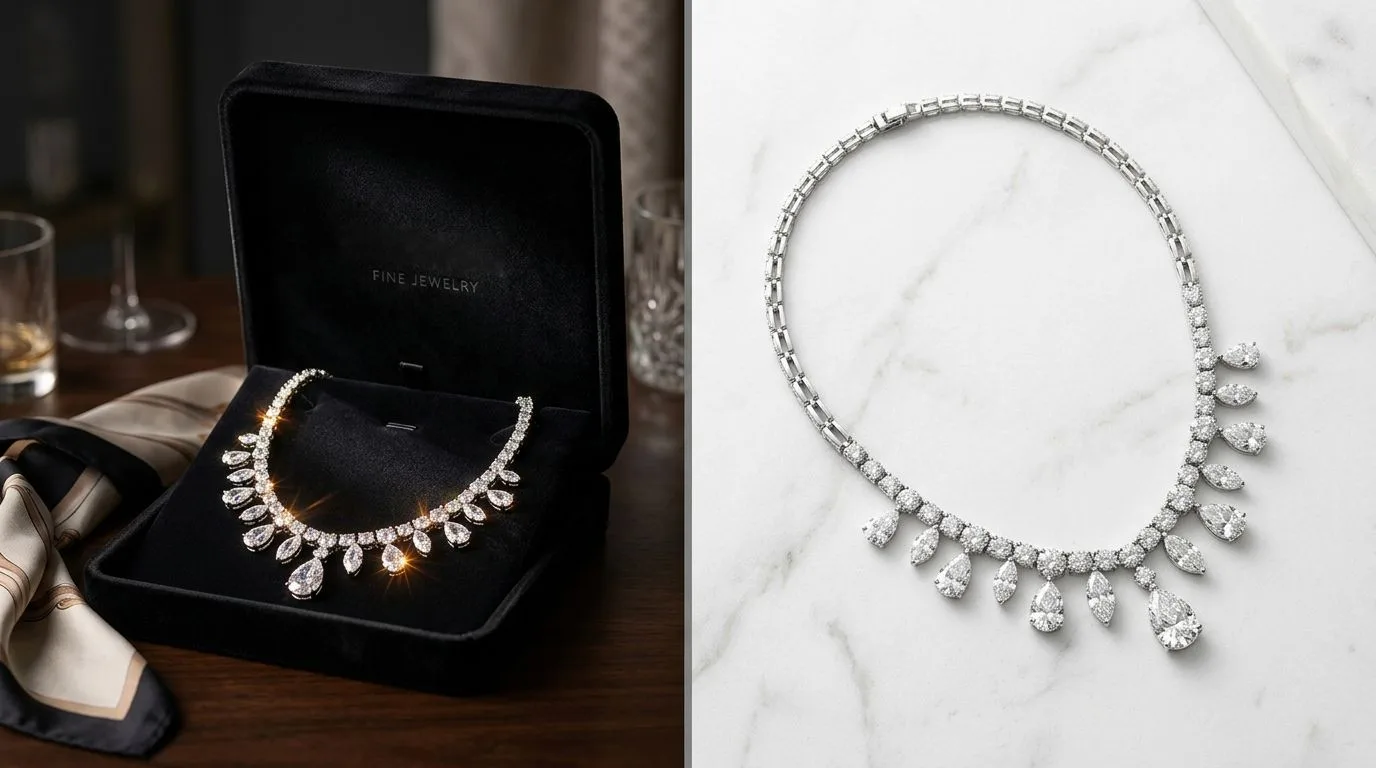
Quick Verdict: General Merchandise vs. Fine Jewelry
When choosing an AI product photography tool in 2026, the core question isn't 'which AI is smarter,' but rather 'which AI understands the physics of my product.' We tested Pebblely and Hylo using 50 physically complex jewelry items—including 1mm cable chains, pavé halos, and high-polish platinum bands.
The Verdict:
- Choose Pebblely if you operate a multi-category boutique or marketing agency generating highly creative, themed social media assets for opaque consumer goods (coffee, skincare, apparel).
- Choose Hylo if your catalog is exclusively jewelry. General AI models fundamentally misunderstand transparent gemstones and micro-metalwork. Hylo's physics-tuned model is mandatory for preventing AI artifacts on prongs and chains.
Technical Feature Comparison
| Capability | Hylo (Jewelry-Specific) | Pebblely (Generalized) |
|---|---|---|
| Model Training | Jewelry Physics & Edge Detection | General CPG & Lifestyle |
| Prong Preservation | ✅ 100% Structural accuracy | ⚠️ Prone to 'melting' or erasing |
| Thin Chain Handling | ✅ Sub-millimeter accuracy | ❌ Frequently fills negative space |
| Batch Processing | ✅ Automated via Brand Kit | ⚠️ Theme-based, manual review needed |
| Marketplace Presets | ✅ Amazon (85% fill), Etsy, Shopify | ❌ Manual cropping required |
| General Ecommerce | ⚠️ Optimized for reflective goods | ✅ Excellent for all opaque goods |
| Starting Price | $9/month | $19/month |
Deep Dive: Where Pebblely Dominates
Pebblely wins on sheer creative versatility and ease of use for general merchandise.
1. Broad CPG Application
If you are a social media manager running an agency that handles ten different DTC brands across ten different industries, Pebblely is a powerhouse. It handles opaque objects beautifully. A bottle of perfume or a sneaker has clean, predictable edges that Pebblely's masking algorithm can isolate perfectly in seconds.
2. Creative Social Themes
Pebblely offers a massive array of pre-built, highly creative background themes (e.g., "Neon Cyberpunk," "Surrealist Desert"). If you need to generate a fun, eye-catching Instagram Story for a new energy drink, Pebblely will produce highly engaging, colorful results faster than almost any competitor on the market.
Deep Dive: Where Hylo Dominates
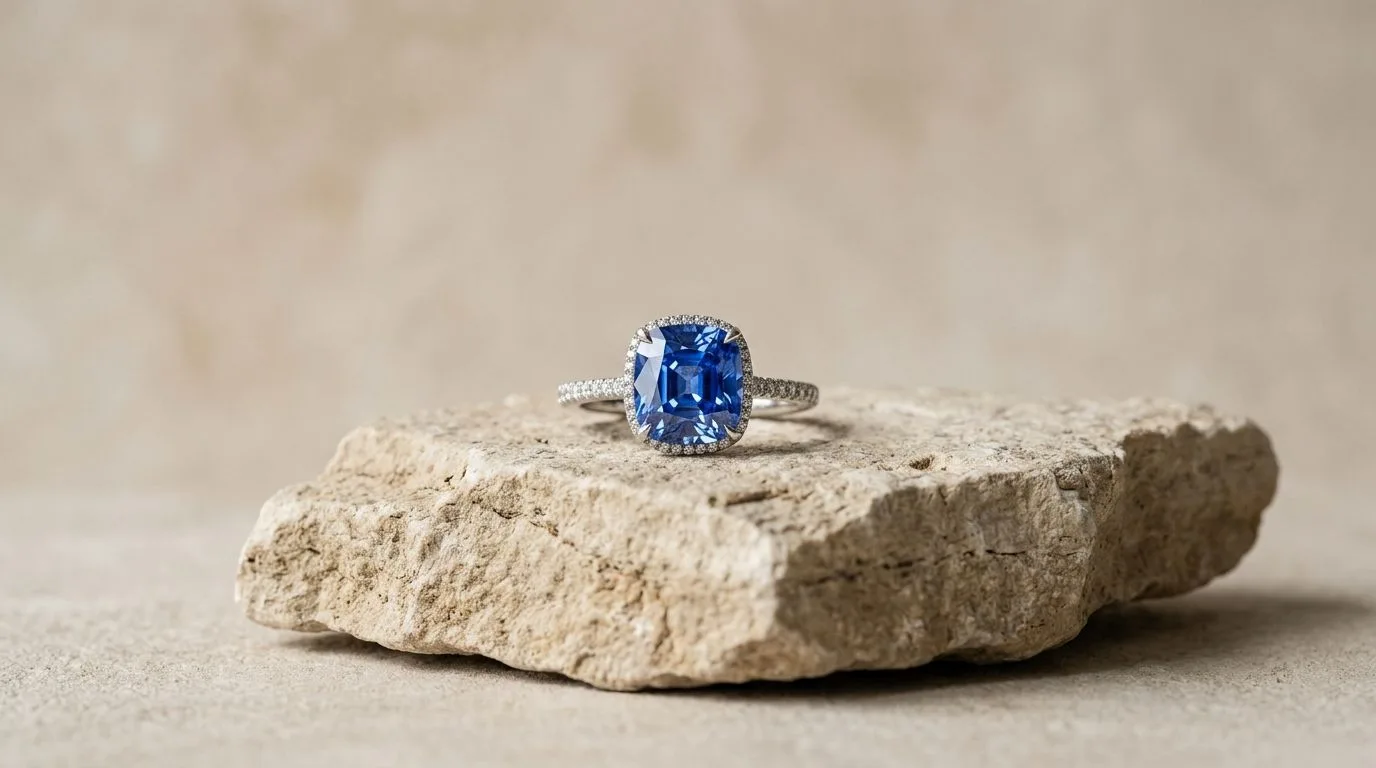
Hylo sacrifices the chaotic, infinite creativity of general AI in exchange for strict physical accuracy and operational consistency. It is a precision tool built solely for jewelers.
1. Sub-Millimeter Physical Accuracy
Jewelry is the hardest subject for artificial intelligence to render. When you drop a 1ct diamond engagement ring into a general AI tool like Pebblely, the AI treats the transparent diamond like an opaque object, and it treats the 1mm prongs as digital noise. The result is often 'melted' metal or prongs that vanish entirely.
Hylo utilizes a specialized masking engine trained exclusively on jewelry structures. In our 50-SKU test, Hylo preserved the exact physical blueprint of the jewelry 100% of the time. This is legally critical: if the AI alters the shape of the setting, you are no longer displaying the product you are actually selling.

2. The Algorithmic Brand Kit
If you sell on Shopify, you don't want 50 different, surreal backgrounds. You want a grid of 50 rings shot on the exact same beige travertine stone with the exact same 45-degree directional light.
Hylo's Brand Kit allows you to program this specific lighting and prop architecture once. When you upload your next 100 SKUs, Hylo mathematically enforces that exact environment across the entire batch. Your digital catalog looks identical to a $20,000 professional studio shoot.
3. Automated Marketplace Compliance
Amazon Handmade enforces strict rules: pure white (RGB 255,255,255) backgrounds with the jewelry filling precisely 85% of the frame. Etsy algorithms favor 2000x2000 square crops.
Hylo features one-click programmatic presets for these marketplaces. It bypasses the need to export an AI image into Photoshop for manual cropping and background stripping, streamlining your multi-channel deployment.
The Technical Conclusion
If you sell candles, cosmetics, or clothing, buy Pebblely. If you sell diamonds, gold, and fine metalwork, buy Hylo.
Trying to force a general AI model to understand the refractive index of a sapphire or the negative space of a Cuban link chain will cost you hours in Photoshop clean-up. Hylo eliminates this operational bottleneck completely.