
The Evolution of Jewelry Content Creation
For years, jewelry photography has been a bottleneck for e-commerce. You either hired a professional photographer for $150 per image, or you bought specialized hardware like the GemLightbox by Picup Media to shoot it yourself.
Today, Generative AI has rewritten the rules. Platforms like Hylo offer a purely software-based alternative that completely eliminates the need for expensive physical hardware.
Here is a comprehensive breakdown of the hardware approach (GemLightbox) versus the AI software approach (Hylo).
GemLightbox: The Hardware Standard
The GemLightbox is a physical, beautifully engineered tabletop lightbox explicitly designed for jewelry. It features integrated 5000K LEDs, a motorized turntable for 360 videos, and a companion smartphone app.
The Pros of GemLightbox
- Foolproof Consistency: Because the lighting environment is a closed, physical box, every photo and video you take will look perfectly consistent, regardless of what room you are in.
- Zero Technical Knowledge Required: You place the ring inside, put your smartphone on the stand, and hit a button. It eliminates the need for DSLR cameras and lighting theory.
- Built-in Turntable: The integrated, vibration-free motorized turntable makes shooting 360-degree white-background spins incredibly easy.

The Cons of GemLightbox
- Hardware Cost: The base unit, turntables, and specialized accessories can quickly push the cost well over $1,000. If you have multiple retail locations, you must buy a box for each store.
- Aesthetic Limitations: The GemLightbox creates flawless pure white (or pure black) backgrounds. However, it cannot create high-end lifestyle imagery. You cannot shoot a ring resting on a piece of raw travertine marble in the sunlight using a lightbox.
- Physical Footprint: It is a large, bulky box that takes up permanent counter space in your studio or back office.
Hylo: The AI Software Revolution
Hylo approaches the problem differently. Instead of trying to perfect the physical lighting environment, Hylo uses AI to mathematically generate the perfect lighting and environment after the photo is taken.
The Pros of Hylo
- Zero Hardware Costs: Hylo requires no specialized hardware. You take a photo of your jewelry with your phone under whatever basic lighting you have available, and the AI does the heavy lifting.
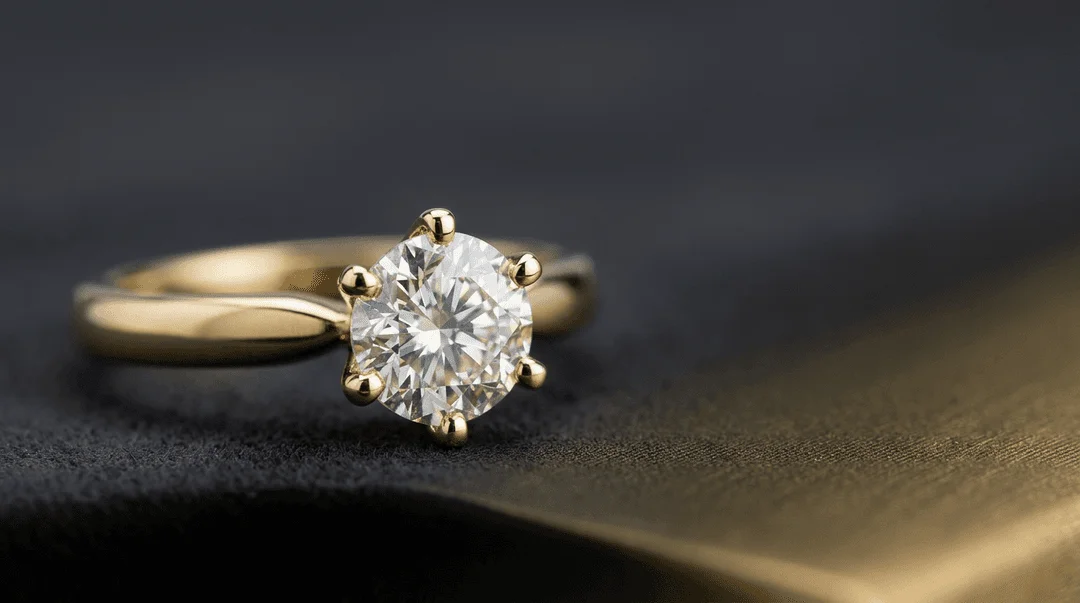
- Infinite Lifestyle Backgrounds: Unlike a lightbox, Hylo allows you to instantly generate any background you can imagine. Place your jewelry on acrylic blocks, silk fabric, or natural stone, all mathematically rendered with perfect drop shadows and reflections.
- Digital 360 Generation: Hylo's AI understands 3D geometry. It can take a single 2D photograph of a ring and extrapolate a hyper-realistic 360-degree spinning video, bypassing the need for a physical motorized turntable.
- Infinite Scalability: A marketing team can process 500 images simultaneously in the cloud using Hylo's batch processing, whereas a lightbox requires you to physically shoot all 500 rings one by one.
The Cons of Hylo
- Software Subscription: While cheaper than buying physical hardware up front, Hylo operates on a SaaS subscription or credit model.
- Requires a Clean Source Image: While Hylo is powerful, it cannot fix a photo that is completely out of focus or totally dark. You still need to capture a reasonably clear baseline image of the jewelry.
The Verdict: Which Should You Choose?
If your absolute only goal is to quickly shoot Amazon-compliant, pure white background photos and basic 360 spins, and you have $1,000+ to spend upfront on hardware, the GemLightbox is an excellent, battle-tested tool.
However, if you are building a modern luxury brand on Shopify or Instagram, you need more than just white backgrounds. You need stunning editorial aesthetics, lifestyle imagery, and infinite visual variety. In 2026, investing in a purely digital AI platform like Hylo provides exponentially more creative freedom, higher ROI, and future-proof scalability compared to buying physical plastic lightboxes.