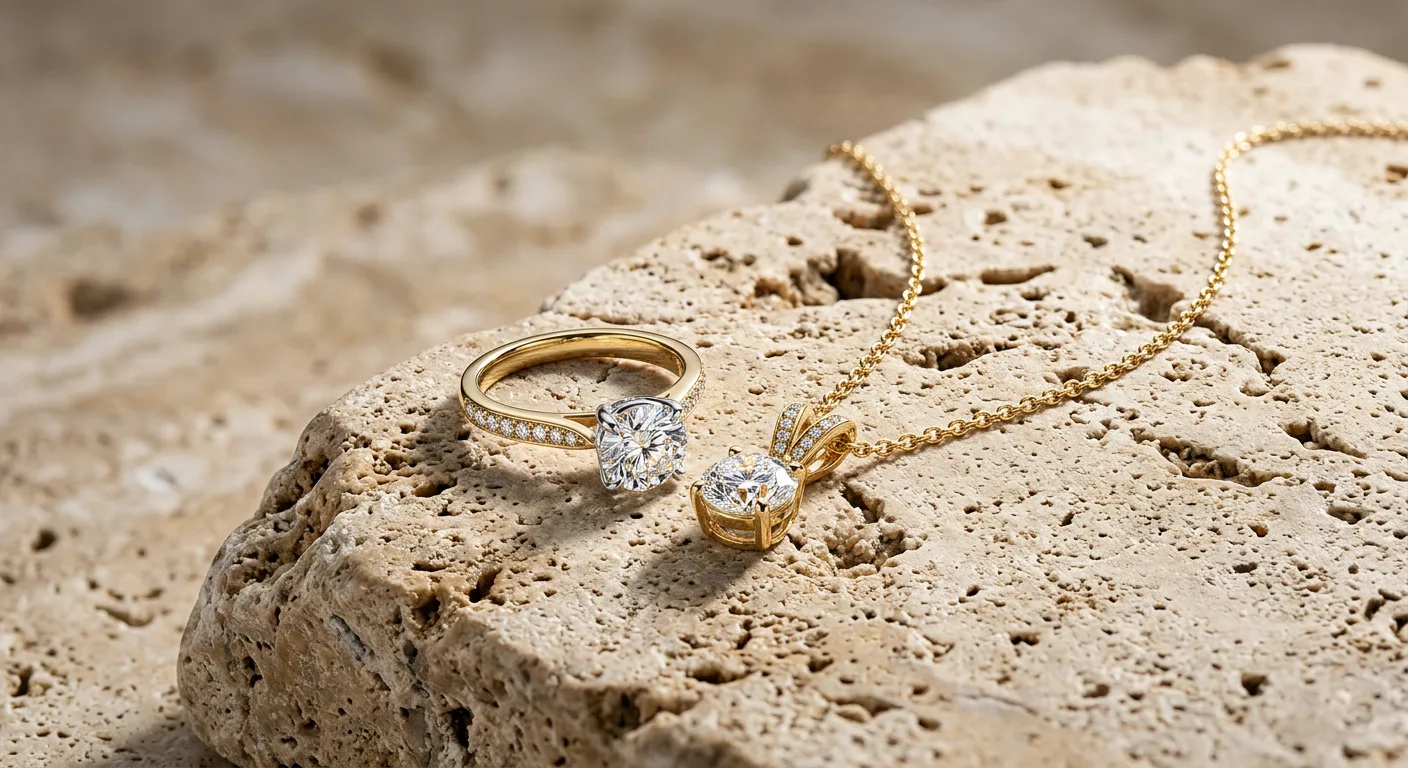
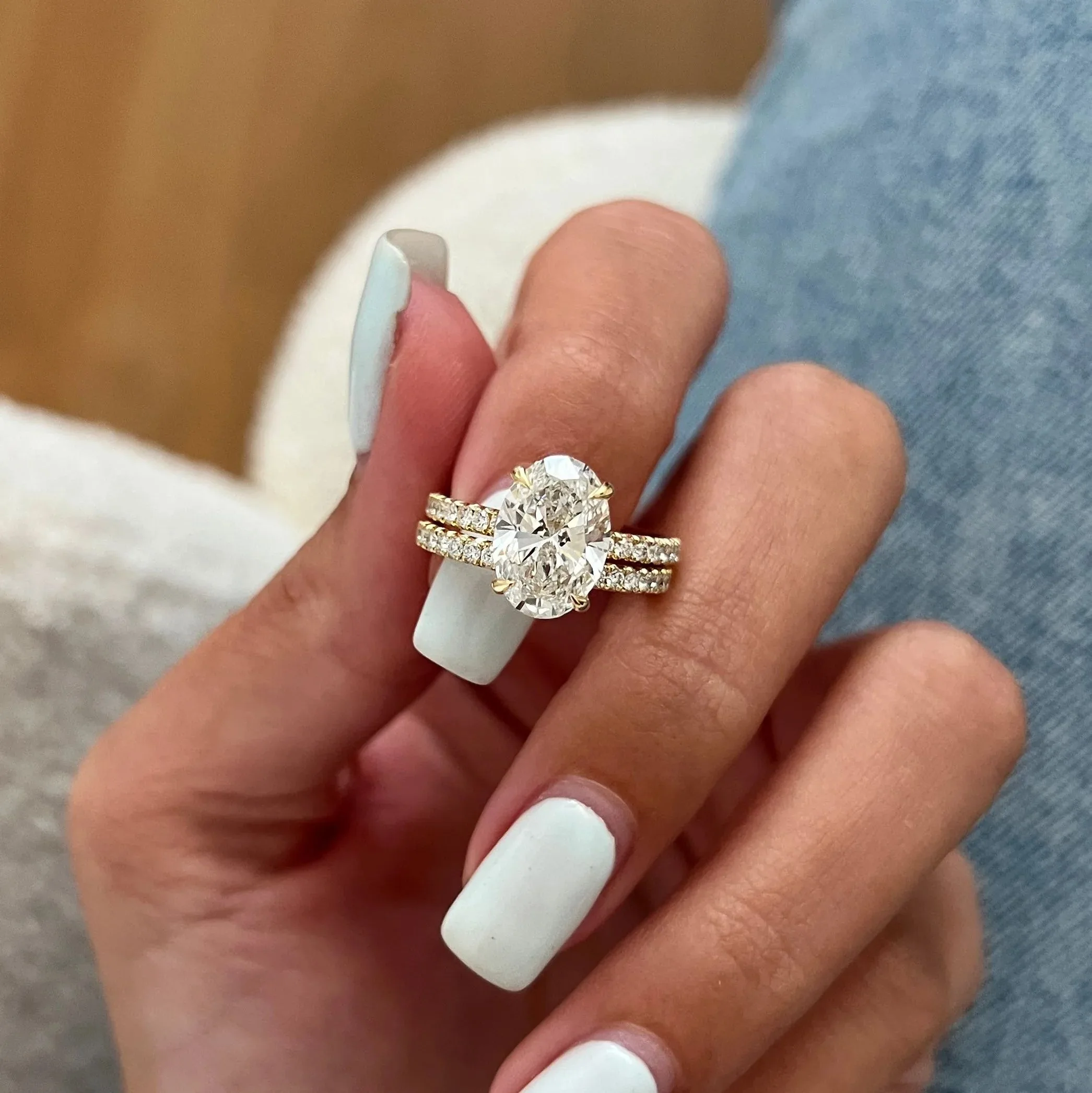

For a marketing agency, jewelry clients are attractive but operationally heavy. Good jewelry imagery has traditionally meant physical shoots, studio rental, a photographer, often a model, and the scheduling to line all of that up, and every one of those costs lands on each project. On tight timelines and across multiple accounts, that overhead is what limits how much an agency can take on and how much margin it keeps. It also makes jewelry work lumpy and hard to schedule, because each campaign depends on aligning external resources that the agency does not directly control. Generating imagery from client product photos changes that equation.
Where the cost and time actually go
The expensive part of jewelry imagery for an agency is rarely the creative thinking; it is the production logistics. Studio rental, model fees, photographer day rates, and the calendar coordination to schedule a shoot all add variable cost and lead time to every engagement. A last-minute seasonal request or a new product drop means finding studio availability before any work can begin. This is the overhead that compresses agency margins on fixed-fee work and slows turnaround on everything.
Generation as a production method
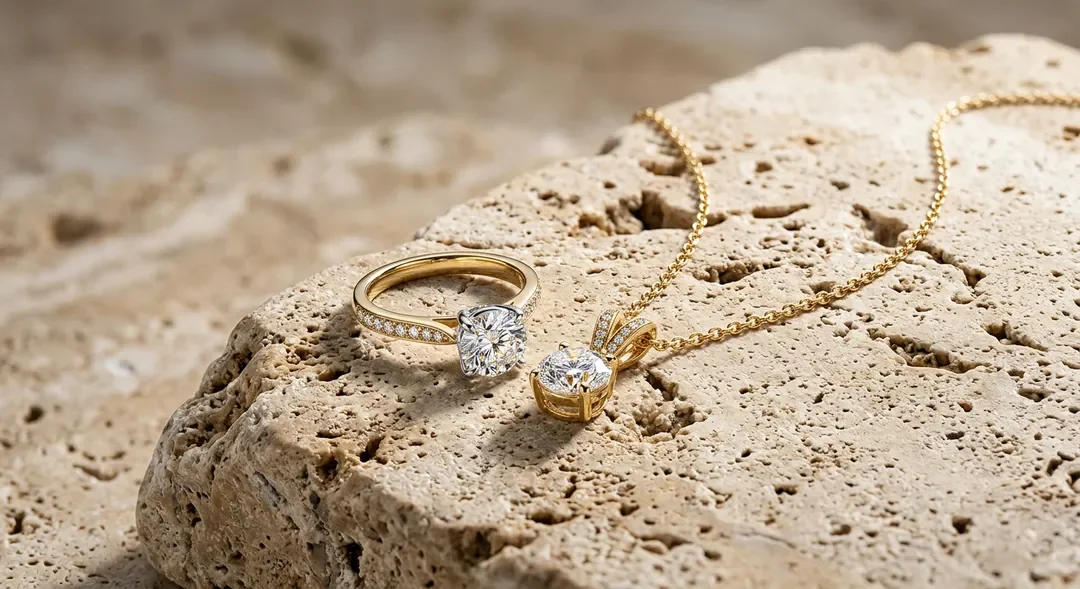
Generating packshots, on-model shots, and channel variants from a client's product photos removes most of that overhead. Crucially, it does not remove the agency's creative role. The agency still directs the background, framing, mood, and presentation to match each client's brand; generation is simply the method of production, much like directing a shoot but without the studio and model booking. The agency keeps creative control and loses the logistics.
This matters most for two kinds of agency work. The first is volume: an agency managing several jewelry accounts can process each client's catalog to its own consistent style and respond to new requests by applying a template rather than scheduling a production. The second is speed: because the work starts from existing client product photos, the agency can turn around quick requests and seasonal campaigns without waiting on studio availability, which is often the longest pole in the tent.
Complete cross-channel delivery
A practical advantage is that one set of inputs can produce a full cross-channel deliverable. From the same client reference photos, an agency can generate marketplace-compliant packshots and the social-ratio variants a campaign needs, so the client receives a complete set spanning their store, their marketplace listings, and their social channels without commissioning separate shoots for each format. The discipline that makes this reliable is accurate inputs: clear reference photos of the real pieces, so the output stays faithful to what the client actually sells.
Pitching and winning jewelry clients
Generation also changes what an agency can offer at the pitch stage, which is where jewelry accounts are won. Producing mock campaign imagery for a prospect traditionally meant either spending speculative money on a shoot or presenting flat stock that did not show the client's actual pieces. With generation, an agency can take a prospect's existing product photos and produce a small set of styled concept images, packshots in the proposed look, an on-model treatment, a social variant, to show in the pitch itself. Demonstrating the client's own yellow gold and sterling silver pieces rendered in the agency's proposed creative direction is far more persuasive than describing it, and it costs the agency hours rather than a production budget.
This lowers the risk of speculative business development and lets an agency pursue more jewelry prospects than it otherwise could. It also sets the right expectation from the start: the client sees that imagery will be produced from their real inventory, accurately, in a defined style, which is exactly how the engagement will run if they sign. The pitch becomes a true preview of the work rather than an aspirational mock-up.

Maintaining client brand consistency over time
Jewelry clients are not one-off projects; the valuable relationships are ongoing, with new collections, seasonal campaigns, and continual additions to the catalog. The risk in a long relationship is visual drift, where imagery produced across many separate shoots over a year stops looking like one coherent brand. Generation solves this by locking each client's look into a reusable template, so the rose gold packshots produced in spring match those produced in autumn, and a new earring added in a rush looks like it belongs with the rest of the range. For an agency, this consistency is part of the product: the client is paying for a coherent brand presence, and a template-driven approach delivers it reliably across every batch of work.
It also makes the agency's own delivery more scalable and less dependent on any single person's memory of how a client's images should look. The template encodes the creative decisions, so work can be produced and reviewed against a defined standard rather than recreated from scratch each time. That repeatability is what lets an agency grow its roster of jewelry clients without the quality of any one account slipping.

New service lines an agency can offer
Removing the studio dependency does not just make existing services cheaper to deliver; it opens services an agency could not previously offer profitably. Rapid-turnaround social content becomes viable, because an agency can produce a steady stream of fresh on-model and styled imagery for a client's feed without a shoot behind each post. Marketplace listing support becomes a service, since the agency can generate the compliant packshots and scale shots a client needs to list across several platforms. Seasonal campaign packages become easy to scope, because the imagery for a festival or holiday push can be produced from the client's existing yellow gold and sterling silver inventory rather than requiring a dedicated production.
Each of these is a service an agency can sell, and each was previously gated by the cost and lead time of physical shoots. An agency that can offer ongoing content, marketplace enablement, and seasonal campaigns from the same lightweight production process can deepen its relationship with each jewelry client and increase the value of every account, rather than being limited to occasional high-cost campaign shoots. The shift is from selling discrete expensive productions to selling a continuous imagery capability, which is both more valuable to the client and more profitable for the agency. It also smooths the agency's revenue, replacing the feast-and-famine pattern of occasional large shoots with steadier, recurring work that is easier to staff and forecast.
Managing client expectations honestly
A responsible agency is clear with clients about how the imagery is produced and what governs its quality. The key message is that generation works from the client's real pieces and is held to accuracy: the metal colour, stone count, and proportion in the delivered images match what the client actually sells. This honesty protects everyone, because it sets the expectation that the imagery is a faithful presentation of real inventory, not a fabrication, which is exactly what keeps the client's own buyers satisfied and returns low. An agency that frames generation this way, as directed, accurate production rather than a shortcut, builds trust with clients who might otherwise be wary of the approach. It also positions the agency as a knowledgeable partner rather than a vendor chasing a trend: an agency that can explain why accuracy matters, how the metal colour and stone count are kept true to the real piece, and where generation fits alongside selective studio work, demonstrates exactly the expertise a jewelry client is paying for. That expertise is itself a selling point, because jewelry clients are understandably protective of how their pieces are represented, and an agency that clearly understands both the creative and the accuracy stakes will win and keep accounts that a less considered competitor would lose. Over the course of a relationship, this credibility compounds: a client who sees that the agency handles their yellow gold and sterling silver ranges faithfully, batch after batch, comes to trust the agency with more of their catalog and more of their marketing, which is how a single project grows into a retained account that anchors the agency's revenue.
Hylo's AI Photoshoot generates the packshots and on-model imagery agencies deliver, AI Retouch cleans client-supplied references to a usable standard, and the same inputs can produce social-ratio and marketplace variants, so an agency can serve jewelry clients with the creative control of a directed shoot and without the studio and model logistics that normally come with it.